Get Full Government Meeting Transcripts, Videos, & Alerts Forever!
Get email alerts on the Land Use Zoning topic
No spam. Unsubscribe anytime.
Linn County planning commission tables Conditional Use Permit for faith-based 'Livingstone's Lodge' after missing staff report
Summary
The Linn County Planning and Zoning Commission voted to table a Conditional Use Permit for Making Disciples Inc., which would operate an 8-month, faith-based wilderness discipleship program called Livingstone's Lodge, after officials said the required staff report was not available. Neighbors raised safety, trespass and infrastructure concerns.
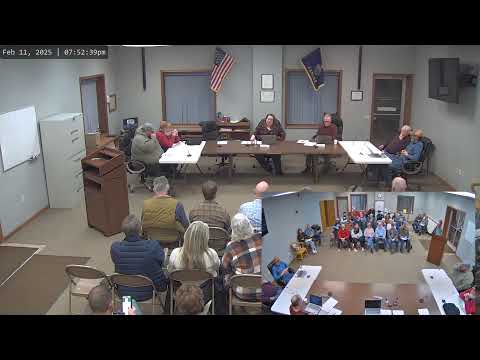
The Linn County Planning and Zoning Commission on Tuesday tabled action on Conditional Use Permit (CUP) 25-02, an application from Making Disciples Inc., doing business as Livingstone's Lodge, after staff said the planning office did not have a written staff report ready for the commission's review.
Livingstone's Lodge would use a rural property to run an eight-month, faith-based wilderness discipleship program for men ages 18 to 25. Founder and executive director Ryan Waxock described a three-phase program in which participants would camp for about a month, spend roughly four months in a bunkhouse and workshop doing skills and agricultural work, then move into a main residence for three months of transition and job/education planning. "Livingstone's Lodge is a faith based non profit organization to help young men 18 to 25 years old find their identity and purpose through an 8 month long wilderness discipleship programs," Waxock told the commission.
Waxock said participant selection would include a "rigorous targeted selection application and screening process that includes a criminal background check," and that the program would accept only voluntary participants. He described a maximum site capacity of 24 men but said a typical full program would likely house 16 to 18 participants and that individual cohorts would be limited to no more than six at a time. He said utilities (rural water and electricity) are at the street and that he has been in conversations with Heartland Rural Electric Cooperative and the local water district about bringing on utilities.
Neighbors who live within a mile of the property urged denial, citing safety, trespass and infrastructure concerns. One commenter who identified himself as a nearby landowner said, "My biggest concern is I have 2 girls... Now I've got to worry about 25 young men that I don't know." Another said, "We have a hundred acres within a thousand feet... I am scared for their safety. ... So I say no." Several speakers raised liability concerns tied to trespass and fences, questions about sewage handling and the suitability of the agricultural zoning district for the proposed use.
A resident who provided written material told the commission she had compared the request to Linn County zoning regulations and concluded the application conflicted with the county's agricultural district rules, quoting that the regulations seek "to preserve and protect ag uses to maintain rural character for peace, tranquility, and solitude." The resident also argued the proposal did not fall under the county's listed conditional uses and suggested the lodging-like arrangement was not compatible with the CUP categories on file.
Commissioners said they lacked a current staff report because the planning office is transitioning between directors. The commission announced the application would be tabled until the next meeting to allow staff to prepare and present a formal staff report and recommendation. Commission member Paul Porter made the motion to table CUP 25-02 until the next meeting; Dan Black seconded. The motion passed by voice vote.
The commission separately moved to table review of its own regulations and other old business until the next meeting.
Documents the applicant provided describe the program model as following an established Tennessee ministry, Narrow Gate Lodge, which Waxock said has operated for more than 20 years. Waxock said funding to date has come from private donors.
The commission closed public comment for the night after numerous speakers addressed the panel and scheduled the item for consideration at the next meeting when a staff report will be available.