Get Full Government Meeting Transcripts, Videos, & Alerts Forever!
Get email alerts on the Mesonet Station topic
No spam. Unsubscribe anytime.
Commissioners weigh hosting Kansas Mesonet weather station; initial costs covered by regional grant
Summary
A commissioner presented a request to pursue siting a Kansas Mesonet weather station in Neosho County. The Southeast Homeland Security Council would pay the station cost; the county would cover maintenance after an initial grant period. Commissioners discussed siting and next steps; no formal vote was taken.
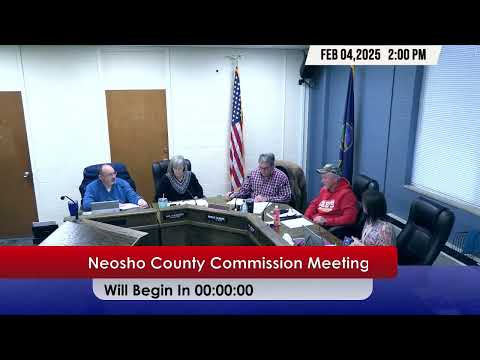
At the Feb. 4 meeting, Neosho County commissioners discussed pursuing placement of a Kansas Mesonet weather station in the county under a Southeast Homeland Security Council project that funds stations across the region.
The presenters said the region’s council pays the full $20,000 cost for the Mesonet station hardware and two years of maintenance. After that initial maintenance period, counties typically cover sustainment costs — the presenter estimated about $2,000 for two years of upkeep beyond the grant period if the county chose not to join a regional sustainment plan.
Officials described the Mesonet station’s sensors and data products: relative humidity, air temperature, wind, solar radiation, two soil‑temperature probes, forced‑profile soil moisture probes, rain gauges, a barometer and a camera. The station also generates derived outputs such as soil temperature and moisture, wheat hollow stem probability, fire‑danger indices and animal‑comfort metrics that can be useful to farmers, emergency managers and local agencies.
The commissioners discussed siting considerations, including placing the station near the county’s geographic center so readings better represent county‑wide conditions, avoiding locations with bedrock or close proximity to water that would bias measurements, and coordinating placement with neighboring counties to avoid redundant coverage. Possible land for the site included private landowners or county‑owned parcels; one suggestion was land near a county landfill. Presenters estimated the tower height at roughly 32 feet and said Kansas State University would maintain the station for the first two years under the grant.
No formal motion or vote was taken. Commissioners asked the presenter to seek landowner permission and to return with recommended sites, a signed K‑State site agreement and any other required documents before the county commits funds beyond the grant window.