Get Full Government Meeting Transcripts, Videos, & Alerts Forever!
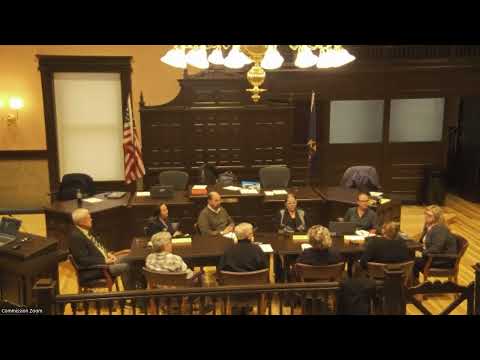
Douglas County officials outline pretrial, corrections and juvenile services in work session
Summary
County criminal justice staff briefed commissioners on pretrial supervision, electronic monitoring, specialty courts, adult and juvenile community corrections, detention and diversion programs, and grant funding. No formal actions were taken at the informational work session.
Douglas County criminal justice staff gave commissioners an overview of the county's pretrial, adult and juvenile corrections programs, data efforts and grant funding at an informational work session. Department leaders said the goal of many programs is to keep people in the community, connect them with services and reduce time in custody while ensuring court appearance and public safety.
The presentation described the county's pretrial services as a daily operation that prepares reports for the court, conducts background checks and recommends supervision levels. Pam (department head, Douglas County Department of Criminal Justice Services) said pretrial staff interview people in the jail, check warrants and holds, and submit reports the court uses at first appearance. She said the county currently supervises about 200 to 205 people on pretrial on any given day and serves “right under 500” distinct people in a year. Pam said the program uses validated risk tools (Praxis, currently on version 19) and a stakeholder review group that includes the court and the district attorney to set supervision practices.
Pam emphasized limiting supervision to what is necessary: the department has reduced use of some electronic-monitoring practices to avoid “oversupervising” lower-risk people. Electronic monitoring is used for house-arrest orders, exclusion/inclusion zones (for victim protection), and some DUI sentences where hours in residence must be documented; the presenters said monitoring equipment can track minute-by-minute compliance. The detention center staff handle overnight monitoring and respond to alerts, notifying law enforcement when orders in the record (in Spillman) indicate an arrestable violation.
County staff…
Already have an account? Log in
Subscribe to keep reading
Unlock the rest of this article — and every article on Citizen Portal.
- Unlimited articles
- AI-powered breakdowns of topics, speakers, decisions, and budgets
- Instant alerts when your location has a new meeting
- Follow topics and more locations
- 1,000 AI Insights / month, plus AI Chat