Get Full Government Meeting Transcripts, Videos, & Alerts Forever!
Get email alerts on the Land Use Zoning topic
No spam. Unsubscribe anytime.
Douglas County defers home-occupation zoning amendment after debate over vehicle repair and welding exclusions
Summary
The Board of Douglas County Commissioners deferred action on a text amendment (AMDT 24 1 0 0 1) that would revise home-occupation standards and the registration process, after a lengthy discussion about whether prohibitions on auto repair and welding should remain. Staff will return with revised language or planning-commission review.
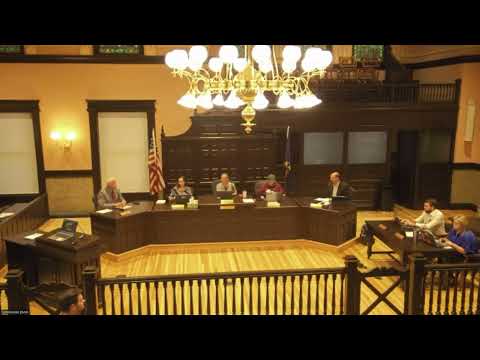
The Board of Douglas County Commissioners on Jan. 29 deferred action on text amendment AMDT 24 1 0 0 1, a proposed revision to county home-occupation standards and the registration process, after commissioners raised concerns about exclusions for automobile painting, mechanical repairs, welding and machine shops.
Carl Bauer, planner with Douglas County Zoning and Codes, presented the draft amendment, calling out five major changes: permitting many low-impact “type 1” home occupations by right (removing annual registration), allowing up to 400 square feet of an accessory building for type 1 uses, removing the 5-acre minimum for type 2 administrative approvals, moving registration from annual to biannual, and deleting the 3,600-square-foot accessory-building cap for type 2 home occupations.
Bauer told commissioners staff had identified 115 registered home occupations and at least 57 that appear unregistered or unpermitted in unincorporated Douglas County. The proposed changes are intended to streamline review and reflect growth in internet-based business activity. Bauer said the Planning Commission had forwarded an 8-0 recommendation for approval from its Dec. 16, 2024 meeting.
Several commissioners — notably Commissioners Anderson, Kelly and Willie — questioned how the draft treats vehicle repair and welding. Commissioners and staff debated whether the list of prohibited uses (which includes automobile painting, upholstering, mechanical/body repairs and welding/machine shops) is arbitrary given that the code allows maintenance and repair of agricultural implements, and whether the focus should be on regulating impacts (noise, exterior storage, traffic, odors) rather than banning specific activities.
Tanya Voigt, zoning and codes director, said the prohibitions are carried over from the existing regulations and that many neighboring counties also restrict vehicle repair as a home-based occupation. Voigt explained staff's enforcement concerns: auto repair commonly triggers noise, odor and storage conditions that are difficult to meet under home-occupation standards. "If you're just a retired person working on one car at a time...we have no issues with that," she said, but added larger-scale activity is hard to regulate without a conditional-use or industrial zoning pathway.
Commissioner Anderson proposed language acknowledging a gray area — allowing occasional work that "may also include" automobile or welding activities — but staff cautioned that terms such as "occasional" or "limited" are not currently defined and could complicate enforcement. Commissioners discussed process options: approving the amendment as drafted while directing staff to research potential allowances for auto/machine work, or deferring the item back to the Planning Commission for more detailed drafting. Several commissioners favored sending the item back for more work or asking staff to prepare alternative text.
After deliberation, the board voted 5-0 to defer action on AMDT 24 1 0 0 1 and instructed staff to return with revisions addressing issues raised by commissioners, including the prohibited-uses list and noise/impact language.
Why it matters: The text amendment would affect who can run businesses from unincorporated residential properties, how they register, and what kinds of activities are permissible without conditional review. The debate centers on balancing rural residents' autonomy with neighbors' concerns about noise, traffic and exterior storage.
Next steps: Staff will either revise the draft and return or initiate a follow-up text amendment and may take the issue back to the Planning Commission for further review, depending on legal advice and the scope of revisions requested by the board.