Get Full Government Meeting Transcripts, Videos, & Alerts Forever!
Get email alerts on the K 12 Assessments topic
No spam. Unsubscribe anytime.
Huntsville schools narrow K–3 literacy risk after review; district details state test performance and next steps
Summary
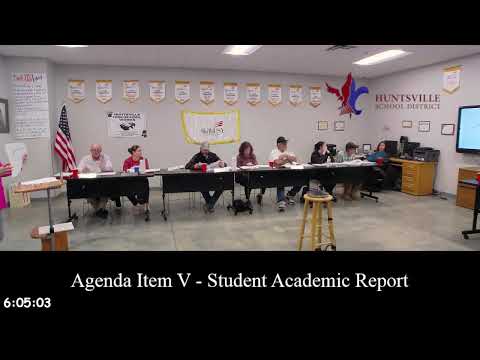
Huntsville School District administrators on Feb. 4 told the school board that state and local test results show significant gaps in performance but that in-school assessments also show measurable student growth.
Huntsville School District administrators on Feb. 4 told the school board that state and local test results show significant gaps in performance but that in-school assessments also show measurable student growth.
Administrators outlined spring 2024 ATLAS summative results and fall 2024 interim results, described a problematic early-literacy screener whose initial results overstated risk for K–2 students, and said the district is targeting a small number of low-performing standards while using classroom-level diagnostics and interim assessments to guide instruction.
The presentation matters because ATLAS summative ratings figure into school report-card grades and because district leaders said they will use targeted instruction to try to improve year-end outcomes.
Presenters told the board that the spring 2024 summative showed a high share of students at ATLAS performance levels 1 and 2 across English language arts, math and science. They said interim assessments taken in fall 2024 test standards not yet taught and therefore look worse than end-of-year summatives, but provide guidance on how much instruction remains before the summative.
Judy, an instructional administrator, told board members the district initially saw a literacy screener that labeled 91 percent of students “at risk.” "That was not true," Judy said, reporting that a follow-up assessment indicated about 52 percent of incoming third graders were at potential risk while 48 percent were considered ready. "We reduced that from 91 to 52," she said.
Judy and Taylor said the district has engaged the University of Arkansas Office for Educational Policy for help analyzing results. They described guidance from Dr. Arale of that office, including studying performance-level descriptors, aligning Lexile bands to instruction, using manipulatives and models in math, using the ATLAS classroom tool for practice, and selecting two or three low-performing standards per grade to focus instruction.
Administrators also described the local assessments they use to monitor and guide interventions: Renaissance Star Reading, Acadience Reading Fluency, and an elementary spelling inventory. Presentation slides and commentary emphasized trend-line growth: across grades the district reported that midyear measures — words correct per minute and accuracy — rose from beginning-of-year scores, which the presenters said indicates student learning driven by targeted interventions.
Taylor said the district reviews data weekly, protects core instruction time, schedules common planning for teachers and uses tiered interventions (Tier 1 core instruction, Tier 2 targeted supports, Tier 3 intensive interventions such as dyslexia services) so students are not pulled from foundational lessons. "That doesn't happen by accident," Judy said of the observed growth.
Administrators noted the intermediate school received a D on the state report card and said the data review is intended to identify concrete instructional priorities to change that trajectory.
The district plans to continue interim assessments and to concentrate instruction on the selected low-performing standards; staff said they will share slides and additional detail with the board and campuses.
Closing notes from presenters described next steps: continue weekly monitoring, align Lexile levels to ATLAS, use classroom assessment tools to familiarize students with the test platform and keep focusing Tier 2 time on the prioritized standards.