Get Full Government Meeting Transcripts, Videos, & Alerts Forever!
Get email alerts on the Water Conservation topic
No spam. Unsubscribe anytime.
Highland Council workshop backs stronger water-wise landscaping rules, more data and incentives
Summary
At a council workshop the Highland City Council directed staff to pursue standards for low-water landscaping on non‑single‑family developments, to revisit regional conservation standards, and to explore rebates, outreach and a drought response plan while rolling out smart meters and a potential aquifer recharge project.
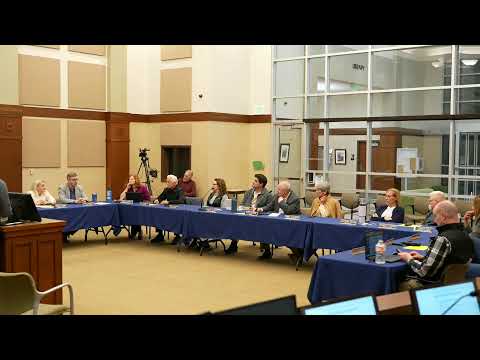
Highland City Council members and staff on Tuesday discussed updates to the city's water conservation element and gave staff direction to pursue several changes, most notably a push to require water-efficient landscaping for certain new and reconstructed developments.
The workshop centered on a staff presentation that summarized Highland's current code and recommended actions drawn from regional conservation reports and state guidance. Councilmembers signaled support for requiring low-water landscaping standards for commercial, industrial, institutional and multi-family projects and asked staff to return with draft ordinance language and a Planning Commission recommendation. Members also agreed to revisit regional standards recommended by the Central Utah Water Conservancy District and to keep residential landscaping changes under further study rather than adopting immediate mandatory rules for existing single-family yards.
City staff framed the proposals as a way to meet state conservation requirements and to reduce outdoor water use. Highland's current water use patterns presented at the workshop show more than 500 gallons per capita per day when measured in certain periods, with roughly 85% of that consumption attributed to pressurized irrigation (PI) and 15% to culinary (drinking) water. The council discussed clarifying definitions for 'xeriscape' to avoid residents interpreting the term as 'rock yards' and asked staff to include photos and plant lists (for example, LocalScapes guidance) in the general plan text to illustrate acceptable low-water landscaping.
On incentives and customer programs, councilmembers supported exploring rebate and credit options tied to conservation actions. Ideas discussed included leveraging Central Utah Water Conservancy District rebates, a Highland-sponsored incentive program, and a bill-credit or partial rebate against PI impact fees for developers or homeowners who meet specified water-wise criteria at the time of occupancy.
Staff also briefed the council on operational measures: a PI meter and secondary metering rollout, smart irrigation controllers at new parks, and plans to upgrade culinary meters. Those systems will provide consumption data the city intends to use for a rate study and targeted outreach. Councilmembers urged that smart-meter data be used to promptly notify customers of leaks and abnormal use.
The Highland Gravel Pit was identified as a candidate site for aquifer recharge being advanced by the Central Utah Water Conservancy District; councilmembers asked staff to seek credit or recognition for recharge activity within Highland and to follow up with the water district on timelines and reclamation details.
Councilmembers supported creating or formally supporting a water-conservation team to give the assistant public works director additional capacity to track goals, coordinate with irrigation companies and regional entities, and lead public education. Workshop participants also endorsed developing a drought-response or water-shortage plan and aligning water goals and metrics across the city's general plan, capital improvement plan and water conservation plan.
The workshop did not include a formal ordinance vote. Instead, the council provided direction and consensus to staff: pursue low-water landscaping standards for non-single-family development and return with draft language and a Planning Commission recommendation; revisit Central Utah Water Conservancy District standards; explore incentives, outreach and a drought-response plan; continue PI metering and smart-control deployment; and coordinate on the gravel-pit recharge opportunity.
The city will return to these issues as staff drafts ordinance language, funding proposals, rebate program details and implementation steps. Councilmembers asked staff to include illustrative photos and plant lists in the general plan and to present clear, implementable code language for future review.