Lifetime Citizen Portal Access — AI Briefings, Alerts & Unlimited Follows
Senate taxes panel hears a string of city, school and ag tax-exemption and TIF requests; two amendment votes pass
Loading...
Summary
The Minnesota Senate Taxes Committee on March 12 heard a slate of requests for sales-tax exemptions for municipal and school projects, extensions or clarifications to tax-increment financing districts, and new agricultural exemptions. Most proposals were laid over for the omnibus tax bill; two A1 amendments were adopted by voice vote.
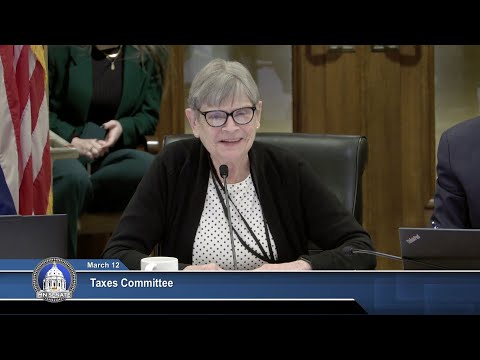
The Minnesota Senate Taxes Committee met March 12 in St. Paul to hear a series of bills seeking sales-tax exemptions for city and school construction, extensions or clarifications for local tax-increment financing districts and new agricultural exemptions for farm equipment. Most proposals were laid over for possible inclusion in the omnibus tax bill; the committee approved two proposed amendments by voice vote during the session.
The hearing opened with requests from multiple cities seeking an exemption from state sales tax on construction materials for municipal projects. Senator Kunash asked the panel to consider Senate File 1356 to exempt construction materials for the Spring Lake Park City Hall renovation, telling the committee the project addressed long-standing building deficiencies and that “the savings from that sales tax exemption would reduce the property tax burden to our taxpayers.” Dan Buchholz, the city’s administrator/clerk-treasurer, described the building’s prior heating, insulation and restroom shortcomings and said the city financed the work with a bond and expects the exemption to reduce debt-service costs.
Senator Koepcke presented Senate File 1684 for Moorhead City Hall, describing a $21.7 million reconstruction and a related downtown redevelopment that will retain the city hall as the only building not demolished as part of a larger project. Lisa Bode, Moorhead’s governmental affairs director, said the project uses a construction-manager-at-risk delivery approach and estimated taxable materials at about $10.5 million.
Several other municipal projects asked for sales-tax relief laid over for consideration, including Burnsville (Senate File 1425), Apple Valley’s central maintenance facility (Senate File 1570), and a Spring Lake Park request (Senate File 1356). Testimony emphasized that the exemptions ease local debt burdens by reducing taxable materials costs and allow local taxpayers’ dollars to go into project scope rather than state sales tax.
School districts seeking construction-material exemptions also testified. Senator Hauschild offered Senate File 1617 for Cook County Schools, which passed a $24.17 million bond referendum in November 2024 to renovate and modernize the district’s single PreK–12 facility in Grand Marais. Superintendent Chris Lindholm said the exemption would “allow the district to reinvest over $600,000 in savings directly back into their facility improvement project,” noting the building needs a secure entrance, updated HVAC, ADA work and an auxiliary gym. Senator Hauschild also carried Senate File 1638 (as amended) for the Lake Superior School District; superintendent Gina Clive described a 2021 referendum and said rising construction costs are forcing choices between value engineering and completing essential health, safety and accessibility upgrades.
On tax-increment financing matters the committee considered multiple requests to extend TIF timelines or expand TIF spending areas. Senator Kupek and Lisa Bode explained Senate File 1994 to extend the construction-eligibility window for Moorhead’s downtown center TIF district from five to ten years to accommodate staging, infrastructure installation and phased housing and commercial development across 18 acres. Senator Mann presented Senate File 1476 seeking extensions for two Edina TIF districts on France Avenue; Bill Neundorf, Edina’s economic development manager, said delays in capital markets and rising interest rates pushed the developers to seek more time to complete interconnected roadway, stormwater and plaza work. Senator Jeong described Senate File 109, a special-law expansion of a Maplewood TIF district to let increment be spent in additional, street-bounded areas.
Senators also described redevelopment-focused renewal requests: Senator Swazinski introduced Senate File 736 (with an A1 amendment adopted by voice vote) to extend Minnetonka’s renewal/renovation knockdown rules, citing transit-construction delays and large-scale redevelopment that has yielded substantial affordable housing. Senator Barr presented Senate File 1314 on Ramsey’s TIF language to clarify interfund repayment authority for past infrastructure investments.
Agriculture-related tax changes were discussed in three bills from Senator Putnam. Senate File 1541 would exempt grain bins and tractor tires from sales and use tax; Charlie Radman, a grain and soybean farmer and Dakota County Farm Bureau president, testified that grain storage gives farmers flexibility to market harvests at better prices and that replacement tractor tires are a substantial, recurring cost. Senate File 1604 would add fencing to the list of farm supplies exempt from sales tax; Pat Lieneman and representatives of cattle and farm groups said fencing costs—particularly for rotational grazing systems—are a large, ongoing expense. Several witnesses noted prior statutory and tax-court discussions about whether large tanks and bins are treated as real property or movable personal property.
The committee also heard Senate File 1712 from Senator Putnam to increase the Minnesota State Agricultural Society’s borrowing cap and to permit the state fair to retain sales tax on admissions and parking for events directly produced by the society. Renee Alexander, CEO of the Minnesota State Fair, said a growing list of capital needs, accessibility upgrades and building preservation projects require stable revenue tools; testimony noted the fair’s roughly $300 million annual statewide economic impact and that capital projects have totaled more than $150 million over the last two decades.
Votes at a glance - SF 736 (Minnetonka TIF renewal) — A1 amendment adopted (voice vote; motion by Senator Klein); bill laid over for omnibus consideration. - SF 1638 (Lake Superior Schools, as amended) — A1 amendment adopted (voice vote); bill laid over for omnibus consideration. - Nearly all other bills (listed below) were laid over for possible inclusion in the omnibus tax bill; no final enactments were recorded on March 12.
Bills laid over for omnibus consideration (representative summary) - SF 1356 — Spring Lake Park City Hall, sales-tax exemption for construction materials (testimony by Senator Kunash and Dan Buchholz). - SF 1684 — Moorhead City Hall, sales-tax exemption; estimated $21.7M total cost and $720,000 two-year exemption impact (Lisa Bode). - SF 1994 — Moorhead downtown center TIF timeline extension (Senator Kupek/Lisa Bode). - SF 1476 — Edina TIF duration extensions for two France Ave sites (Senator Mann/Bill Neundorf). - SF 109 — Maplewood TIF geographic expansion for increment spending (Senator Jeong/Mayor Mary Lee Abrams). - SF 736 — Minnetonka TIF renewal/knockdown change (Senator Swazinski/Julie Wyschock) — A1 adopted. - SF 1314 — Ramsey technical TIF language to clarify interfund repayment authority (Senator Barr/City Administrator Brian Hagen). - SF 1617 — Cook County Schools construction-materials sales-tax exemption tied to 2024 referendum (Senator Hauschild; Supt. Chris Lindholm). - SF 1570 — Apple Valley central maintenance facility materials exemption (Senator Maquay/Tom Lawell). - SF 1638 — Lake Superior School District material exemption for 2021 referendum projects (Senator Hauschild/Supt. Gina Clive) — A1 adopted. - SF 1541 — Agricultural exemption for grain bins and tractor tires (Senator Putnam/Charlie Radman). - SF 1604 — Agricultural exemption for fencing and related supplies (Senator Putnam/Bruce Cleven/Pat Lieneman). - SF 1712 — Increase borrowing limit for Minnesota State Agricultural Society and allow retention of sales tax on admissions/parking for events produced by the society (Senator Putnam/Renee Alexander).
What the committee did not decide and next steps Most items were laid over “for consideration in the omnibus bill,” meaning committee members will weigh revenue estimates and competing priorities during omnibus negotiations. Where questions surfaced—particularly for school-referendum exemptions—committee members pressed witnesses to confirm that any sales-tax savings would be spent on referendum-approved items and not to supplant voter choices made in unsuccessful referendum questions. Some members asked for clarifying language be added to legislation to ensure any exemption applies only to the projects and referendum items identified by the districts.
Why it matters If enacted, construction-materials exemptions and retained sales-tax authority for the state fair would shift costs away from local government and institutions to general state revenue (or reduce remitted tax). TIF extensions and special-law TIF expansions alter how local redevelopment is financed and the time window for public reimbursement, with implications for school districts, counties and property-tax bases. Agricultural exemptions would lower out-of-pocket costs for farmers buying certain equipment or supplies, a direct but fiscally measurable state revenue impact noted in Department of Revenue estimates presented to the committee.
The committee is scheduled to consider additional bills at a follow-up hearing. For now, the March 12 session produced broad support from municipal, school and agricultural witnesses for targeted state tax relief, while senators pressed for precise statutory language to limit exemptions to voters’ and local governments’ stated priorities.