Get Full Government Meeting Transcripts, Videos, & Alerts Forever!
Get email alerts on the Hiv Services topic
No spam. Unsubscribe anytime.
Senate File 1385 would add $9 million for HIV supportive services as advocates warn of rising diagnoses and depleted rebates
Summary
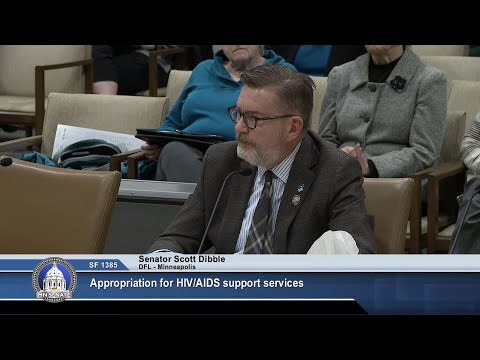
Senate File 1385, presented by Sen. Scott Dibble, would appropriate roughly $9 million to sustain HIV supportive services administered by the Department of Human Services amid rising diagnoses in Minnesota and a shortfall in AIDS Drug Assistance Program rebates, according to providers testifying before the committee.
Senate File 1385, presented to the Senate Health and Human Services Finance and Policy Committee by Senator Scott Dibble on March 12, 2025, would provide state funding to maintain supportive services for people living with HIV administered through the Department of Human Services HIV Supports Division.
Senator Dibble told the committee that while national HIV diagnoses are declining, new HIV diagnoses in Minnesota have continued to rise year‑over‑year and that the rebates that historically funded many HIV supportive services have dwindled to zero because of federal rebate program changes. He said the requested funding would cover grants administered by DHS that provide case management, housing supports, food assistance and other services that help people adhere to treatment and remain virally suppressed.
Three nonprofit witnesses testified in support: Mary McCarthy, executive director of Rural AIDS Action Network; Brian Young, housing case manager with Clear Housing and a person living with HIV; and Kat Rohn, executive director of OutFront Minnesota. McCarthy emphasized that roughly 56% of people living with HIV in Minnesota live outside the Twin Cities and that rural and Greater Minnesota providers rely on case management, transportation and other supports. She told the committee that community providers operate on tight margins and that a funding shortfall would reduce services and could erode viral suppression achievements.
Brian Young described Clear Housing’s supportive housing work and portable rental voucher program, saying the proposed $9 million — larger than the governor’s $6 million allocation — would substantially help agencies maintain services for clients in Hennepin and Ramsey counties and beyond. Kat Rohn said HIV prevention and supportive services are smart public‑health investments that reduce future costs and urged the committee to support the bill.
Committee members asked for baseline information about current funding and whether state general fund dollars currently support the program; DHS staff said much funding comes from other sources and identified changes in the AIDS Drug Assistance Program as creating the $9 million deficiency. Senator Dibble and witnesses said grant awards would continue to flow to community‑based organizations that provide housing, food, case management and related supports.
Ending: The bill was laid over for further discussion; no committee vote was taken on SF 1385 at the hearing.