Get Full Government Meeting Transcripts, Videos, & Alerts Forever!
Get email alerts on the Medicaid topic
No spam. Unsubscribe anytime.
Senate committee approves bill to stabilize Medicaid funding, add oversight and reporting requirements
Summary
The Appropriations and Revenue Committee approved House Bill 695 with a committee substitute that adds reporting requirements, moves the pharmaceutical rebate fund, limits managed-care organization renewals and requires studies on long-term services; the measure passed the committee 9-0 and goes to the Senate floor.
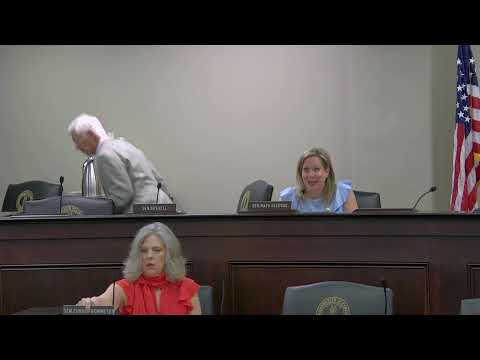
The Kentucky Senate Appropriations and Revenue Committee on Tuesday voted 9-0 to advance House Bill 695, a measure aiming to stabilize Medicaid spending and add new reporting and oversight requirements.
Representative Adam Bowling of the 87th Legislative District, the bill's sponsor in the House, told the committee the bill is intended to stabilize Medicaid spending and establish a process for long-term oversight. "About 1 out of 3 Kentuckians is on Medicaid," Bowling said. "It affects all 120 counties, every provider, every healthcare system." He said the bill's immediate aim is to "stabilize" the program while a separate measure, House Bill 9, would create a longer-term Medicaid Oversight and Advisory Board.
The committee substitute makes multiple technical and policy changes. Among them, it: - Exempts certain federally required changes to the Medicaid program; - Moves the pharmaceutical rebate fund to the Cabinet for Health and Family Services and requires those monies be expended there; - Adds an MCO (managed care organization) reporting requirement and moves development of an MCO scorecard to the cabinet; - Limits the number of MCOs eligible for renewal to three; - Establishes a 180-day window to prevent prior authorization actions from causing immediate loss of coverage; and - Directs a noncodified study on feasibility and findings for managed long-term services and supports (MLTSS) to be delivered by the end of the year.
Eric Friedlander, secretary of the Cabinet for Health and Family Services, described the cabinet's review of the committee substitute as "friendly-ish" and warned committee members about implementation risks. "There's just a little increased risk," he said, citing potential federal scrutiny of some changes and noting that only two states, Maine and Idaho, currently use an approach similar to the proposed pharmacy changes.
Steve Bechtel, chief financial officer for the Department for Medicaid Services, told the committee the proposed change to how the state treats drug rebates would shift some budgetary treatment. "By changing the drug rebate, it's gonna grow the budget," Bechtel said, explaining the change would move some offsets out of the general fund and into restricted agency funds and that administrative costs for a future rebid and for a study of managed long-term services would increase.
Representatives of the Kentucky Association of Healthcare Facilities urged caution about moving long-term care reimbursement toward a managed-care model. Adam Mather, president of the association, said long-term care comprises roughly 10 to 15 percent of total Medicaid spend and cautioned against assuming managed care could readily reduce that spending. "Anywhere you see managed care and long term care, you never see improved quality, and you never see lowered costs," Mather said.
Chairman McDaniel described the bill as part of a continuing legislative effort. "This is not a once and done thing," Senator Mays Bledsoe said during debate, urging continued collaboration. The committee adopted the committee substitute and then the bill by roll call. The committee recorded nine aye votes and no nays; the measure advances to the Senate floor.
Votes at the committee on House Bill 695 were taken by roll call; the committee recorded nine votes in favor and no votes against. The committee did not adopt any title amendment for this measure.
The bill contains multiple reporting and implementation deadlines; specific fiscal impacts and resulting changes to the 2026 budget will depend on further specification and how the cabinet implements the rebate and reporting changes.