Get Full Government Meeting Transcripts, Videos, & Alerts Forever!
Get email alerts on the Hemp Beverages Sb202 topic
No spam. Unsubscribe anytime.
Committee advances bill to treat hemp beverages as intoxicating at 5 mg per serving; hemp industry warns of economic harm
Summary
The Committee on Licensing, Occupations and Administrative Regulations voted to advance Senate Bill 202 after extended testimony from industry representatives, retailers and consumers about economic and public‑health consequences.
The Committee on Licensing, Occupations and Administrative Regulations voted to advance Senate Bill 202 after extended testimony from hemp industry representatives, retailers and consumers about the bill’s potential economic and public‑health effects.
Sponsor description Sen. Julie Rocky Adams, sponsor of SB202, said the bill aims to impose “reasonable common sense public‑health guardrails” around an “explosion” of cannabis‑infused beverages being sold in convenience stores, vape shops and other outlets. Adams said the bill defines a cannabis‑infused beverage at a threshold of 5 milligrams per 12‑ounce serving and places enforcement of retail sales under Alcoholic Beverage Control. She said manufacturing and testing requirements under the Cabinet for Health and Family Services (CHFS) would remain in effect and the University of Kentucky would report to the General Assembly by Nov. 1 on manufacturing, testing, distribution, sales and consumer effects.
Industry, retailer and consumer testimony Multiple witnesses representing the hemp industry and hemp retailers urged the committee to reject or amend the bill, saying it would harm small businesses and consumers who use higher‑dose products for medical or wellness reasons.
- Didi Taylor, president of the Kentucky Hemp Association, and other industry witnesses said some products marketed as beverages contain multiple servings and a resealable top; they urged the committee to consider dosing context and retailer knowledge. - Jim Higdon, co‑founder of Cornbread Hemp, asked the committee to reconsider a broad ban on on‑premise sales and the 5‑milligram cap. He said the industry has been working with CHFS on regulations and worried transferring enforcement to ABC would “remove all that work.” - Annie Rouse, representing Cannabuzz Barn Dispensary, said SB202 would “wipe out two thirds” of her business and argued the bill was rushed. “If SB202 passes, particularly as an emergency, 1,300 registered retailers by the cabinet of health will not be able to sell these products,” Rouse said in testimony. - Nancy Roberts, testifying as a consumer and retail business owner, said the bill would force some customers with alcohol‑related issues to buy hemp beverages in liquor stores, which she said could increase relapse risk. “Hemp beverages should be readily available at hemp retailers, and the retailers shouldn’t be forced to get a liquor license to sell these products,” she said.
Key bill provisions (as described in committee) - Defines a cannabis‑infused beverage at a 5 milligram threshold per 12‑ounce serving. Sponsor said the 5 mg figure was chosen based on studies and as a starting point for regulation. - Moves enforcement of retail sales of defined intoxicating hemp beverages to the Alcoholic Beverage Control (ABC) agency; CHFS regulations for manufacturing and testing would remain in place. - Allows wholesalers, distributors and retailers until June 1 to exhaust inventory exceeding the new per‑serving limit. - Carves out festivals and fairs from the restrictions until Jan. 1, 2026, to avoid immediate disruption of seasonal sales. - Permits stores to seek an alcohol license to continue retailing these beverages if they so choose. - Requires the University of Kentucky to report to the General Assembly by Nov. 1 on manufacturing, testing, distribution, sales and consumer effects.
Economic and regulatory disagreements Industry witnesses provided differing estimates of the sector’s size and raised legal concerns. Witnesses told the committee the hemp sector supports jobs and investments in Kentucky; industry testimony included figures on jobs and revenues, and at least one witness warned the state could face legal challenges over federal law if the measure overly restricts hemp products.
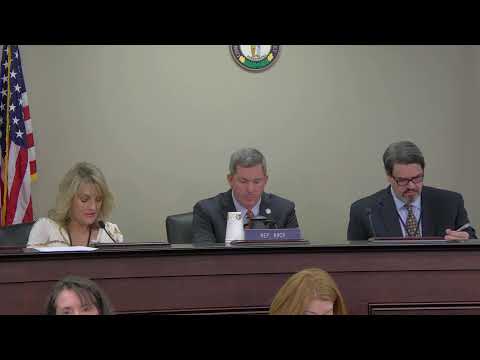
Committee debate and outcome Committee members expressed concerns about parity with the alcohol industry, consumer safety, enforcement capacity and impacts on small businesses. Some members said the bill improved during committee work; others said more time was needed. After discussion and explanation votes, the committee approved a committee substitute and voted to advance SB202 to the floor. The clerk recorded the roll call; the committee reported the result as 16 ayes, 2 nays and 2 passes, and the bill carries to the House floor.
Votes and positions (selected) - Nays (recorded during roll call explanations): Representative Deeds, Representative Gentry (both stated they were voting no as written and asked for further work before final passage). - Passes: Representative Ault and Representative Kulkarni recorded “pass” during the roll call. - The roll call recorded 16 ayes, 2 nays and 2 passes; the committee advanced the bill.
Why this matters Sponsor supporters described the bill as an initial regulatory step to curb youth and public‑safety risks posed by widely available high‑dose hemp beverages. Industry witnesses argued that limiting sales to liquor outlets and a 5 mg per‑serving cap would disrupt existing businesses, erode investments and hinder consumer access to products some call therapeutic.
Quotes "We need strong policy. That's the solution that Kentucky's been looking for and the one that it needs," Griffin Nemeth said earlier in the hearing during related testimony on youth nicotine access. "Hemp beverages should be readily available at hemp retailers, and the retailers shouldn't be forced to get a liquor license to sell these products," Nancy Roberts said.
Taper The bill now moves to the full House for consideration, where sponsors and opponents said they expect further debate and possible floor amendments.