Get Full Government Meeting Transcripts, Videos, & Alerts Forever!
Get email alerts on the Child Online Exploitation topic
No spam. Unsubscribe anytime.
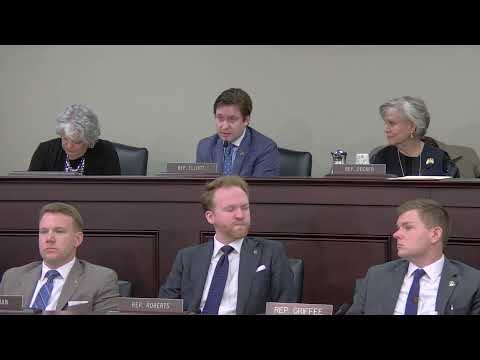
House Judiciary Committee expands administrative subpoenas to social networks, cloud and payment platforms in child-exploitation probe
Summary
The House Judiciary Committee voted unanimously to allow the attorney general and Kentucky State Police to issue administrative subpoenas to social networking, mobile payment and cloud-storage services in investigations of online child exploitation, expanding an existing statutory tool.
The House Standing Committee on the Judiciary voted to advance Senate Bill 169 on a unanimous voice vote, extending the types of online platforms subject to administrative subpoenas in investigations of child exploitation.
Senator Danny Carroll, sponsor and state senator for Kentucky’s Second District, told the committee the change updates existing law to reflect where child exploitation has migrated online. "A lot has changed since 2009 in the world of technology, and this bill will allow the attorney general's office and KSP to stay more up to date of ways that child predators are contacting children online," Carroll said.
The bill would add social networking companies, mobile payment services and cloud storage services to the list of providers that the attorney general's office and the Kentucky State Police (KSP) may compel to produce account-holder information under an administrative subpoena when there is reasonable cause to believe an Internet service provider was used in the exploitation or attempted exploitation of children. Will Schroeder, senior counsel for the attorney general, and Matt Hedden, special unit director for the attorney general's office, described the tool as analogous to a license-plate check for online accounts: it yields account-holder identifiers rather than content.
Hedden described common investigative needs: "In many cases, a suspect may operate across different services, sending explicit messages on social media, storing compromising material in cloud storage, and receiving payments for more material via online platforms. Adding these to KRS 501.120 will allow law enforcement to gather a comprehensive set of data from multiple services, helping them to build a clear picture of the suspects activities and connections," he said.
Committee members and presenters emphasized that the statutory subpoena authority is limited to statewide agencies: the attorney general's office and Kentucky State Police. Senator Carroll said the committee did not seek to extend the administrative subpoena to local law-enforcement agencies, noting that local officers can obtain subpoenas through a prosecutor's office in their jurisdictions.
The bill specifies the types of account-holder information that can be sought, including electronic mail addresses, Internet usernames, IP addresses, account-holder names, billing or service addresses, and telephone numbers. The committee record shows there was no extended debate after the sponsor's presentation and the clerk later announced the bill passed with all votes in favor.
Votes at a glance: the committee reported 17 yes votes, 0 no votes. The committee's roll call and the clerk's announcement recorded the favorable expression for Senate Bill 169.
The bill now moves on in the legislative process for further consideration by the full House. The committee record does not show floor amendments or a change to the statutory text beyond the platform-type expansion described in committee.