Get Full Government Meeting Transcripts, Videos, & Alerts Forever!
Get email alerts on the Tobacco Retail Licensure topic
No spam. Unsubscribe anytime.
Committee advances tobacco retail-licensing changes, shifts enforcement to ABC and raises license fee
Summary
Sen. Jimmy Higdon’s proposal to expand tobacco retail licensing and tighten enforcement advanced out of the Committee on Licensing, Occupations and Administrative Regulations after supporters and youth advocates testified in favor.
Sen. Jimmy Higdon’s proposal to expand tobacco retail licensing and tighten enforcement advanced out of the Committee on Licensing, Occupations and Administrative Regulations after supporters and youth advocates testified in favor.
Sen. Jimmy Higdon, sponsor of the measure, told the committee the bill targets “bad actors” in retail sales while preserving lawful businesses. “This bill has teeth that ABC can enforce and get rid of bad actors,” Higdon said, adding the measure updates provisions from last year’s House Bill 11 and includes new restrictions on nitrous oxide sales and other products.
Youth advocates told the committee the change is needed to curb rising e-cigarette use among minors. “In Kentucky, 1 in 10 middle school students and 1 in 5 high school students use e‑cigarettes,” Mallory Jones said. Jones, a high school senior and self-described youth advocate and heart survivor, said flavored products and marketing are driving use among younger children. “It’s time for us to put Kentucky kids ahead of tobacco,” she said. Griffin Nemeth, youth advisory board coordinator at the University of Kentucky, urged retailer licensing, annual compliance checks and escalating penalties, saying those policies reduce youth access without harming legitimate businesses.
Sponsor summary and key provisions - The bill incorporates updates to House Bill 11 from the prior year and places cigarettes and vaping products under ABC enforcement for retail sales. Higdon said the measure would make tobacco and vaping retail rules more analogous to alcohol regulation. - The bill increases a cited retail license fee from $2.50 to $500, according to remarks from the sponsor. - The sponsor said parts of the bill tied to House Bill 11 would take effect immediately under an emergency clause; provisions addressed as Senate Bill 100 would take effect Jan. 1, 2026. - The measure also includes language addressing nitrous oxide ("laughing gas") sales and a statutory framework for enforcement and penalties, as described by the sponsor.
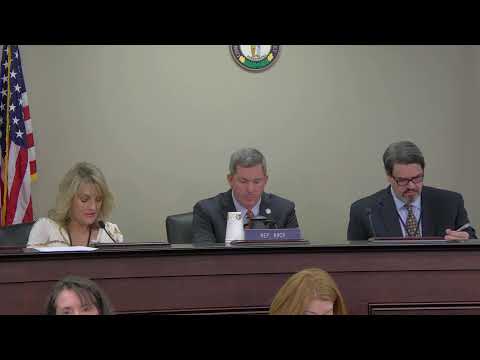
Committee action and next steps The committee approved a committee substitute and then voted to advance the bill to the full House; the clerk called the roll and members registered their votes. Chair statements at the end of the roll call indicated the committee would send the measure to the floor for further consideration.
Why this matters Supporters said retailer licensing is a proven tool to reduce illegal sales to minors and curtail youth nicotine initiation. Youth testimony emphasized the public-health stakes: several witnesses cited high rates of youth vaping and described retail targeting as contributing to nicotine dependence.
What committee opponents said Committee discussion included questions about enforcement, costs and impacts on small retailers. The sponsor and youth witnesses repeatedly emphasized the bill’s objective of targeting illegal sellers rather than licensed, law-abiding businesses.
Quotes "This bill has teeth that ABC can enforce and get rid of bad actors," Sen. Jimmy Higdon said. "It’s time for us to put Kentucky kids ahead of tobacco," Mallory Jones said. "Powerful policy with retailer licensing, annual compliance checks, and strong escalating penalties for violations is a proven measure to reduce youth access and curb youth use," Griffin Nemeth said.
Taper The committee advanced the measure to the House; additional amendment and debate are expected on the floor and in subsequent committees. The sponsor said parts of the bill would become effective immediately and other sections on Jan. 1, 2026, if enacted.