Get Full Government Meeting Transcripts, Videos, & Alerts Forever!
Get email alerts on the Pesticide Labeling topic
No spam. Unsubscribe anytime.
Committee approves SB 144 to clarify pesticide labeling liability; supporters and public-health critics spar in hearing
Summary
SB 144, which the committee voted to approve, would clarify that manufacturers need not be held liable for failing to warn of risks that the U.S. Environmental Protection Agency has not required on a product label; the bill drew support from agribusiness groups and opposition from public-health and consumer advocates.
The House Committee on Agriculture & Consumer Affairs voted to approve Senate Bill 144 after a lengthy hearing that featured testimony from farmers, agribusiness organizations and public-health advocates.
Sponsor Sen. Watson told the committee the bill "clarifies that the manufacturer cannot be held liable for failing to warn consumers of health risk above those required by the United States Environmental Protection Agency." He described the federal label-review process as rigorous, saying it can take roughly 10to15 years and substantial resources for a manufacturer to obtain label approval.
Supporters at the hearing, including the Georgia Agribusiness Council, Georgia Farm Bureau and the Georgia Urban Ag Council, said the bill preserves access to EPA-registered crop-protection tools farmers use to manage pests and weeds. Will Bentley of the Agribusiness Council said the bill "does not change anything that would already be illegal" and that drift and other illegal uses that cause harm would remain actionable.
Opponents including a pharmacist, beekeepers and public-health advocates warned the bill could make it harder for consumers and workers to seek remedies if later research finds harms. Laurie Altman, a pharmacist testifying against the bill, said the measure "gives them immunity if they misbrand, misrepresent, mislabel, and produce products that are toxic," and urged caution. Several witnesses cited glyphosate and other products as examples of controversy and asked the committee to preserve liability paths.
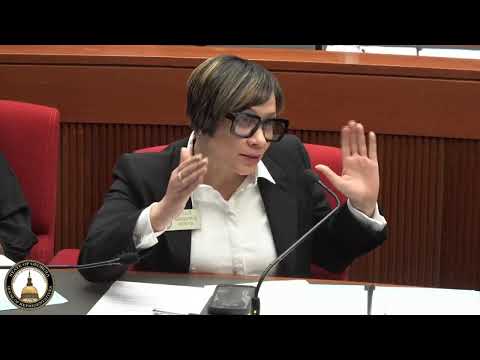
Committee members asked detailed legal and practical questions. Representative Carter pressed whether the bill would strip liability when a product is harmful; sponsor Watson and other Republican members said the bill does not protect manufacturers who knowingly conceal or misrepresent risks and that federal law (FIFRA) and other common-law claims remain available.
Representative Tyler Paul Smith moved that the committee report the bill favorably; a second was heard and the committee approved the measure (voice vote with one member recorded in opposition). The sponsor said the language will remain available as the bill advances and that federal preemption and the EPAs regulatory role guided the drafting.
The hearing included several technical claims: witnesses and the sponsor cited the EPAs intensive label-review process (presenter said roughly 13 years, 500 scientists and about $13 million of research were involved in some registration processes) and testimony from a university specialist that hand-weeding certain vegetable crops could raise production costs by roughly $4,000 per acre if crop-protection chemicals were not available. Supporters said the bill is intended to keep U.S. manufacturers competitive and to avoid manufacturers withdrawing products from the market due to litigation risk; opponents said it could reduce remedies for harmed consumers and workers.
The committee vote forwards SB 144; the bill will proceed to the next step in the legislative process.