Get Full Government Meeting Transcripts, Videos, & Alerts Forever!
Get email alerts on the Historic Preservation topic
No spam. Unsubscribe anytime.
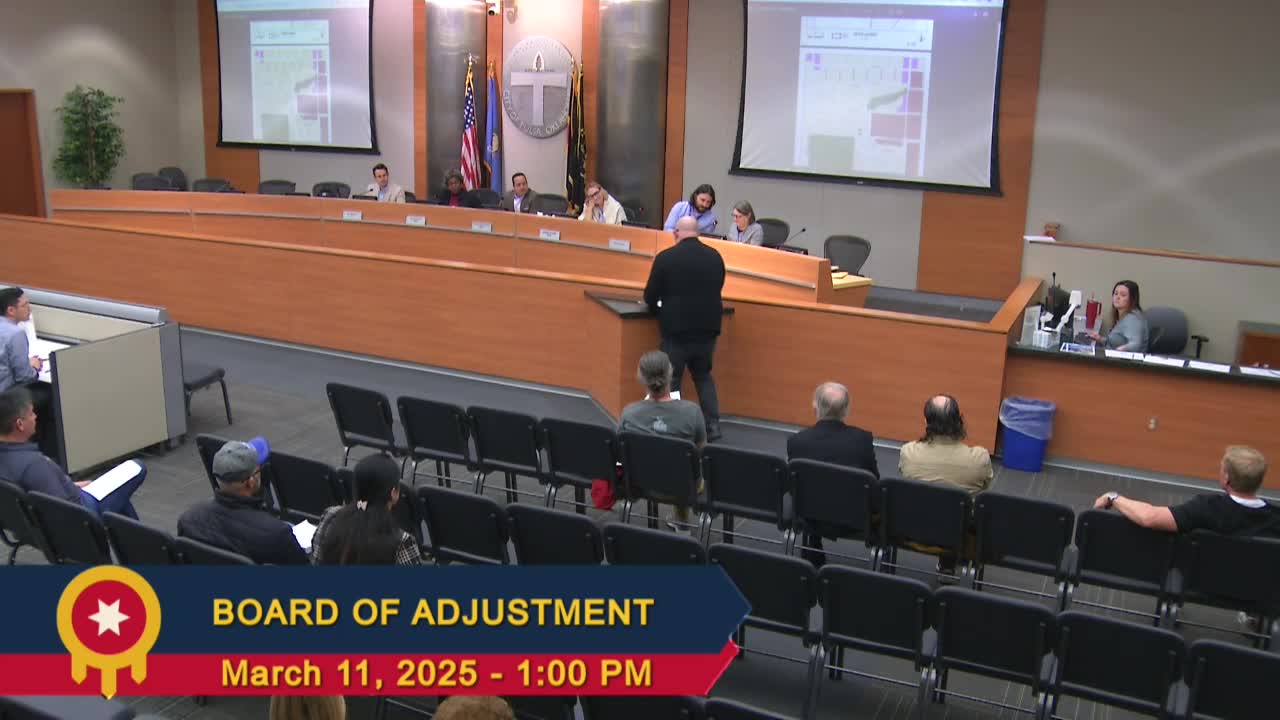
Board of Adjustment upholds Tulsa Preservation Commission denial of front-yard parking pad but allows applicant time to revise
Summary
The Board of Adjustment voted not to overturn the Tulsa Preservation Commission's denial of a retroactive historic-permit for a front-yard parking pad at 1519 East 20th Street; related zoning relief was continued so the applicant can revise plans with the commission.
The Tulsa Board of Adjustment declined to reverse a decision by the Tulsa Preservation Commission (TPC) to deny a retroactive historic-preservation permit for a front-yard parking pad at 1519 East 20th Street in the Swan Lake historic district, saying the preservation commission's application of the district's design guidelines merited a presumption of correctness. The board's motion to overturn the TPC denial failed on a split vote; two members voted in favor of reversal, one voted against and one abstained, leaving the TPC denial in place.
Why it mattered: The property owner, Brent Wilkes, told the board the parking pad is a public-safety and functional necessity; his attorney and counsel argued the existing yard configuration and a 6-foot retaining wall create a dangerous blind spot that forces residents to reverse onto a busy four-lane arterial. The Tulsa Preservation Commission chair, Shane Hood, told the board the commission's mandate is to apply the adopted unified residential design guidelines for historic preservation districts — including provisions that strongly discourage front-yard parking pads — and that the work in question did not comply with those guidelines.
What the preservation commission said: Shane Hood, chair of the Tulsa Preservation Commission, told the Board of Adjustment that the commission's review of the 1519 East 20th Street application focused on the adopted unified residential design guidelines and specifically cited provisions under "g0.2" that discourage additional front-yard paving and require new paving to respect the historic pattern of the street and neighborhood. Hood said the commission determined the unpermitted parking pad introduced a large expanse of hardscape in the street-facing yard of a 1920s Tudor-style home and permanently altered the property's historic setting. He said the TPC had no authority under its guidelines to approve the work as-built and therefore voted to deny the HP permit application.
What the applicant argued: Homeowner Brent Wilkes and representative James (Jim) Farris argued the parking pad is necessary for safe access and that the city's measurement of the paved area's width had been misapplied. Wilkes told the board the area used for maneuvering is effectively an 11-foot driving surface and not the nearly 30-foot width staff used to measure the full paved expanse; he said the retaining wall and heavy grade near the sidewalk make the turnaround necessary to avoid repeatedly reversing onto a busy arterial. Farris cited the preservation guidelines'standard that the commission must "to the greatest extent possible, strive to effect a fair balance between the purpose and intent of the HP district regulations and the desires and needs of the property owner." The applicant asked the board to find the preservation commission erred.
Board action and next steps: Board members debated whether the preservation commission had erred or whether the commission had simply applied its clearly written guidelines. A motion to reverse the TPC denial was made and seconded; voting on that motion produced 2 votes in favor of reversal, 1 vote against and 1 abstention, which meant the motion failed and the TPC decision was affirmed. After that vote, the applicant asked the board to continue consideration of the related special-exception and variance requests (which would concern driveway width and other zoning relief) so the applicant could return to the TPC with revised drawings. The board granted a continuance: the applicant will pursue revisions with the preservation commission and return to the board on April 8 if the applicant meets the TPC deadlines.
What this means for the property owner: - The as-built parking pad remains denied by the Tulsa Preservation Commission; the owner may revise the design and seek a new HP permit, or pursue other appeals (including judicial review in district court). The board noted that an approval from the TPC would not automatically cure a separate zoning code violation; similarly, a zoning relief decision would need to align with HP approval if both are required. - Staff advised the owner that measurements for driveway width in this kind of front-yard parking configuration include the full paved extent, which is why staff measured the pad as wider than the owner's driving-surface estimate. The board encouraged a cooperative design process before more work is performed and accepted the applicant's request for a continuance to gather revised exhibits and to return at the April meeting.
Quotes from the hearing (verbatim): - "Our mandate is limited to determining whether a proposal conforms to the adopted unified residential design guidelines for historic preservation districts." ' Shane Hood, chair of the Tulsa Preservation Commission. - "There is a retaining wall that causes a blind spot for my wife and children that would definitely not have a safe area to leave without this L extension parking pad... I require it so that they're not forced to back up from a 40 foot alley..." ' Brent Wilkes, homeowner. - "In its review of HP permit applications, the preservation commission must use the adopted design guidelines to evaluate the proposed work and must, to the greatest extent possible, strive to effect a fair balance between the purpose and intent of the HP district regulations and the desires and needs of the property owner." ' James Farris, counsel for applicant (reading the code language in packet).
Procedural note: The board recorded the failed motion to overturn the TPC denial and then voted to continue the applicant's special-exception and variance requests for consideration at the April 8 board meeting, to allow time for the applicant to submit revised material to the Tulsa Preservation Commission and to this board.