Get Full Government Meeting Transcripts, Videos, & Alerts Forever!
Get email alerts on the Homelessness Chesh Program topic
No spam. Unsubscribe anytime.
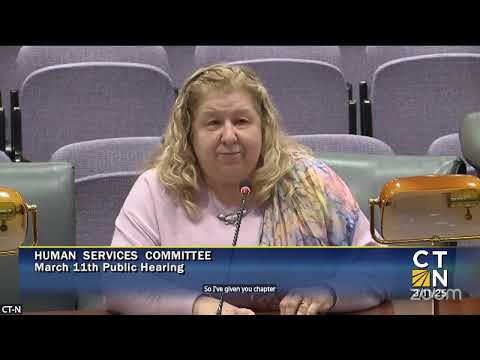
DSS and providers debate future of CHEST homelessness program; lawmakers pressed to avoid abrupt sunsetting
Summary
Department of Social Services told the Human Services Committee on March 11 that the CHEST homelessness program is not viable in its current construction because of a shortage of providers and lack of housing vouchers; the department recommended sunsetting the current approach and moving voucher recipients to other supports but lawmakers and providers urged a redesign rather than abrupt closure.
The Department of Social Services told the Human Services Committee on March 11 that Connecticut's federally-authorized CHEST homelessness program is operating under severe capacity constraints, and commissioners urged the legislature to consider a phased redesign rather than immediate expansion. Some lawmakers and provider representatives pushed back, urging broader coordination before sunsetting the program.
Commissioner Andrea Barton Reeves said a multi-agency study concluded there are not enough providers to administer CHEST services at scale and that there are no available housing vouchers for the wait list. "There aren't adequate providers to administer the program," Reeves said, adding that the interagency recommendation was to sunset the CHEST program in its current form and move people who already hold vouchers to support under the Department of Mental Health and Addiction Services (DMHAS). Reeves told the committee the federal 1915(i) waiver structure used by CHEST restricts targeted catchment areas and that Medicaid cannot, as currently drafted, support a narrowly targeted housing catchment without a waiver amendment.
Lawmakers from both parties expressed concern about removing the option entirely, given rising homelessness across the state. Representative Gilchrist and Senator Lesser pressed DSS officials on whether the state had tried other approaches used in other states, including making programmatic corrections or using other waivers to support housing case management. DSS officials and their Medicaid director said the CHEST study was limited to Connecticut operations but noted other states use varied strategies and partners; they said some states benefit from stronger voucher programs or different public-private partnerships.
Provider and advocacy testimony reflected the split: some shelter and homelessness providers urged continued support for CHEST, saying the program showed early promise and reduced health care utilization for participants, while others acknowledged it required redesign and better voucher alignment. Several speakers suggested moving the program into a structure that coordinates housing issuance with existing supportive housing and DMHAS programs rather than an outright sunset.
Why it matters: CHEST sits at the intersection of Medicaid, housing vouchers and homelessness supports. Policy choices about its future affect how the state can deploy Medicaid financing for supportive housing and whether federal matching funds can be leveraged to address homelessness in a cost-effective way.
Next steps: Lawmakers pressed DSS to convene more stakeholders, and several chairs signaled interest in more joint discussions with the Department of Housing and DMHAS and in exploring program alternatives before any final sunset action.