Get Full Government Meeting Transcripts, Videos, & Alerts Forever!
Get email alerts on the Pelsb Reform topic
No spam. Unsubscribe anytime.
House committee adopts technical PELSB changes, moves grants to MDE and lays bill over for omnibus inclusion
Summary
House File 1418, a broad bill to refine Professional Educator Licensing and Standards Board operations, moved forward after testimony from PELSB and education stakeholders. The DW3 amendment was adopted. The bill transfers multiple grant programs and paraprofessional credential duties to the Minnesota Department of Education, provides one-time IT
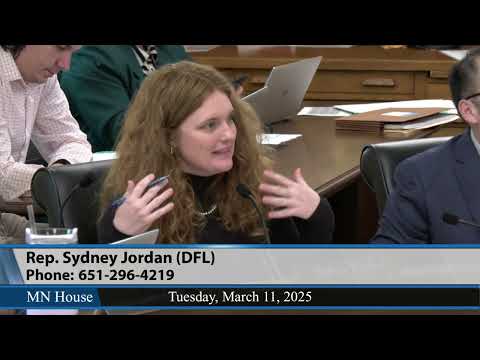
The Minnesota House Education Policy Committee on March 11 adopted a DE3 author's amendment to House File 1418 and laid the bill over for possible inclusion in an omnibus package or later consideration. The bill would make operational changes to the Professional Educator Licensing and Standards Board (PELSB), transfer certain grant programs to the Minnesota Department of Education (MDE), and provide modest operational funding for continued work on alternative licensure pathways.
Representative Hill, the author, said the bill supports PELSB’s operations and helps the agency process and issue teaching licenses more efficiently. PELSB Executive Director Dr. Elena Bailey told the committee that PELSB issues tens of thousands of licenses annually, licenses approximately 10,000 teachers statewide, accredits 38 teacher-preparation providers that operate nearly 700 programs, and administered about $17 million in grants last year. "This bill supports vital operations for PELSB including our ability to process and issue teaching licenses in a timely manner," Bailey said.
Key provisions in the DE3 amendment and the bill as presented would:
• Transfer several grant programs — including the collaborative urban and greater Minnesota educators of color grant and teacher mentorship/retention grants — from PELSB to MDE's educator-workforce division, along with their appropriations and allowed administrative funds.
• Move voluntary paraprofessional credentialing to MDE to align oversight of non-licensed staff with the department that manages other district staff responsibilities.
• Shift some administrative duties and appropriations to the Board of School Administrators to align with an existing 2018 policy change that moved administrator licensing duties.
• Increase operational funds for PELSB to support licensure via portfolio review (an alternative pathway), heritage-language educator pathways, online portfolio platforms and related staff salaries.
Several educators and district staff testified in support. Deqa Muhedin, district program facilitator for Minneapolis Public Schools, urged continued funding for heritage-language pathways and described program benefits for students and families. Dr. Matthew Rigg of Education Minnesota said the bill "is not controversial" and supported PELSB’s capacity to process licenses, review portfolios, and support portfolio cohorts and heritage-language pathways.
Remote witnesses described personal experiences using the licensure-via-portfolio pathway. Naomi Hughes, a Rochester library media specialist, said the portfolio program saved her thousands of dollars and enabled her to be licensed while working. Another remote witness, Juliana Lillehei, said she spent more than 100 hours compiling a rigorous portfolio while teaching abroad and that the pathway allowed her to obtain licensure without an unpaid student-teaching requirement.
Committee members asked technical and fiscal questions. Dr. Bailey said grant administrative percentages remain in statute and that the staff member who administered grants at PELSB would move with the grant duties to MDE so there would be no net loss of staff funded by the grants. Bailey also said licensure via portfolio has grown; PELSB issues roughly 90–95 licenses per year through the experience pathway and reported increased portfolio activity in the current fiscal year.
The committee adopted the DE3 amendment and the chair laid House File 1418 over for possible inclusion in an omnibus bill or further consideration at a later date.