Get Full Government Meeting Transcripts, Videos, & Alerts Forever!
Get email alerts on the Personnel Data Sharing topic
No spam. Unsubscribe anytime.
Minn. education committee advances bill to let school HRs share personnel files after interview; privacy group urges 'no'
Summary
The Minnesota House Education Policy Committee on March 11 voted to refer House File 914 to the Judiciary Finance and Civil Law Committee. The bill would allow school human resources offices to share a departing employee's personnel file with another school's HR after the receiving employer has decided to interview the candidate and the candidate has been notified.
The Minnesota House Education Policy Committee on March 11 voted to refer House File 914 to the Judiciary Finance and Civil Law Committee after a presentation from Rep. Quam and public testimony opposed by Education Minnesota.
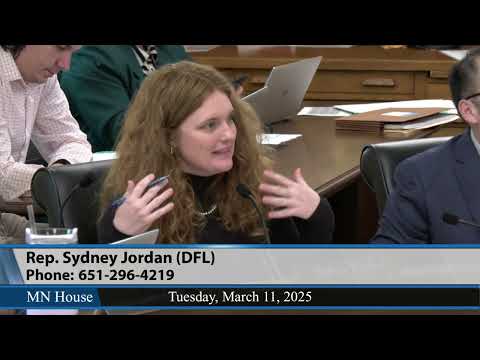
Rep. Quam, who authored the bill, told the committee the measure is a response to a recent Minnesota Supreme Court ruling that exposed gaps in how schools discover previous allegations against prospective hires. "This would say after you've decided to interview a person, your HR department can talk to the HR department that the person had worked at or was working at and share that file and the person would be notified," Quam said, adding that the proposal is intended to protect students from "bad actors who have jumped multiple schools."
The bill would, as presented, permit one school HR office to share a departing employee's personnel file with another school’s HR only after the receiving employer has decided to interview the candidate and the candidate has been notified that information will be shared. Quam said the exchange would remain under the same privacy protections that govern personnel data currently: "Both HR departments have the same constraints on public and non public data," she said.
Education Minnesota attorney Deb Corhose told the committee she represents roughly 85,000 school professionals and urged lawmakers to reject the bill. Corhose said personnel files contain private information such as medical leaves, ADA accommodation details, evaluations and resolved-but-false allegations. "An employee's personnel file contains details about medical leaves... ADA accommodations for disabilities... and the specifics of complaints they may have filed against someone else," she said, arguing that broad access could lead to biased and unlawful hiring decisions. She noted that employers can already request additional private information by asking a candidate to sign a release.
Other members of the committee asked whether the bill would let employers access the entire personnel file or only specific items relevant to misconduct. Rep. Quam said she is open to narrowing the scope by amendment but emphasized the bill's intent: "I basically wanna protect the students." She told members she would work with the Judiciary Finance and Civil Law Committee on language that would limit what is shared.
Committee discussion also touched on existing licensing and investigative processes. Nonpartisan staff and representatives noted that PELSB (the Professional Educator Licensing and Standards Board) investigates complaints filed against educators and that license suspensions and revocations are publicly available. A PELSB representative told the committee that the board investigates complaints and can suspend or revoke licenses and that some of that information is public.
The committee recorded no roll-call vote listing member-by-member tallies in the transcript. Chair Bennett moved to refer the bill and the motion "prevailed;" the committee therefore re-referred House File 914 to the Judiciary Finance and Civil Law Committee for further work.
The bill's author and opponents agreed during discussion that more-limited language could be drafted; Quam told the committee she supported sending the bill on so the judiciary committee could "go over the fine tooth comb" of potential amendments.
Looking ahead, the Judiciary Finance and Civil Law Committee will consider the measure with an expectation that language clarifying which categories of personnel data may be shared — and how candidates are notified — would be part of subsequent amendment work.