Get Full Government Meeting Transcripts, Videos, & Alerts Forever!
Get email alerts on the Government Ethics topic
No spam. Unsubscribe anytime.
Council adopts ordinance codifying permissible uses of sheriff—s jail commissary fund
Summary
The council unanimously waived second reading and adopted ordinance C006-25-010 to establish approved uses of Vanderburgh County Jail commissary funds following guidance from the Indiana Sheriffs' Association and increased state oversight of commissary expenditures.
Vanderburgh County Council unanimously adopted ordinance C006-25-010, which codifies permissible uses of the county jail commissary fund.
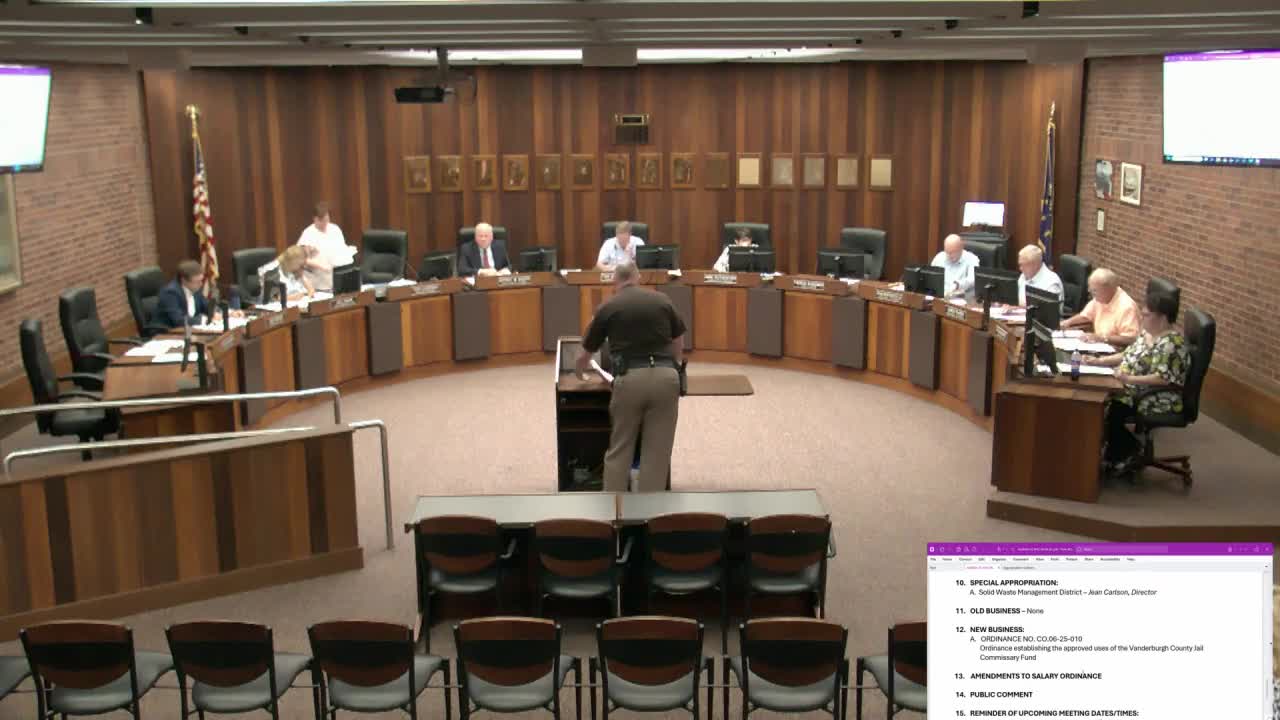
Sheriff Noah Robinson explained the ordinance arose from guidance by the Indiana Sheriffs' Association and increased scrutiny from the State Board of Accounts. "This would essentially establish an ordinance, codifying what permissible uses of the sheriff's commissary fund are," Robinson said.
The council first voted unanimously to waive the second reading so the ordinance could be adopted at the same meeting; roll call for that procedural motion recorded six ayes and no nays. A separate roll-call vote then approved the ordinance on final reading; council members Kiefer, Hahn, Bassmeyer, Raven, Montrastell and President Schettler all voted yes.
Why this matters: County officials said the ordinance provides "guardrails" for current and future sheriffs and clarifies the council's expectations about what commissary funds may and may not be spent on. The measure was described by one council member as a response to high-profile incidents in other counties and to the State Board of Accounts' heightened attention to commissary expenditures.
Ending: The ordinance is now adopted; the sheriff and council said future commissary expenditures will follow the ordinance and be subject to the council—s appropriation and reporting processes.