Get Full Government Meeting Transcripts, Videos, & Alerts Forever!
Get email alerts on the Procurement Purchasing Ordinance topic
No spam. Unsubscribe anytime.
Pensacola council workshop considers raising purchasing thresholds to speed repairs, staff to draft ordinance
Summary
City officials discussed updating a purchasing ordinance last revised in 2006, including raising the three-quote threshold from $2,500 to $10,000 and debating increasing mayoral purchase authority from $25,000 to between $50,000 and $75,000; no vote was taken and staff was asked to draft proposed ordinance language.
City officials at a special Pensacola City Council workshop discussed proposals to update the city's purchasing ordinance, which the city administrator said has not been materially revised since 2006. The discussion centered on raising thresholds for informal procurements and clarifying definitions for commodities, services and public works so routine repairs and purchases can be completed more quickly.
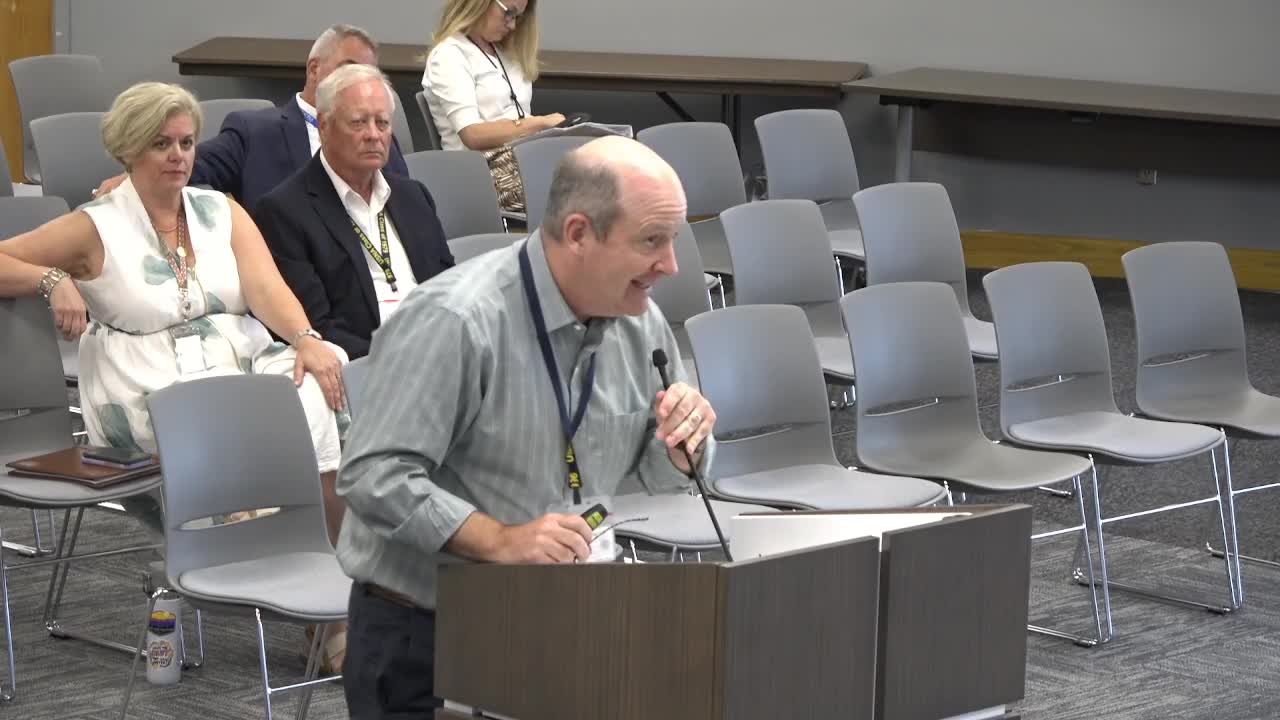
City Administrator Don Kinsella opened the discussion: "We are here today to talk to to workshop updating our city's pertinent, purchasing ordinance and policies." He told council members the current ordinance includes a $25,000 threshold set in 2006 and several internal policies that require three quotes for purchases above $2,500, rules he said are now creating delays for routine work.
Kinsella gave examples and timing data to explain the problem. He said, "$25,000 in 2006 is almost $40,000 in today's money," and described procurement timelines that under the city's current system can take months: "in a perfect world scenario, when we do an RFP, it takes us 132 days from, from post RFP all the way to awarding it" and that bids take about "78 days." He said those delays mean the city spends disproportionate staff time on low-dollar purchases, and that "40% of our purchase orders are under $10,000" while most dollars flow to larger purchases.
Proposed changes presented by staff include: adding statutory-based definitions for services and public works improvements; raising the three-quote threshold from $2,500 to $10,000; and increasing the mayoral or administrative purchase threshold (staff suggested $100,000 as an initial option but said they would work with council). Kinsella emphasized the intent was to "unburden the system so we can provide more agility and better efficiency for our citizens," and recommended revisiting the ordinance on a fixed schedule, suggesting every four years.
Council members generally supported raising low-dollar thresholds and debated the appropriate upper limit for administrative authority. Several council members said $10,000 for the three-quote rule "makes sense," and Council member Jones said raising thresholds would help explain to constituents why repairs that appear simple take so long. Several council members favored moving the mayoral threshold to $50,000 or $75,000 rather than immediately adopting a larger figure. Council member Bayer said she "tend[s] to lean more towards 75," while others described 50 as an "easy sell." One council member cautioned about giving too much unilateral authority to an individual mayor across changing administrations.
Members also raised accountability and anti‑circumvention concerns. Council President and others asked how the city would prevent departments from splitting projects into smaller parts to avoid solicitation thresholds. Kinsella and other staff acknowledged the risk and urged drafting ordinance language and internal controls to reduce the incentive to "chop" projects. Council members asked for oversight measures: one proposal from staff was to provide a monthly or regular report listing payments under the raised threshold so council could monitor recurring vendors and patterns of spending.
During the workshop staff identified state statutory limits that would remain controlling in some areas: continuing architectural and engineering task orders can be used only when the construction value is under $7,500,000, and certain planning studies over $35,000 must be procured through formal solicitation. Kinsella said the proposed local ordinance language would mirror state definitions where appropriate and would include a carve‑out for common IT needs such as credit card processing already addressed in statute.
No formal vote or ordinance adoption occurred at the workshop. Kinsella said the next step is to take council feedback, draft ordinance language, and return it to a future agenda for formal consideration: "we don't wanna put something there that's gonna fail. Right? We wanna do something that is that we're we can all agree on." With no public speakers signed, the council adjourned the special workshop.
Staff and council members signaled agreement to move from discussion to drafting: the council asked for clearer draft language that would (1) adopt state-based definitions for commodities and services, (2) raise the three-quote threshold to $10,000, (3) propose an updated administrative threshold (options discussed included $50,000 and $75,000), and (4) include oversight reporting to track usage under the new thresholds.