Get Full Government Meeting Transcripts, Videos, & Alerts Forever!
Get email alerts on the Hhs Annual Report topic
No spam. Unsubscribe anytime.
Portland HHS presents 2024 annual report detailing housing, harm reduction and service metrics
Summary
Health & Human Services director Maggie McLaughlin presented the department's 2024 annual report highlighting shelter and housing transitions, general assistance vouchers, syringe exchange metrics and investments in data and communications; staff reported improved syringe return rates in a 2025 pilot.
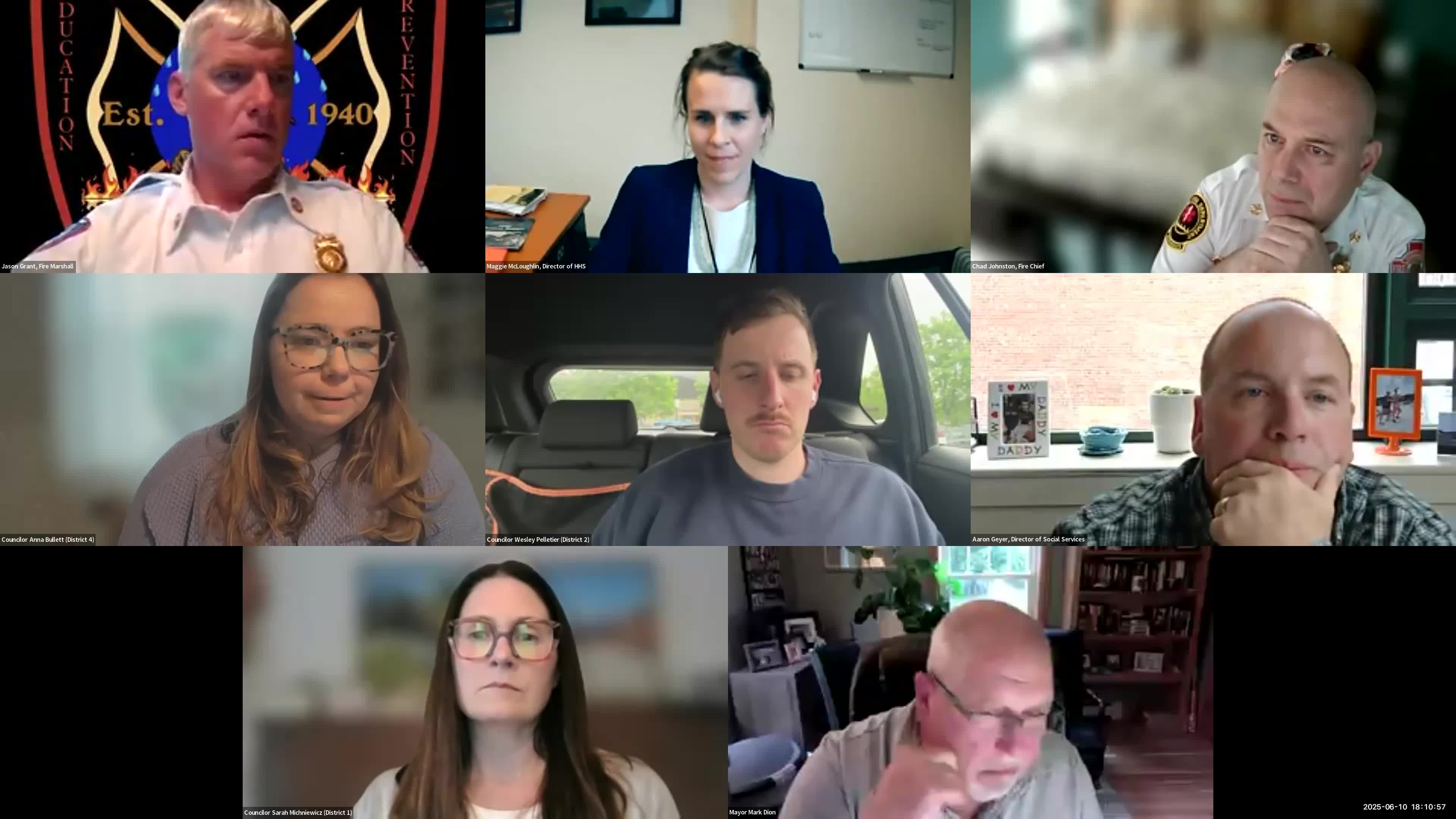
Maggie McLaughlin, director of Portland’s Department of Health and Human Services (HHS), presented the department’s 2024 annual report to the City Council committee on June 10, summarizing shelter outcomes, general-assistance activity, disease-prevention programs and investments in data and communications.
McLaughlin said the department’s 2024 staff numbered more than 460 and stressed that behind statistics are residents in vulnerable moments. "Behind each of those numbers is a team of more than 460 in 2024 that pour their heart and souls into this work," McLaughlin said.
Key housing and shelter figures from the report: - HSC and shelter system: the city operates roughly 250 shelter beds and sheltered more than 1,200 individuals during 2024; many clients use short-term shelter while a subset are long-term stays. - Family shelter: 281 individuals representing 86 families sheltered in 2024; staff transitioned 266 individuals (77 families) into housing. - Riverside Shelter: 439 clients sheltered; 167 were transitioned into housing. - The resettlement team served about 279 families (nearly 1,000 people), placing 159 into shelter and 32 families into permanent housing; staff also provide tenant education and navigation services.
On general assistance (GA), McLaughlin said GA served roughly 3,000 clients in 2024 (average age about 33). About 78 percent of applicants qualified for assistance and the city issued about 1,800 vouchers; most GA episodes (67 percent) lasted less than three months.
Substance-use and harm-reduction work was a focal point for committee discussion. The report shows the needle-exchange and related programs reached nearly 1,951 exchange clients in 2024 (including 99 new clients). Staff distributed about 1,200,000 syringes and collected 742,595 for disposal — roughly a 60 percent return rate for 2024. McLaughlin told the committee that a 2025 syringe-redemption pilot is producing higher returns: "At the moment, we've had a 92% recovery rate," she said in response to Mayor Mark Dion's questions about neighborhood needle waste and recovery geography.
McLaughlin said the needle-exchange program also makes referrals into other care: the department recorded 5,910 referrals in 2024 for medical care, case management, substance-use treatment and recovery pathways. HHS reported 66 overdose-response and Narcan training sessions in 2024, and 235 reported overdose reversals linked to distributed naloxone.
Public‑health programs: HHS administered nearly 3,000 immunizations (about 700 to children and some 2,000 to adults) and ran prevention programs that reached almost 2,000 youth and 1,000 adults. The department also reported more than 4,55 parents received lead-prevention education, more than 95 substance-use prevention classes in seven Cumberland County school districts, and nearly 2,140 maternal and child health home visits.
Aging and long‑term care: the Behrend Center, the city's skilled nursing facility, served more than 165 unique residents in 2024; McLaughlin said roughly 81 percent of patients were covered by Medicaid and that the facility has a five‑star CMS rating.
Investments and operations: McLaughlin said HHS invested in communications, data systems and standardized demographic collection to improve cross‑division analysis and to make it easier for residents to find services online. The department also signed a data-sharing agreement with Maine CDC to help correlate disease surveillance with city programs.
Committee members pressed for more geographically disaggregated data on syringe recovery and distribution and for interim reporting on the 2025 redemption pilot so council members can answer constituent complaints about needle waste at specific locations. McLaughlin and staff agreed to provide follow-up data and said they could produce another update for the committee as the pilot progresses.
","sections":{"lede":"HHS presented its 2024 annual report, saying staff sheltered more than 1,200 people, issued roughly 1,800 general assistance vouchers and distributed harm‑reduction services including syringe exchange and overdose training; a 2025 pilot has raised syringe return rates.","nut_graf":"The report tracks shelter placements, resettlement, harm reduction, immunizations and elder services while describing investments in data and communications; committee members requested more geographically disaggregated data on syringe recovery and a progress update on the 2025 redemption pilot.","ending":"HHS committed to follow up with data on syringe redemption geography and pilot performance and to report back to the committee, likely in the fall, on outcomes and any recommendations."},