
Committee recommends Palo Alto adopt eMobility strategic roadmap with redlines to emphasize last‑mile, multifamily and transit charging
Get AI-powered insights, summaries, and transcripts
Subscribe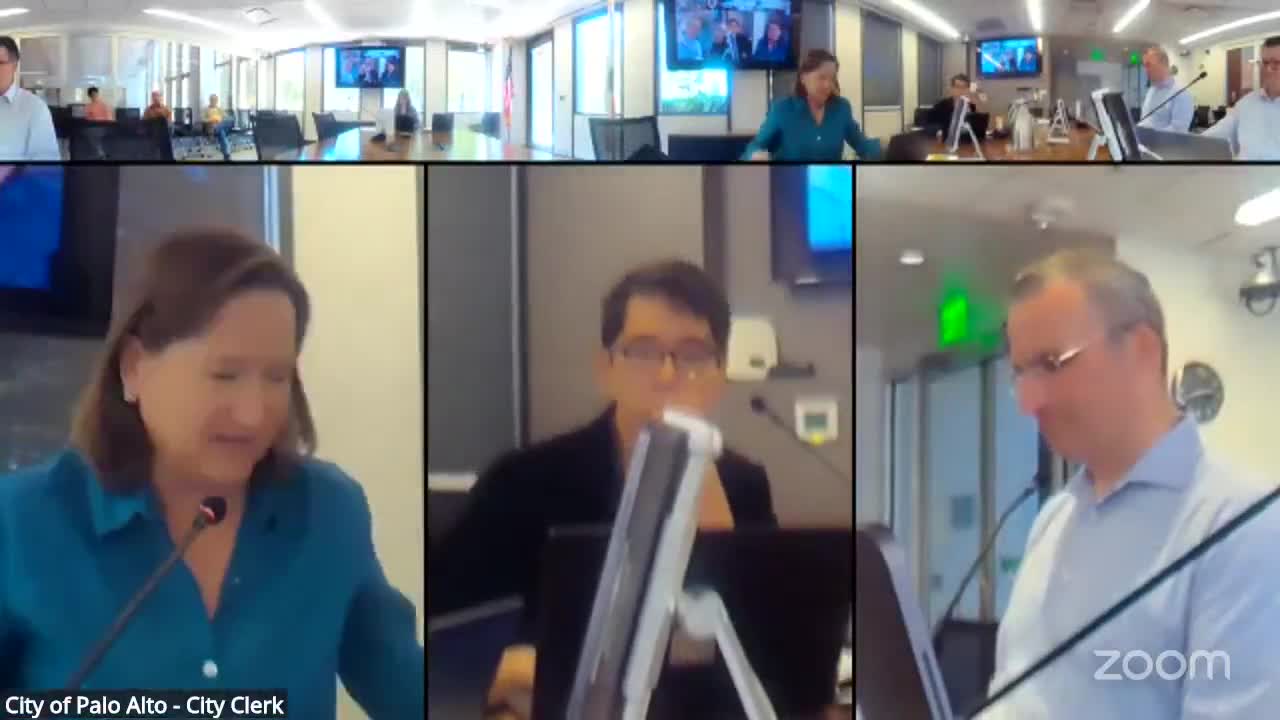
Summary
The Climate Action and Sustainability Committee voted to recommend the City Council accept an expanded eMobility strategic roadmap that broadens the plan beyond cars to cover e‑bikes, scooters, shared vehicles and integration with transit and grid planning.
The Climate Action and Sustainability Committee voted to recommend that City Council accept a new eMobility strategic roadmap that expands traditional electric‑vehicle planning to a broader set of electric modes — including e‑bikes, scooters, shared micro‑mobility and discussions of heavy‑duty and transit charging — and that the committee’s redline suggestions be incorporated.
Staff presentation and purpose
Brad Eggleston, director of public works, and Jonathan Abenschein, assistant director for climate action, presented the roadmap. Eggleston said the document evolved from an EV strategic plan into an "eMobility" roadmap to reflect a wider set of modes. Jonathan described the roadmap as a guide intended to align multiple work plans across city teams rather than a separate, stand‑alone work plan.
The document sets five strategy areas: promoting eMobility and behavior change; expanding on‑site and public charging infrastructure; shared and workplace charging models; integration with active transportation and transit; and grid‑friendly charging and load management.
Redlines and committee feedback
Committee members and working‑group members suggested edits to make short‑term behavioral interventions more explicit (for example, last‑mile e‑bike and scooter programs tied to employee and resident commute programs) and to clarify that cost‑effective charger deployment includes avoiding expensive transformer or panel upgrades. Staff walked through redline language added to strategy sections to reflect those suggestions.
Ria (chief transportation official, newly onboarded) told the committee that "e mobility bikes are included in the bicycle pedestrian transportation plan" and noted safety concerns such as the weight and speed of some e‑bikes are being considered in safety planning.
Public comment
A member of the public, David C., urged stronger, ongoing promotion of bicycle and micro‑mobility use at city events and cited the importance of bike parking and secure charging infrastructure. Committee members agreed that promotional campaigns and secure bike storage are actionable near‑term items that align with the roadmap.
Vote and next steps
Committee members moved and seconded a recommendation that the council accept the roadmap as revised with the redline language discussed at the meeting. The motion passed on a roll call; the committee called the question and the clerk recorded yes votes from the roll (motion carries).
Staff said that, if recommended to council, they will pursue council adoption in August and then align the city’s 2026–27 sustainability work plan with the roadmap. Staff also said they intend to pursue pilots (for example, multifamily charging programs and micro‑mobility pilots) and to refine business models for public and workplace charging to avoid underutilization and to target charging where it supports mode shift and grid‑friendly charging patterns.
Ending
Committee members asked staff to incorporate the redline edits discussed at the meeting (explicit last‑mile/behavioral language, mention of transit centers and airport/aviation infrastructure where relevant, and clearer language on charger cost‑efficiency and load management) before the item moves to council.