Get Full Government Meeting Transcripts, Videos, & Alerts Forever!
Get email alerts on the Immigration Community Protections topic
No spam. Unsubscribe anytime.
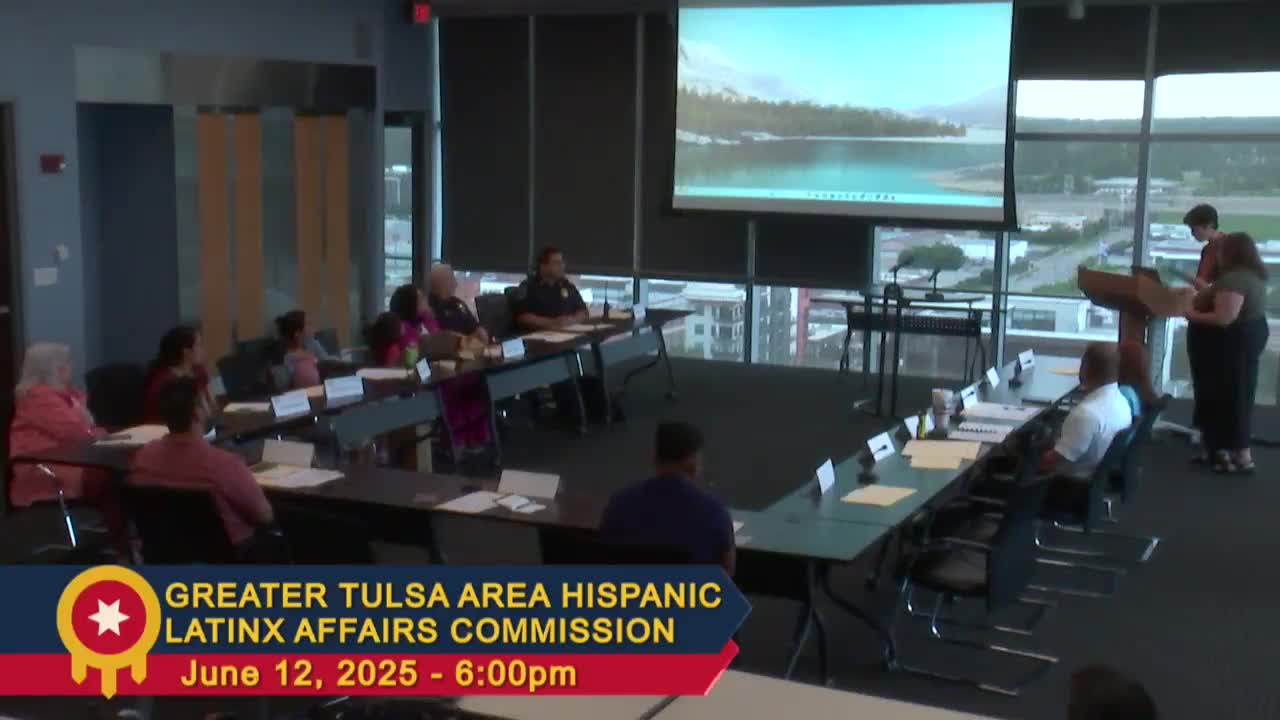
Hispanic Affairs Commission endorses Fourth Amendment Worksites toolkit for restaurants
Summary
The commission voted to endorse a training and print toolkit aimed at helping restaurant owners prepare for federal immigration enforcement actions, and asked community advocacy and immigration subcommittees to lead outreach and adaptation locally.
The Tulsa Hispanic Affairs Commission voted to endorse a program called Fourth Amendment Worksites, a toolkit and training package geared to restaurant owners that outlines steps to protect employees during federal immigration actions.
Commission member Jackie presented the initiative as an educational resource with printable materials, a manager training checklist, and virtual training the commission could promote locally. Lexi offered to help print curated materials. "It's called Fourth Amendment Worksites," Jackie said during the presentation, describing the toolkit as a way for restaurants to plan how to interact with federal agents and how to safeguard employees in the event of an unconstitutional search.
Commissioners discussed routing the item through the Community Advocacy Committee for initial outreach and recommended reconvening in August if a formal adoption or broader roll‑out is needed. Commissioner Jackie moved the motion to adopt the commission endorsement and Mimi seconded; the chair called for the voice vote and recorded it as "All in favor; motion passes."
Members described three near‑term uses for the endorsement: (1) curating and printing a subset of the toolkit as physical handouts for employers and employees; (2) promoting the training and materials through commission mailing lists and social channels; and (3) tracking use in the fall to evaluate whether the city or other agencies should adopt related tools.
During public comment following the endorsement, several residents raised broader immigration concerns, including reports of immigration enforcement actions at homes and claims that municipal courts lack adequate professional interpretation services. A public commenter urged the commission to form a functional immigration committee to monitor policy changes and produce recommendations. Commissioners agreed to reconstitute the immigration committee and to name a chair by August so the group can investigate issues raised by residents and coordinate outreach.
The commission also agreed that Community Advocacy will take the lead on contacting local restaurants, curating materials for print and scheduling training opportunities.
No dollar appropriation was approved; the endorsement allows the commission to promote and print materials and form a small working group to implement the pilot outreach.