Get Full Government Meeting Transcripts, Videos, & Alerts Forever!
Saratoga Springs charter commission begins review of Titles 1 and 2, debates powers, supervisors, salaries, residency and meeting rules
Summary
Members of the Saratoga Springs City Charter Review Commission opened a multi-part review of Titles 1 and 2, focusing on how state law and the charter interact, how county supervisors are apportioned, elected-official pay and benefits, residency requirements, and rules for agenda additions and executive sessions.
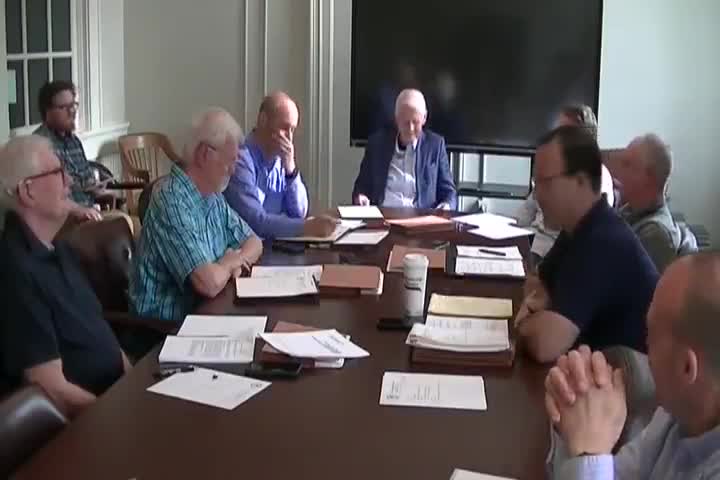
The Saratoga Springs City Charter Review Commission opened its review of Titles 1 and 2 of the city charter on Tuesday, beginning a discussion that ranged from how state law interacts with local charter provisions to the city’s rules on salaries, residency and public meetings.
The commission heard legal guidance that the charter cannot override state general laws where the legislature has declared statewide uniformity, while several members pressed for clearer language on how the city may redistribute departmental functions without triggering mandatory referenda.
Why it matters: The language commissioners consider now will frame recommendations to the city council and inform a later, deeper rewrite of the charter. Changes could affect who controls specific city functions, how elected officials are compensated and whether candidates must meet a durational residency test, all of which have practical implications for governance and public transparency.
Commission chair K. Romick opened the session and framed the commission’s two-step charge: make immediate recommendations for amendments that do not require referendum, then conduct a full review and (if the commission chooses) propose a replacement charter for voter consideration.
Jonah, the commission’s legal adviser, explained the state-law limit on local charters. “A general law is a law that the state legislature acts to be uniform statewide,” he said, and he cited the public-officers qualification paragraph as an example: “18 years of age, US citizen, and a resident of the political subdivision where you will exercise your authority.” Jonah told the commission that where state law is expressly general, local charter language that conflicts will not prevail.
Members used that legal baseline to question a sentence in Title 1 that gives the city broad…
Already have an account? Log in
Subscribe to keep reading
Unlock the rest of this article — and every article on Citizen Portal.
- Unlimited articles
- AI-powered breakdowns of topics, speakers, decisions, and budgets
- Instant alerts when your location has a new meeting
- Follow topics and more locations
- 1,000 AI Insights / month, plus AI Chat