Get Full Government Meeting Transcripts, Videos, & Alerts Forever!
Get email alerts on the Licensing Enforcement topic
No spam. Unsubscribe anytime.
Tennessee Real Estate Commission fines broker Vincent Nutt $2,000 after de novo hearing
Summary
After a de novo hearing on June 12 in Nashville, the Tennessee Real Estate Commission found that broker Vincent Nutt failed to timely respond to a complaint and violated duties of honesty and good faith; the commission assessed $1,000 per violation (total $2,000), ordered education and assessed costs.
NASHVILLE — The Tennessee Real Estate Commission on June 12 assessed civil penalties and ordered education after a de novo hearing on a complaint against Nashville broker Vincent E. Nutt.
The commission voted to assess a $1,000 civil penalty for each of two proved violations — failing to respond to a complaint within 10 days and failing to “provide services to all parties with honesty and good faith” — for a total civil penalty of $2,000, and directed Nutt to complete a 30-hour TRACE continuing-education course by the end of 2025. The commission also voted to assess costs of the proceeding.
Why it matters: The case illustrates how the Tennessee Real Estate Commission enforces basic duties for licensees — timely responses to complaints and duties of honesty and fair dealing — and the penalties the commission will impose when it finds violations. It also shows how effort to resolve procedural discovery disputes and jurisdictional confusion (in this case involving the Attorney General’s Division of Consumer Affairs) plays out before an administrative judge and then the commission.
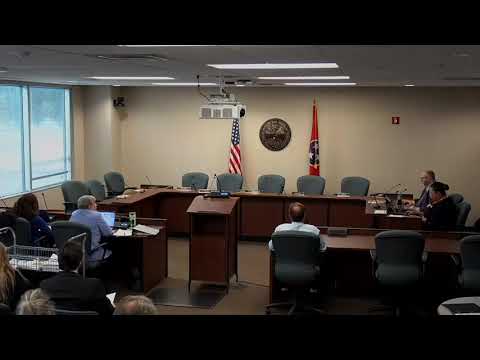
What the commission found and ordered - The hearing, held at the Davy Crockett Tower in Nashville and presided over by Administrative Judge Alex Reager, was a de novo review of allegations the Department of Commerce and Insurance had presented to the commission. - Commissioners voted unanimously to impose a $1,000 civil penalty for each of two findings (total $2,000), require Nutt to complete the TRACE 30‑hour course by Dec. 31, 2025, and assess the costs of bringing the action. The motion was recorded and carried 6–0 (one commissioner had left earlier in the day).
Case background and procedural rulings - The complaint originated with the Office of the Tennessee Attorney General, Division of Consumer Affairs, and was forwarded to the Department of Commerce and Insurance and the Tennessee Real Estate Commission. Denise Baker, executive director of the Tennessee Real Estate Commission, testified that the AG’s office referred the complaint because it was within TREC’s jurisdiction: “The complaint was sent to the attorney general’s office, their division of consumer affairs. And since it was outside of the AG’s office jurisdiction, it was sent to our office.” - Nutt brought six prehearing discovery motions seeking, among other things, in‑camera review of a legal memorandum presented to the commission. Administrative Judge Alex Reager denied all six discovery motions, ruling that any internal legal memo was not likely to lead to admissible evidence at the de novo hearing: “The discovery motions in this matter, all 6, are respectfully denied.”
Arguments and testimony - The Department’s counsel, Kimberly Cooper (Associate General Counsel, Department of Commerce and Insurance), told the commission that the department would prove two elements: that Nutt did not file a timely response to the commission’s complaint notice and that he failed to act with honesty and good faith toward a prospective buyer, Steven Moss. Cooper summarized the department’s concerns about the facts and sought civil penalties and other remedies. - Vincent Nutt, a licensed Tennessee broker for 32 years, testified without counsel. He acknowledged that he failed to deliver the formal response to the commission within the 10‑day deadline and said he had instead submitted a response to the Attorney General’s Division of Consumer Affairs earlier and believed that would satisfy TREC. As he told the commission, “I submitted my full response to the Tennessee attorney general’s office and the division of consumer affairs who originally contacted me regarding this complaint.” Nutt said the missed filing with TREC was an error and asked for leniency, describing his long license history and saying he had no prior disciplinary record. - The hearing included testimony from Denise Baker (TREC executive director) about TREC complaint processing and from Steven Moss, the prospective buyer who brought the complaint. Moss testified that he and his wife toured a 75‑acre tract with Nutt, made a written, full‑price offer of $150,000 (with a special stipulation asking the seller to pay up to $2,000 toward a survey), and later learned the property had been sold to another buyer. Moss said he and his agent sought confirmation that his written offer was presented to the seller after it was submitted and that he was told the sellers had accepted a higher cash offer later that day. - Nutt’s account: Nutt said he presented the offers and the sellers chose a better cash offer; he also said he had told both prospective buyers that the sellers were seeking a clean $150,000 sale. He defended his conduct as having been honest and explained that his family trust ultimately purchased the property; he said the purchase was made after he presented all offers to the sellers and disclosed his changing role and interest.
Commission deliberations and rationale - Commissioners debated timing of written offers and signatures, how quickly offers and counteroffers had been exchanged, and whether the buyer was given a fair chance to counter. Several commissioners said the timeline and several undated or pre‑typed date fields on the written forms weakened Nutt’s explanation and “didn’t pass the smell test,” while others said the record showed enough procedural confusion and miscommunication that the issue was close. - The panel concluded that the state met its burden — by a preponderance of the evidence — on two allegations: (1) failure to timely respond to a complaint served on Nutt and (2) failing to provide services to all parties with honesty and good faith. For those two violations the commission assessed a civil penalty of $1,000 per violation, ordered the 30‑hour TRACE education requirement to be completed by Dec. 31, 2025, and ordered assessment of the department’s costs associated with bringing the matter.
What Nutt said in closing - Nutt repeated that he had meant no dishonesty and that the late filing resulted from confusion about whether a prior submission to the AG’s office had satisfied the Commission’s 10‑day filing requirement. He told the commission his work history and said, “A dishonest man will sign a consent order and mail in a check. An honest man will fight to maintain his integrity.”
What the department said in closing - The Department reiterated that its burden was to prove the alleged violations by a preponderance of the evidence and urged the commission to adopt the recommended penalties and remedial education.
Next steps and practical notes - The order will be prepared to reflect the commission’s findings and penalties. Counsel for the parties and the commission will finalize the written order that memorializes the findings of fact, conclusions of law, sanctions, and policy reasons. - Nutt may be required to satisfy the civil penalties and the education condition by the deadlines imposed in the commission’s order; the commission also voted to assess administrative costs of the proceeding.
Ending - The hearing record and transcript show the commission focused on two related problems: missed deadlines in agency complaint response procedures, and the appearance of fair dealing when the listing agent or listing broker later becomes a purchaser. The commission’s action combined a monetary sanction and an education requirement intended to address both the procedural lapse and the panel’s concerns about how competing offers were handled.
Speakers quoted (selected) - Vincent E. Nutt, respondent and licensed broker: "I submitted my full response to the Tennessee attorney general's office and the division of consumer affairs who originally contacted me regarding this complaint." - Kimberly Cooper, Associate General Counsel, Department of Commerce and Insurance: "The most basic rule, for the commission, for the licensees is to respond when you, the commission, reach out to them and say, you've got a complaint. You have 10 days to do so." - Denise Baker, Executive Director, Tennessee Real Estate Commission: "The complaint was sent to the attorney general's office, their division of consumer affairs. And since it was outside of the AG's office jurisdiction, it was sent to our office." - Administrative Judge Alex Reager: "The discovery motions in this matter, all 6, are respectfully denied."