Get Full Government Meeting Transcripts, Videos, & Alerts Forever!
Get email alerts on the Sheriff Budget Amendments topic
No spam. Unsubscribe anytime.
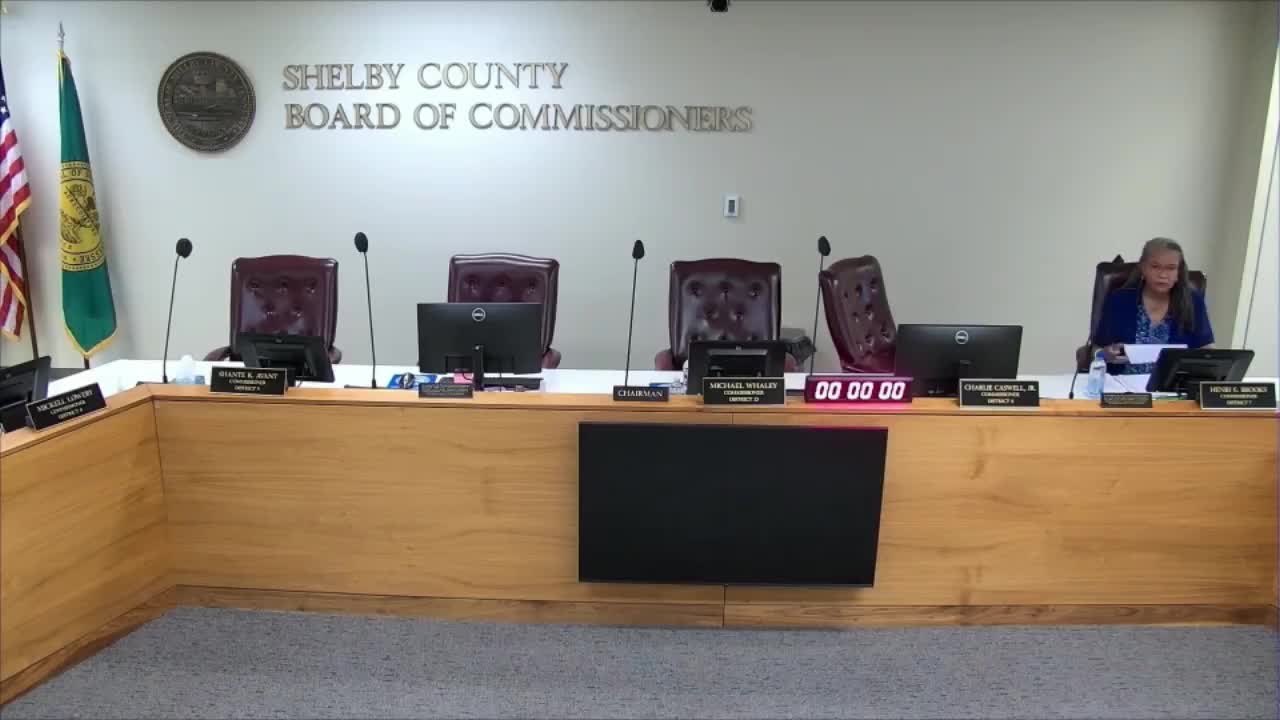
Shelby County commissioners, sheriff and administration spar over $44 million salary restriction and SCSO budget amendments
Summary
Shelby County commissioners met in a working session to review eight proposed budget amendments submitted by the Shelby County Sheriff’s Office, focusing on a disputed salary restriction of roughly $44 million, vacancy‑savings treatment for vacant positions covered by memoranda of understanding (MOUs), and large overtime and operations shortfalls in the SCSO budget.
Shelby County commissioners met in a working session to review eight proposed budget amendments submitted by the Shelby County Sheriff’s Office, focusing on a disputed salary restriction of roughly $44 million, vacancy-savings treatment for vacant positions covered by memoranda of understanding (MOUs), and large overtime and operations shortfalls in the SCSO budget.
The session centered on reconciliation between the sheriff’s office and the mayor’s administration over which requests are already included in the mayor’s proposed fiscal 2026 consolidated budget and which would require new funding. Alicia Lindsey, chief administrative officer for the Shelby County Sheriff’s Office, said the department’s submission to the mayor differed from the consolidated document and that several changes made since the mayor’s proposed budget created discrepancies.
“The variance was about $49,754,424,” Lindsey said, describing the difference between the sheriff’s submission and the mayor’s consolidated figures. She told commissioners the office has about 2,156 full- and part-time positions and roughly 700 vacancies, and that vacant positions covered by MOUs should be budgeted at their step‑1 amounts so they can be filled without delay.
Why it matters: commissioners must pass a balanced FY2026 budget before July 1. The meeting highlighted three governance tensions: (1) whether the administration’s practice of including a large vacancy-savings/salary-restriction line is appropriate for an elected office, (2) whether SCSO vacant positions and MOU pay increases are already reflected in the mayor’s proposed budget, and (3) how to fund substantial overtime and contractual obligations without increasing the county’s net spending or creating unfunded gaps.
Key facts and figures discussed
- Item 1: A reconciliation item (as explained by Lindsey) comparing the sheriff’s Exhibit B submission to the mayor’s Exhibit C; Lindsey said a variance of about $49,754,424 exists between submissions.
- Item 2: An amendment to align vacant positions covered by MOUs to step‑1 salary values; Lindsey described the line as a net negative (reducing expenditures) in some instances because some vacant positions have historically carried higher incumbents’ pay levels.
- Aggregate proposals: Lindsey and the sheriff’s team said the total of the sheriff’s requested amendments would be in the tens of millions; at one point a figure of $75,970,687.56 was referenced as the sum of amendments discussed in the session.
- Vacancy and positions: The sheriff’s office reported approximately 2,156 positions total and about 700 vacancies in active position control.
- Overtime: The SCSO overtime budget is $11.7 million for FY25; year-to-date overtime spending through June (as stated in the meeting) was roughly $24 million. The sheriff’s budget modification requested additional overtime funding (Lindsey cited an $8.2 million request to align budgeted overtime with actuals).
- Salary restriction: Item 7 on the working list would remove a salary‑restriction/vacancy‑savings line the administration inserted; the figure discussed repeatedly in the meeting was approximately $44 million (described in the transcript as “$44,000,000” or similar phrasing). Commissioners and staff disagreed about the legal and fiscal implications of removing that restriction.
What commissioners and staff said
- Commissioner Ford emphasized past practice and warned against elected officials “voluntarily” lowering maintenance-of-effort or yielding budget authority to appointed officials; Ford repeatedly urged scrutiny of both the sheriff’s and the mayor’s maintenance‑of‑effort figures.
- Michael Thompson, deputy CFO for Shelby County government, repeatedly stated that several listed amendments (items 2, 3 and 5 in his view) were already reflected in the mayor’s proposed budget and advised commissioners that a few items could be considered “mute” because they are in the administration’s numbers. He also cautioned that removing a salary restriction of roughly $44 million would create a funding gap that would need explicit offsets.
- Gerald Thornton, director of human resources for Shelby County government, said the commission must vote to ratify any MOU that has a fiscal impact and cautioned the body that increasing corrections deputies’ schedules would trigger “me too” effects for other county employees covered by prior county ordinances.
- Sheriff Floyd Bonner said the SCSO has regularly returned unspent salary dollars in past years but that the office needs budgeted capacity to respond to unpredictable events and to hire and retain officers. “If we have to get the money from another position, then that takes time,” Alicia Lindsey said, arguing that vacant MOU positions should be budgeted at step‑1 to avoid hiring delays.
Procedure and next steps
No votes were taken at the working session. County Attorney Marcy Ingram told commissioners that the commission’s adopted budget procedures and resolutions inform how the mayor’s proposed budget and subsequent amendments are handled and that an adopted MOU must be presented to the commission for ratification before its economic terms take effect in the county budget.
Deputy CFO Thompson and the sheriff’s office agreed to continue reconciling line-by-line position and account detail (account 5102 was repeatedly referenced as the personnel account) and to provide position-level extracts from the county’s budget system so commissioners can verify whether the administration’s presentation already incorporates the SCSO requests. Commissioners asked that the MOU ratification and any funding adjustments be available before the final budget vote later in June.
Ending
Commissioners said the working session’s purpose was to surface differences and reach technical reconciliation before final votes. Multiple commissioners urged administration and the sheriff’s office to meet offline and return with agreed, auditable numbers; the commission will consider the reconciled items during forthcoming committee and full-board sessions prior to adoption of the FY2026 budget.