Get Full Government Meeting Transcripts, Videos, & Alerts Forever!
Get email alerts on the Invasive Species Enforcement topic
No spam. Unsubscribe anytime.
Michigan lawmakers probe DNR enforcement of feral-pig rules after testimony from game-ranch owners
Summary
Witnesses told a House oversight subcommittee that the Department of Natural Resources used an invasive-species order, undercover investigations and a disputed genetic test to target game farms and breeders; committee members said they will seek documents and consider reforms.
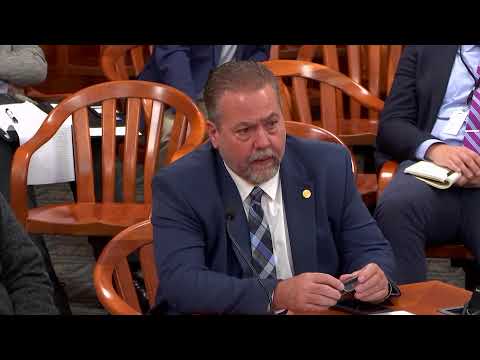
LANSING — Lawmakers on a House oversight subcommittee heard more than two hours of testimony from game-ranch owners, a veterinarian and a state senator on enforcement of Michigan’s invasive species order (ISO) related to feral pigs, with witnesses saying the Department of Natural Resources has pursued farms and customers through undercover operations and disputed genetic testing.
Sen. Ed McBroom told the Oversight Subcommittee the DNR "has waged a heavy handed campaign against farmers" through a 2010 ISO amendment and a 2011 feral-pig ban, and he urged the panel to investigate the department's enforcement actions.
The testimony centered on a multiyear conflict between the DNR and several northern Michigan ranches that sell and lease pigs for hunting. Ranchers and witnesses described court wins that affirmed some animals as lawful, then later enforcement actions they say resumed without clear scientific criteria for distinguishing "wild" from domestic or heritage breeds. "We beat them," rancher Roger Tornan said of earlier litigation. "Now they're back again."
Why it matters: Witnesses said the DNR's enforcement has shuttered some operations, reduced the number of Michigan game-ranch businesses from dozens to a handful and imposed financial and legal burdens on small operators. Committee members said the case may illustrate a broader pattern of agency overreach and signaled an intent to subpoena DNR documents and pursue statutory or oversight changes.
Most witnesses described similar claims: the DNR relied on phenotypic descriptions — observable physical traits — and later on a genetic test that witnesses and outside experts called unvalidated for distinguishing heritage or transitional breeds from wild boar. Dr. Barry Wehner, a veterinarian who described decades in food-animal medicine, said pig appearance and production traits can be changed in one generation through selective breeding and that the DNR's genetic-sampling program lacked the sample design and controls researchers would require. "They didn't test the heritage breeds," he said, adding the DNR used a sample set drawn from commercial breeds and unvetted global submissions.
Owners gave specific examples. Eddie Wainer, owner-manager of Superior Wildlife Adventures, said DNR staff posed as customers using false names to book hunts, shot animals during those visits and later used those animals as the basis for enforcement actions against the ranch and some of its customers. "They came, gave fake names," Wainer said. "They shot their pigs. They took it. And then over two years later, they told us that we were being sued." Wainer said the operation paid the customary license fee for hunting ranches but that the DNR did not disclose who paid the hunts when the events later surfaced in litigation.
Witnesses described a history of litigation and mixed court outcomes. They said a declaratory ruling the DNR issued on how to classify pigs was later thrown out by a court as arbitrary and capricious, even while the underlying ISO remained in force. Witnesses said a 2021 appeals-court ruling found particular animals used as evidence were lawful, and other judges dismissed some DNR complaints as time-barred under a three-year statute of limitations.
Committee members pressed witnesses on details, including how animals were purchased, whether the DNR's tests are used elsewhere in the country and whether the DNR had authority to act under the identified statutes. Vice Chair Pawlowski asked whether any of the DNR's criteria were behavioral rather than phenotypic; witnesses said the department relied primarily on appearance and that behavior had not been admitted as a classification criterion in prior litigation. Representative Wolford and others characterized the enforcement pattern as a use of state resources to litigate against small businesses.
Committee action and next steps: Subcommittee members said they plan to seek internal DNR documents, question agency officials and consider statutory revisions. At the hearing's close Representative Pachowski moved to excuse absent members; Representative Shriver moved and, with no objection, the committee also adopted the minutes from its May 14 meeting. There were no formal votes on policy or regulatory changes during the hearing.
What the panel did not resolve: Witnesses and lawmakers requested documents and further review; no new rulemaking, rescission of the ISO or statutory change was adopted at the meeting. Several legal disputes remain at various stages in the courts, and witnesses said additional appeals or litigation could follow.
The subcommittee chair said the panel will continue its inquiry, request documents from the DNR and hold additional hearings to determine whether legislative guardrails or procedural changes are needed to clarify the ISO and the department's enforcement practices.