Get Full Government Meeting Transcripts, Videos, & Alerts Forever!
Get email alerts on the Tax Policy topic
No spam. Unsubscribe anytime.
Senate narrowly passes tax omnibus including data-center mitigation and cannabis tax increase
Summary
The Senate passed House File 9, the omnibus tax bill, after partisan debate over restoring a sales-tax exemption on electricity for data centers, increasing cannabis taxes and adding refundable R&D credits. A motion to restore the electricity exemption failed; the tax bill passed by a single-vote margin after roll calls.
The Minnesota Senate passed House File 9, the omnibus tax bill, after lengthy floor debate that ranged from industry tax incentives to a contested cannabis tax increase and the structure of research-and-development tax credits.
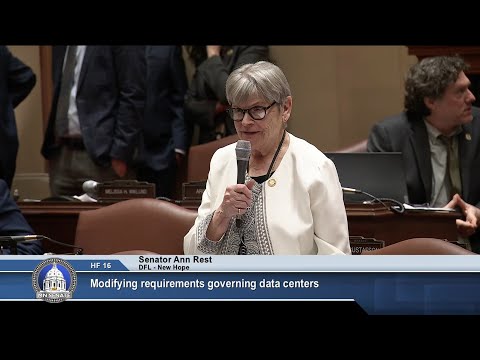
Senator Rest, explaining the bill, said the package reflects a leaders’ agreement and includes provisions intended to mitigate the effect of a separate tax measure on data centers. She described $80 million over four years in refundable R&D credits and other leader-negotiated provisions, while acknowledging disagreements with some parts of the agreement.
Opponents called out specific provisions. Senator Matthews offered an amendment to restore the sales-tax exemption on electricity used by data centers; the Matthews A1 amendment would have deleted the section that repealed the exemption. Matthews said restoring the exemption would prevent harm to Minnesota companies and local governments that depend on large industrial taxpayers. The A1 amendment was defeated on a roll call, 31 ayes to 34 noes.
Senator Marty objected to long-term tax breaks for very large data-center operators and criticized secrecy in some project NDA terms, and argued the sales-tax relief for billion-dollar facilities disproportionately benefits the wealthiest companies.
Supporters urged passage to honor commitments and to blunt the immediate tax impact described by supporters. Senator Rasmussen said the bill “will help mitigate the damage” of the tax bill and support Minnesota companies that have invested in-state.
Other provisions debated on the floor included raising the cannabis sales tax from 10% to 15%, which several senators warned could push purchases to black-market sellers; and the refundable R&D credit expansion intended to help startups and R&D-heavy companies.
A roll call to suspend the rules to give the bill expedited second and third readings passed 46–20. The Matthews A1 amendment failed 31–34. On final passage the Senate recorded 34 ayes and 33 nays after a clerical adjustment to a recorded vote; the bill passed and the title was agreed to.
Lawmakers described the bill as a compromise that includes numerous smaller tax changes and local provisions offered by members on both sides of the aisle. Senator Rest urged a green vote while acknowledging the bill is imperfect and the product of interchamber negotiations.