Get Full Government Meeting Transcripts, Videos, & Alerts Forever!
Get email alerts on the Gaza Humanitarian Crisis topic
No spam. Unsubscribe anytime.
UN: Internet blackout and fuel shortages are paralyzing aid operations in Gaza
Summary
The UN says a damaged fiber cable and more than 100 days of fuel restrictions have caused a near-total Internet outage in central and southern Gaza and put medical, water and sanitation services at risk, warning that nearly 80% of life‑saving health facilities may soon run out of fuel.
The United Nations said on June 12 that a collapse of Internet and data services, compounded by more than 100 days of restricted fuel access, is “paralyzing aid operations” across the Gaza Strip and putting life‑saving services at risk.
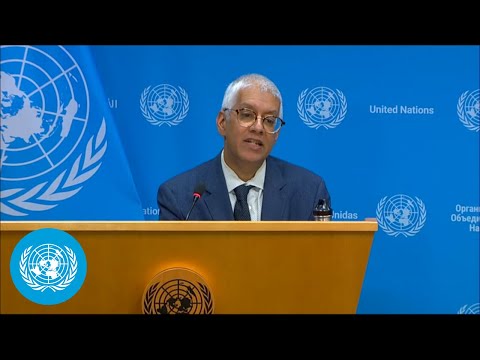
Farhan, spokesperson for the Secretary‑General, told reporters that partners working on telecommunications reported damage to the last fiber cable route serving central and southern Gaza, “likely caused during heavy military activity.” He said, “this is not a routine outage, but a total failure of Gaza’s digital infrastructure,” and that lifelines to emergency services, humanitarian coordination and critical information for civilians have been cut.
The Office for the Coordination of Humanitarian Affairs (OCHA), cited by the spokesperson, warned that fuel shortages have reached a critical point after Israeli authorities imposed restrictions for more than 100 days. UN colleagues working on health told the briefing that nearly 80% of health facilities providing life‑saving services — 67 of 85 facilities — may very soon run out of fuel. The UN list of affected facilities includes 17 hospitals, seven field hospitals and 43 primary health centres.
The briefing said the loss of fuel threatens hemodialysis services, ambulance patient referrals and the so‑called “golden hour” for trauma care. Water wells and desalination systems also face likely shutdowns if power and fuel remain unavailable. The spokesperson said attempts to retrieve fuel have been repeatedly denied; one recent operation that was initially approved could not be completed after shelling forced the team to turn back and a fuel‑truck driver was injured.
OCHA said Israeli authorities issued displacement orders for six neighbourhoods across three governorates — Gaza North, Gaza and Khan Yunis — covering more than three square kilometres already subject to previous orders. The briefing reiterated that tents and other shelter materials have not been allowed into Gaza for over 100 days.
On aid deliveries, the UN said teams collected 56 truckloads of food from Kerem Shalom and moved them to northern Gaza using the Erez West (Zikim/Erez West) entry point, which the briefing described as the first use of that route since early March. The spokesperson said additional movements to Kerem Shalom were being planned but gave no firm schedule.
The United Nations also cited reports from the Gaza Humanitarian Foundation that some Palestinians distributing supplies were attacked and some killed; the UN said it did not yet have independent verification and noted the telecommunications blackout was hampering confirmation. The briefing reiterated that civilians and those providing aid must not be attacked.
The spokesperson urged restoration of fuel deliveries and access to existing reserves inside Gaza so that essential services can continue. He said a ceasefire and restoration of basic services would most directly help the situation, and added that fuel and repairs to fiber infrastructure are both needed to restore Internet operations.
Context: the briefing placed these technical failures alongside broader operational constraints, noting that many agencies, including UNRWA, have lost contact with colleagues on the ground and that mobile networks were “barely functioning.”