Get Full Government Meeting Transcripts, Videos, & Alerts Forever!
Get email alerts on the Municipal Finance topic
No spam. Unsubscribe anytime.
Staff proposes fee changes that could generate up to $1 million; council asks for separated business‑license review
Summary
Finance and planning staff told the Spokane Valley council June 10 that a set of permit and license fee changes — if fully adopted — could produce up to about $1 million in net revenue, and recommended council consider engineering and land‑use fee changes first while treating business‑license changes separately.
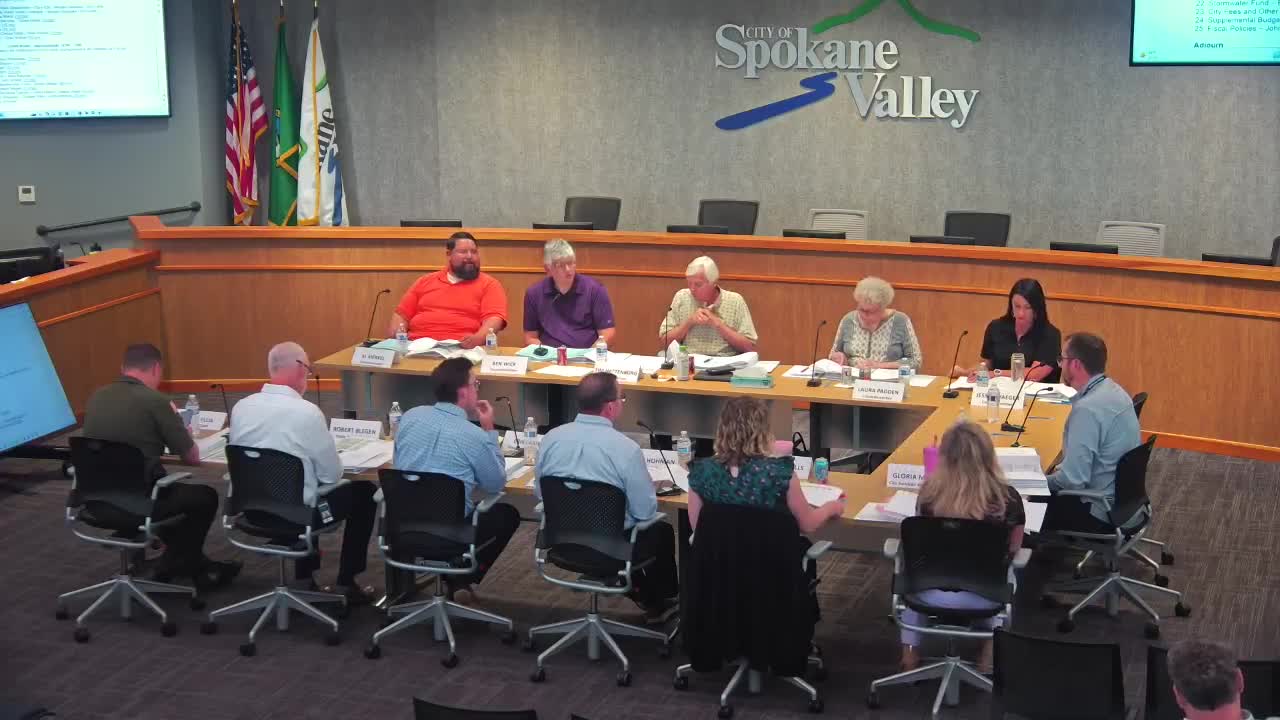
City staff presented a multi‑part proposal to increase or restructure fees for engineering reviews, planning permits, building and business licenses during the June 10 budget workshop as a way to reduce the 2026 general‑fund gap.
Finance Director Chelsea Walls and senior planning staff outlined a structure that would replace some volume‑based grading fees with tiered, complexity‑based charges, add re‑inspection or excessive‑review hourly surcharges, and add a technology/permit processing fee for building permits. Planning staff also proposed higher fees for comprehensive‑plan amendments, shore‑line and SEPA reviews for more complex reviews, and recommended charging hearing‑examiner costs to applicants when hearings are required.
Home‑business and business‑license proposals: planning staff proposed lowering the separate home‑occupation permit fee (currently $113) to $50 while tightening exemptions, and raising the city’s base business license from $25 to $100 a year. Staff calculated the combined proposal (planning, building, engineering and business licenses) could generate approximately $1 million in net revenue using recent historical permit volumes and the proposed fee schedule. The planning team said some fee lines currently recover little of staff time (example: many grading permits produce a few hundred dollars but require tens of staff hours), and the new tiers are designed to align fee to workload.
Council response and next steps: several members said they supported moving forward with engineering and land‑use fee adjustments but asked that the business‑license proposal be split out and considered separately. Councilmember Bill Wick said he did not support raising the base business license; other council members said they wanted time to examine impacts on micro‑businesses and home‑based enterprises. Staff agreed to return the engineering, building and planning fee items as one package and the business‑license proposal as a separate agenda item so council could evaluate potential impacts on small firms.
Why it matters: staff told council the fee changes are not a full solution to the draft budget shortfall, but they would meaningfully reduce the gap while preserving service levels. Staff estimated planning‑fee changes alone could generate roughly $190,000 with historical permit volumes; a new building technology fee could generate roughly $110,000; business‑license changes could produce a larger portion of the total, depending on council choices.
What’s next: staff will prepare separate administrative reports and proposed ordinance language: an initial package for engineering/planning/building fees and a second, separate proposal for business‑license changes so the council can consider them apart from one another.