Get Full Government Meeting Transcripts, Videos, & Alerts Forever!
Get email alerts on the City Budget topic
No spam. Unsubscribe anytime.
Spokane Valley managers outline $1.3M recurring deficit, multi-month budget process at June workshop
Summary
City staff presented draft 2026 budget estimates June 10, saying recurring general-fund shortfalls remain and that streets and public safety contracts will drive near-term choices. Staff urged the council to treat the draft as a work in progress as revenues, contract settlements and grant awards are clarified over the summer.
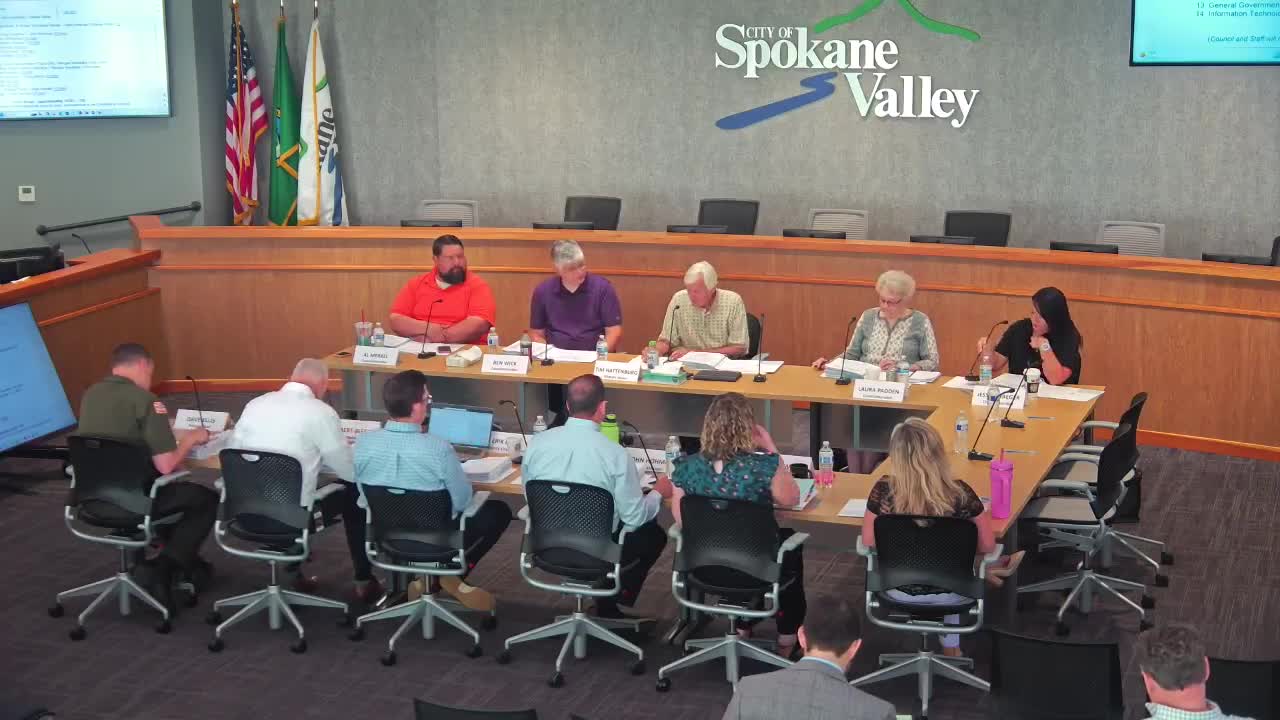
City Manager John Holman and Finance staff presented a draft 2026 budget at a Spokane Valley City Council workshop June 10, saying the city currently projects a recurring general-fund shortfall and several uncertain contract costs that will be worked through over the summer. Finance Director Chelsea Walls told the council the draft shows a recurring-activity deficit of “about 1,300,000.0” and an estimated ending fund balance ‘‘at the end of 20 26 is estimated to be about 44,200,000.0, which is 67% of recurring expenditures.’’
Holman described the presentation as a status‑quo draft: “this is the draft of the budget, the draft of many that we're working through. This is what we know as of this point in time,” he told the council. Walls walked the council through revenue assumptions — including property tax, sales tax, motor vehicle fuel tax and permitting income — and highlighted that some receipts are volatile or subject to timing issues this year.
Why it matters: staff said police-contract growth has outpaced sales-tax growth in recent years and that a combination of contract settlements, county indirect-cost changes and capital needs leave several material unknowns. Holman said the city’s earlier winter workshop data showed law-enforcement costs growing faster than sales tax revenue and that the council will see updates through the summer as the city refines revenue estimates and finalizes interlocal settle-and-adjust figures with Spokane County.
Council members and staff discussed specifics: Walls flagged a nearly 30% year‑to‑date decrease in fuel-tax receipts (January–April 2025), an item she said she would investigate with the state Department of Revenue and neighboring jurisdictions. Holman and deputy city officials said some previously budgeted one‑time funds were being held for potential capital matches and that staff would return with more precise options for the council to cut or raise revenue if needed.
The workshop included a list of budget follow‑ups for the council: (1) a fuller revenue‑estimate update after July collections and the county settle-and-adjust, (2) an update on the law-enforcement contract and indirect‑cost review, (3) refined fee proposals for permits and licenses, and (4) a continued look at capital timing for street and stormwater projects.
Ending note: staff emphasized the draft nature of the materials and warned that several large contract and capital drivers remain unsettled. Holman said the council’s budget schedule stretches through public hearings and an anticipated adoption in November, with additional public hearings planned before adoption.