Get Full Government Meeting Transcripts, Videos, & Alerts Forever!
Get email alerts on the Entertainment District topic
No spam. Unsubscribe anytime.
San Antonio outlines financing, traffic and community engagement plan for proposed downtown entertainment district and new Spurs arena
Summary
City staff and consultants on June 4 told the San Antonio City Council they are pursuing a mix of visitor-tax capture, private development revenue and possible voter-backed bonds to finance a proposed downtown entertainment district centered on a new Spurs arena and a $750 million-plus expansion of the Henry B. González Convention Center.
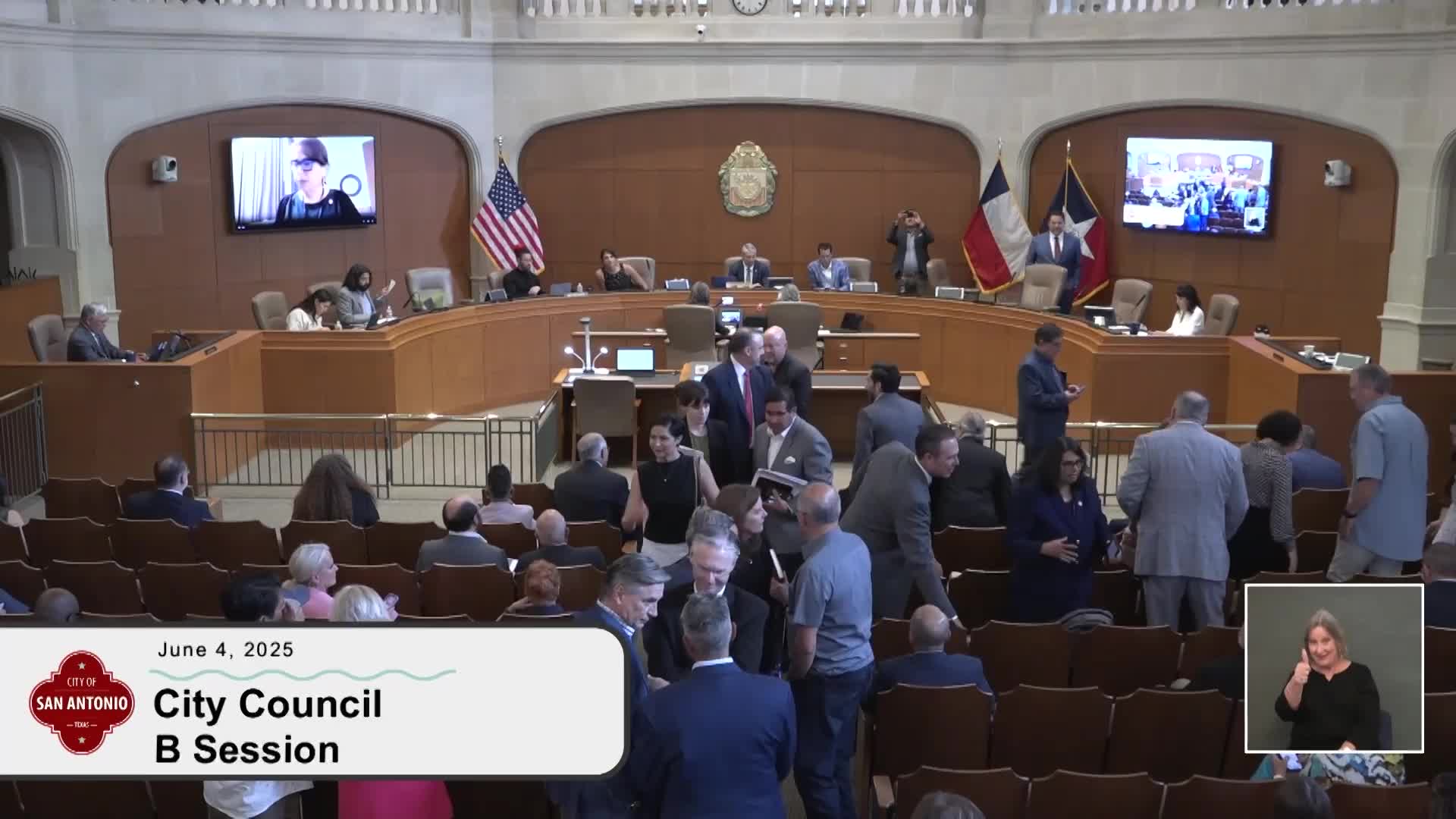
City staff and consultants on June 4 briefed the San Antonio City Council on a proposed downtown entertainment district centered on a potential new Spurs arena, a $750 million-plus expansion of the Henry B. González Convention Center and related infrastructure projects, and described possible financing tools, a community engagement schedule and next steps for voter approval.
The presentation outlined three primary funding sources city officials expect to use: incremental capture of hospitality-related taxes through a project financing zone (PFZ), portions of hotel-occupancy and event-related taxes, and bond financing that would require voter approval if used for general-obligation infrastructure. Staff estimated the arena construction cost at $1.3 billion to $1.5 billion; the convention-center expansion at about $750 million; and district infrastructure work between roughly $220 million and $250 million. City officials emphasized there are no council decisions or bond measures before the council yet and that many financing details remain under negotiation.
City financial staff said the financing strategy would rely heavily on newly captured visitor revenues and private development contributions rather than on current operating budgets. The PFZ concept described would capture incremental state-related hotel and related tax growth generated inside a designated zone for up to 30 years and redirect those increments to qualified district projects. Staff also described a potential structure in which the Spurs would pay rent to an owner entity and private developers would contribute lease/rent revenues and development guarantees that would support a bond issuance for the citys contribution to the arena.
Consultants and transportation staff presented traffic, pedestrian and parking proposals intended to protect adjacent neighborhoods (identified in the presentation as La Villita/La Villita area, King William, La Vaca and portions of Denver Heights) and to move people efficiently during large events. Notable infrastructure recommendations included a pedestrian bridge across U.S. 37 to link the Alamo Dome/Arena area, new ramps between Montana and Commerce to reduce signal delays, widening Commerce at some intersections, and an "innovative interchange" at César Chávez and Highway 37 that the traffic model showed could increase hourly vehicle throughput by about 60 percent at that intersection. The team proposed a 2,500-space parking structure as part of the near-term plan and recommended integrating parking, ticketing and wayfinding so ticket buyers are offered parking and transit options up front.
Staff and consultants said existing transit assets, including the Robert Thompson transit center and planned Green and Silver rail lines, could help move large numbers of people: presenters described scenarios in which transit and bus shuttles could carry thousands of people during peak event periods and noted the district would be designed to be walkable from several transit and shuttle access points. Presenters said Via and other transit partners are already engaged in planning and that additional service models and possible fare contributions are under discussion.
City leaders repeatedly framed benefits-agreement negotiations and community benefit commitments as central to the project. Staff described a range of community benefits that have appeared in similar agreements elsewhere — from ticket discounts and workforce initiatives to affordability and youth-program investments — but emphasized there is no standard agreement, that terms vary widely among jurisdictions and that the city will seek community feedback to define its priorities. Consultants outlined a community-engagement plan that begins with two-day workshops in each council district this summer (presenters listed June 24–25 and June 30–July 1 among early dates) that will include bilingual surveys, focus groups on housing, transportation, parking and local-business opportunities, and public open-house sessions. Staff said they intend to return to the council in mid-summer with a summary of community input and recommended principles that would guide future development.
Council members pressed staff for more financial detail and for guarantees from private partners. Several members said residents deserve clear, itemized models showing which party would pay what portion of arena costs and how any general-obligation bond would affect property taxpayers and other city services. Staff repeatedly said those details remain under negotiation, that the city is seeking construction guarantees from private developers and that some funding pieces (including any bond measure) would require voter approval; staff also noted statutory and procurement processes (for example, state-level PFZ certification and coordination with the state comptroller) that affect timing and implementation.
On schedule, staff said portions of the district work could be phased over five to 15 years: near-term traffic and pedestrian improvements and some site infrastructure in the first five years; hotel and private-development phases occurring later in a 10-year window; and an arena opening date tied to negotiations and the Spurs' existing lease, which staff said currently runs through 2032. Staff said acquisition of certain parcels (including a previously discussed UTSA property acquisition) is projected at about $60 million, and that the city proposes investing roughly $100 million over 10 years to support operations and upgrades to the existing Alamo Dome while longer-term renovation and replacement planning proceeds.
No formal motions or votes were taken during the session. Staff said that if the council chooses to use general-obligation bonds for district infrastructure, those bonds would need to be placed on a ballot approved by voters; staff noted an August 18 deadline (calendar date cited by presenters) to place measures on the November ballot, should the council elect that schedule. Presenters also said legal and procurement steps, selection of construction partners and firm developer guarantees are prerequisites to a final bond/financing recommendation.
The council asked for additional financial models, clearer breakdowns of which revenues would support which debt-service obligations, and documentation of how any guarantees and remedy provisions would work if development revenues underperform. Presenters agreed to return with additional analyses and reiterated the community-workshop schedule as the next step in the public process.
"This project has potential to be transformational," one city official said in the presentation, while also urging a multiyear, phased approach tied to community input and private guarantees.
Next steps listed by staff: a series of district workshops beginning this summer to develop community principles, continued negotiations with the Spurs and private developers on guarantees and rent structures, coordination with Via and other transit partners on service and fare options, and a mid-summer report back to council summarizing community input and refined financing assumptions. Any use of general-obligation bond proceeds would require a council decision followed by voter approval.
Sources: City staff presentation to San Antonio City Council, June 4, 2025; consultant presentations on traffic and community engagement included in that briefing.