Get Full Government Meeting Transcripts, Videos, & Alerts Forever!
Get email alerts on the Natural Resources topic
No spam. Unsubscribe anytime.
County natural‑resources staff warn federal funding shifts could strain wildfire response and recreation services
Summary
Summit County natural‑resources staff briefed the council on federal funding and policy shifts that are reducing personnel and program dollars, raising concerns about wildfire response support, recreation maintenance and invasive‑species work. Staff urged regional collaboration and contingency planning.
Summit County natural‑resources staff on June 4 told the county council the county and its federal partners face uncertain funding and regulatory changes that could shrink staff support for wildfire response, recreation maintenance and ecological programs.
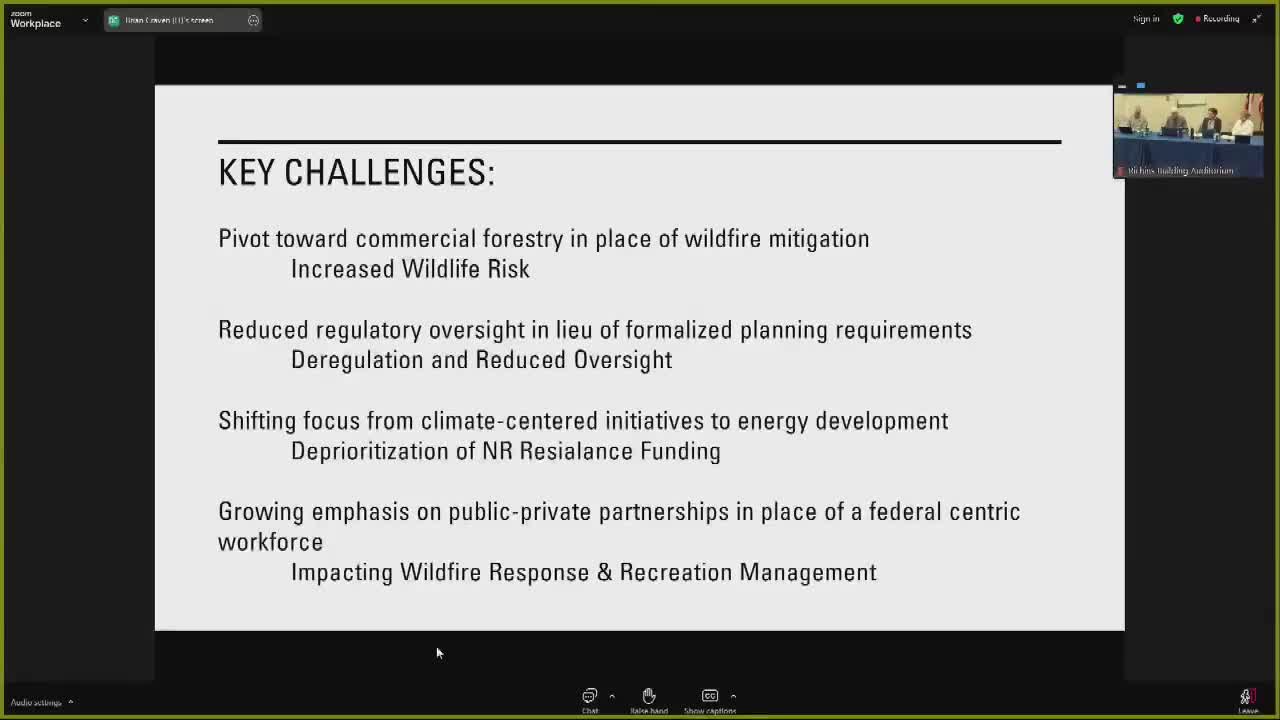
The presentation, led by a county natural‑resources official, described rapid policy shifts at the federal level that have reduced program authority and, in some cases, stalled grant language. The speaker said some federal programs are being reorganized, NEPA implementation details are in flux, and seasonal funding for operations such as pit‑toilet maintenance and seasonal red‑carded staff is under threat.
Why it matters: The county’s recreation and wildland programs rely heavily on federal and nonprofit partnerships and seasonal employees. The presenter said reductions to administrative budgets could mean fewer people to staff trailheads, maintain sanitation facilities, manage weeds and provide administrative backup during major wildfire incidents. "It's the support staff that's being cut in many cases — people who do the admin, the privy and maintenance — which has downstream effects on fire and recreation management," the presenter said.
Key concerns and examples - Fire response: Staff said cuts to federal staffing and changes in grant rules could reduce available air and support resources during large wildfires and make it harder to sustain long incidents. The county’s fire chief and emergency managers raised similar concerns in the discussion. - Recreation infrastructure: Examples cited included funding shortfalls to maintain dozens of pit toilets on Mirror Lake Highway and rising risk that visitors will encounter overflowing garbage and sanitation failures in high‑use recreation corridors. - Invasive species and noxious‑weed programs: The county's CWMA (cooperative weed management area) reported a major reduction in its grant funds, which would shift more burden to the county weeds program.
Opportunities and recommended next steps: Staff urged the council to support a proactive, partnership‑first response: 1) maintain and strengthen relationships with federal and state partners and local nonprofits, 2) diversify non‑tax funding including philanthropic support, and 3) create a county working group to define a backup or “on‑call” roster of staff who can be temporarily reassigned to emergency or maintenance roles during high‑demand periods.
Council response: Councilors expressed concern and encouraged staff to pursue congressional engagement and to develop contingency and prioritization plans so essential services can be protected if funding evaporates.
Ending: Staff said they will return with more detailed contingency proposals, possible working‑group membership and recommended outreach to federal and congressional offices.