Get Full Government Meeting Transcripts, Videos, & Alerts Forever!
Get email alerts on the Mortgage Recording Tax topic
No spam. Unsubscribe anytime.
Madison County directs attorney to draft legislation to extend mortgage recording tax
Summary
Madison County legislators voted to direct the county attorney to draft legislation that would allow the county to extend an additional mortgage recording tax. A public commenter described the tax history and projected revenue; the resolution passed with 1,207 votes in favor.
Madison County legislators voted to direct the county attorney's office to draft legislation allowing the county to extend an additional mortgage recording tax. A member moved the resolution for adoption and Rex seconded; the roll call showed 1,207 votes in favor and the resolution passed.
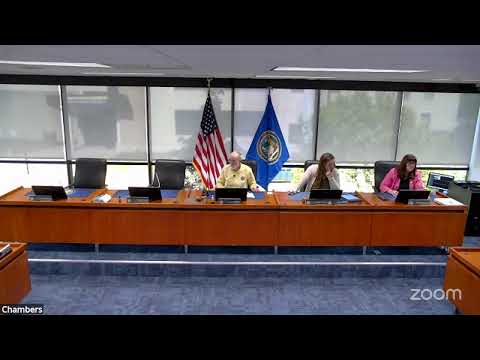
The measure directs the county attorney to prepare a bill that would permit Madison County to levy an additional mortgage recording tax. Matt Roberts, chairman of the Finance Ways and Means Committee, introduced the resolution during the meeting and identified the item for the record.
During the public-comment portion of the item, a resident identified as Mike described why the county has relied on the mortgage recording tax and gave recent revenue figures. Mike said the tax was "started ... as a means of raising funds for the county so that we wouldn't have to hit taxpayers as the state continues to ramp up, unfunded mandates for the county," and added that the levy "gives Madison County point 25% of any new money borrowed, and that goes right to the county's bottom line." He told legislators the tax produced roughly $700,000 in its first year, fell to about $500,000 in a subsequent year after interest-rate increases, and could rebound to about $700,000 to $800,000 if refinancing increases when rates soften.
After brief procedural discussion, a member moved to adopt the resolution, Rex seconded, and the clerk conducted a roll call. Multiple members voted "aye" and the clerk recorded "1,207 votes in favor," after which the chair stated the resolution passes. Committee discussion as recorded in the transcript consisted primarily of the chair reading the resolution and the motion to adopt; no ordinance number, effective date, or specific draft language was provided during the meeting.
Next steps recorded in the meeting: the county attorney's office is to draft the enabling legislation. The draft and any subsequent proposed ordinance or local law were not described in detail at the meeting, and no implementation timetable or funding allocation tied to the extension was specified.