
UN peacekeeping chief says pledges cover needs as operations adapt to tougher conflicts
Get AI-powered insights, summaries, and transcripts
Subscribe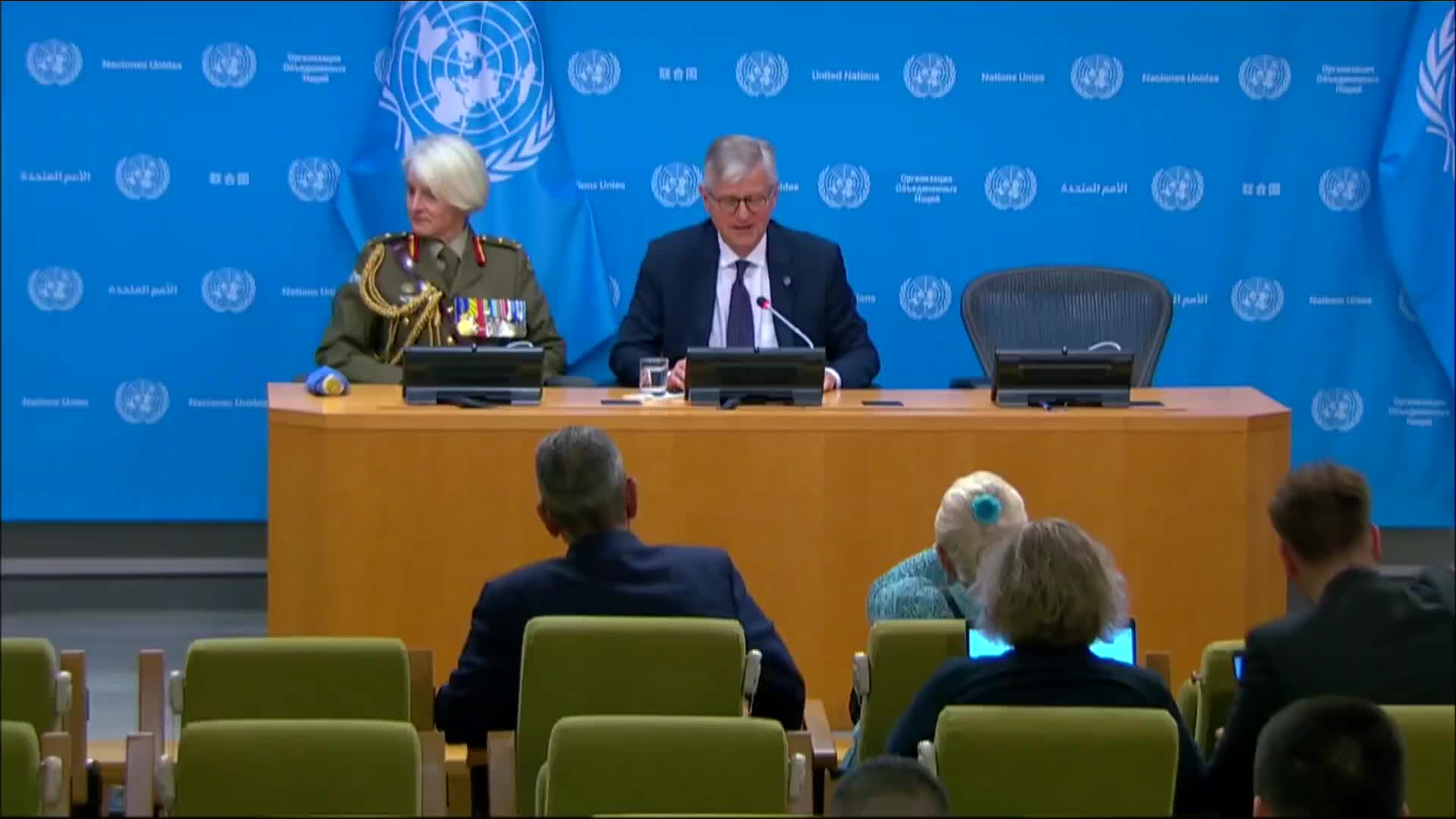
Summary
At a press briefing marking International Day of UN Peacekeepers, Under‑Secretary‑General Jean‑Pierre Lacroix said recent pledges from member states “essentially cover the needs” identified by missions, while warning that operations face deteriorating security environments and require resources and reforms to remain effective.
Under‑Secretary‑General Jean‑Pierre Lacroix told reporters at a United Nations press briefing that member‑state pledges made at a recent ministerial meeting “essentially cover the needs” that peacekeeping missions filed but that peacekeeping must remain resourced and adapted to increasingly difficult operating environments.
The briefing, held on International Day of UN Peacekeepers, focused on several overlapping themes: financing and pledges, efforts to improve cost‑effectiveness and use of technology, the United Nations’ review of peace operations, and the operational situation in the Democratic Republic of Congo (MINUSCO). Lacroix opened by noting the service and sacrifice of peacekeepers: more than 4,400 peacekeepers have died in the line of duty since 1948 and 58 in the past year.
Lacroix said the Berlin peacekeeping ministerial drew broad support from member states and produced pledges of personnel, capabilities and training. “The pledges that we received from member states essentially cover the needs,” he said, adding that the UN shared a “shopping list” of unit and individual capacities before the meeting. He said work is under way to operationalize commitments and update the Action for Peacekeeping initiative to identify what has produced good outcomes and where more work is needed.
On finance, Lacroix said the UN is pursuing greater cost‑effectiveness while warning that operations must still be provided the resources required to fulfill mandates. He reiterated that the secretary‑general will submit a revised budget in September (as part of ongoing internal work responding to member‑state guidance) and that ultimately member states will decide on resource levels. Lacroix said efforts to reduce duplication, streamline mandates and apply digital tools are part of expected savings, but that some efficiency measures require host‑country consent.
Responding to questions about MINUSCO in eastern DRC, Lacroix described a “mixed and complex situation.” He said “more than 60% of the mission is out of the M23 controlled areas,” that the mission continues protection work for internally displaced people and that violence has “somewhat subsided, but it's still there.” He said diplomatic efforts led by African organizations, supported by outside states, are ongoing and that the UN stands ready to deploy monitoring elements if a ceasefire materializes. Lacroix added: “If we leave today, then those civilians ... will be totally unprotected,” underlining the mission’s continuing protection role.
On organizational reform, Lacroix repeated that work is ongoing to reflect recommendations from the Summit for the Future and from internal reviews; any formal structural change — including proposals to bring political and peacekeeping components closer together — would require decisions by the secretary‑general and then member states. He described those proposals as “work in progress.”
Major General Pierce, the acting military adviser, and Commissioner Faisal (UN police adviser) said militaries and police contributing countries must prepare forces with new skills and technology. Pierce emphasized the need for “agility to have the ability to use technology” — including aviation, cyber, maritime and unmanned systems — and for pledges and readiness from member states. Faisal said the police side is seeing rising demand for specialized expertise such as forensics and digital policing and stressed the need to align recruitment and training to meet that demand.
Journalists asked whether the UN should outsource uniformed roles to private contractors. Lacroix said contractors already support some functions — aviation and unmanned aerial vehicles among them — but cautioned that substituting uniformed personnel with private security raises difficult questions about responsibility and the character of UN peacekeeping, which he described as “a partnership across member states and with the UN.”
Lacroix and other officials highlighted efforts to increase the number of women in peacekeeping and to promote senior female officers. He said the police component and some military contributions are doing relatively well on numbers, but that more senior female officers remain a shortfall.
No formal decisions or votes were taken at the briefing; officials described ongoing reviews, pledging processes and operational planning rather than new mandates or budget approvals. The UN officials declined to detail individual member‑state cash payments at the briefing, saying pledges were public and that the organization would share lists of commitments.
The briefing closed with tributes to the day’s awardees and to fallen peacekeepers; Lacroix named two award winners who serve in Abiye (the transcript: squadron leader Sharon Winsote Sima of Ghana and Superintendent Zainab Gebla of Sierra Leone) and praised their work.