Get AI Briefings, Transcripts & Alerts on Local & National Government Meetings — Forever.
U.N. official says aid to Gaza is being hampered, urges sustained access and warns against privatizing relief
Loading...
Summary
Sigrid Kaag, speaking in New York, said new restrictions and vetting are limiting the U.N.'s ability to deliver aid to Gaza, called for sustained humanitarian access in accordance with international humanitarian law, and warned that privatizing or "weaponizing" aid would set a dangerous precedent.
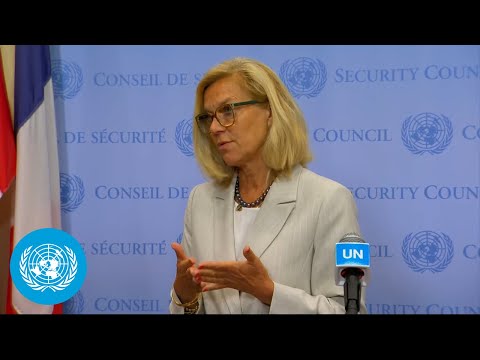
Sigrid Kaag, a United Nations official speaking in New York, said new restrictions and vetting are limiting the U.N.'s ability to deliver humanitarian assistance to people in Gaza and urged that aid be allowed in "in the volume that is needed" to reach everyone in need.
Kaag said she would not confirm specific shipment figures cited by others but emphasized that the priority is ensuring aid reaches people on a sustained basis and in accordance with international humanitarian law. "I don't want to go into 400 trucks or 9,000 or the volume of 9,000. I think the biggest message is aid needs to be allowed in, sustained in the volume that is needed to reach all people and allow the UN and the humanitarian partners to do their job the way they've always done and the way they do it wherever else in the world in times of conflict in accordance with international humanitarian law," she said.
Reporters asked Kaag about an Israeli ambassador's reference to "400 trucks" stranded and about reports of casualties at an aid distribution organized by the Gaza Humanitarian Foundation. Kaag said she was "in New York now" and that colleagues on the ground and the U.N. humanitarian team may have the most up-to-date figures and were issuing statements. She described the operating environment in Gaza as an "active war zone" where recently introduced rules and additional vetting have "hampered" the U.N.'s ability to operate.
Kaag also described a situation in which the U.N. and other partners appear to be working in parallel with the Gaza Humanitarian Foundation; she said there was "no cutoff date" she could point to but stressed that aid should not require repeatedly displacing elderly people simply to receive assistance. "We need to reach old people in Gaza. They shouldn't be displaced again and again just to receive aid, and it needs to be done on a daily basis in a manner that is incumbent and aligned with international humanitarian law," she said.
On the political front, Kaag reiterated calls for an immediate cease-fire and the "unconditional release of the hostages" as well as the return of remains, and said the U.N. continues to be in contact with negotiators including representatives from Egypt and Qatar. She said international consensus and legitimacy ultimately rest with U.N. resolutions and the Security Council, and warned that ongoing measures, including settlements and demolitions, risk making a two-state solution "irreversible" in effect.
Asked about reports that U.S. private contractors or mercenaries might be operating in Gaza, including companies associated with the firm Blackwater, Kaag said the U.N. had been "very clear" about compliance with international law and called "the privatization of aid and the weaponization of aid a very dangerous precedent." She said such practices would have implications beyond Gaza and must be examined in light of legal and humanitarian norms.
Kaag said the U.N. would continue to press for unimpeded humanitarian access and that the humanitarian team was preparing statements with details from the ground.