Get Full Government Meeting Transcripts, Videos, & Alerts Forever!
Get email alerts on the Zoning Fence Permit topic
No spam. Unsubscribe anytime.
New Shoreham board finds fence is a "structure," upholds permits and rules appellant lacks standing
Summary
On remand from Superior Court, the New Shoreham Zoning Board of Review concluded a disputed fence qualifies as a "structure," voted that the demolition and fence permits were issued properly (including after construction), and found the appellant lacked standing to continue the appeal.
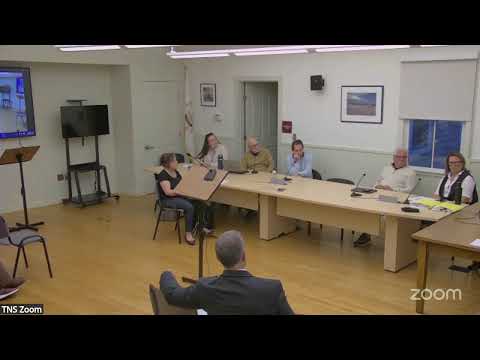
The Town of New Shoreham Zoning Board of Review, sitting as a board of appeal on a Superior Court remand, voted Thursday to find that a fence on a West Side property is a "structure," to uphold the building and demolition permits connected to the site, and to rule that the appellant no longer has standing to pursue the appeal.
The finding resolves a multi-year dispute that began after the board originally declined to consider the fence a structure; the Rhode Island Superior Court (Judge Lanphier) vacated that earlier decision and sent the matter back for a new hearing with factual findings. The appellant, represented in the hearing by attorney Taro, argued the post‑demolition fence should not have been permitted and asked the board to order its removal. The town, represented by land use counsel Karen Browning and by Building Official Christopher Zangari, urged the board to reject those requests.
The case matters locally because it clarifies how the town will treat fences and post‑construction permits after a demolition and limits the zoning board’s immediate power to order removal of completed work. The town's legal counsel read the zoning ordinance definitions aloud during the hearing to show the board the difference between a "structure" and an "accessory structure," and the board treated that statutory language as central to its decision.
Background and testimony
Karen Browning, land use counsel for the town of New Shoreham, told the board it was acting as a quasi‑judicial body on remand from the Superior Court and that the court had vacated the board’s earlier ruling and ordered a new hearing with factual findings. Browning read the ordinance definitions into the record, including the rule that "an accessory structure shall not be permitted without the primary structure to which it is related."
Christopher Zangari, the town’s building official and counsel at the hearing, told the board the property at issue had been sold since the first hearing and argued that change undercut the appellant’s standing. "I would submit to this board that as of right now, the appellant is not an aggrieved party," Zangari said, noting the deed records showed the property had been sold for "$4,400,000" and that the appellant no longer owned or held a leasehold interest in the parcel.
Philip Trahanas, who testified that he had been co‑trustee of the Jennifer A. Trahanas Revocable Trust at the time of the events, said he had authority to sign on behalf of the trust and described why he placed the fence. Trahanas said he put the fence up after an incident in which trees on his property were cut and an individual used a chainsaw on his land; he said he initially believed a permit was not required, then received an after‑the‑fact permit and a letter from the town acknowledging an error. "I put up a fence," Trahanas said in testimony describing the events that led to the permit dispute.
Key legal issues and the board’s findings
The board focused on three legal questions: (1) whether the appellant had standing now that the property had been sold, (2) whether the fence is a "structure" or an "accessory structure" under the New Shoreham zoning ordinance, and (3) whether the demolition and fence permits had been issued properly, including an after‑the‑fact fence permit.
On standing, a majority of board members agreed with the town that the appellant no longer qualified as an "aggrieved party" because it no longer owned or held a leasehold interest in the property. Zangari had urged the board to address standing first, saying the sale was a material change in circumstances.
On the ordinance definitions, the board reviewed the text read into the record: the ordinance defines "structure" broadly ("a combination of materials to form a construction for use, occupancy, or ornamentation ... including but not limited to porches, patios, stairs, decks, and flagpoles") and defines "accessory structure" as "customarily incidental and subordinate to the principal structure" and "not be permitted without the primary structure to which it is related." The board concluded the Superior Court had already held a fence can be a structure and that the record did not support treating this fence as only an accessory structure dependent on a primary dwelling that no longer existed on the lot.
On permits, the board accepted testimony from town witnesses that the demolition permit was issued after review by a building official who concluded the buildings could not be feasibly moved, and that a post‑construction building permit for the fence had been issued by the town. The building official told the board that issuing after‑the‑fact permits is a common administrative remedy when a structure later is found to meet applicable standards.
Formal actions and votes
The board took two formal votes. First, members voted to find the appellant lacks the necessary standing to proceed with the appeal. Second, the board voted to uphold the demolition permit as properly issued under §7.11 of the zoning ordinance and to find that the fence permit, although issued after construction, was properly issued; the board also concluded the fence qualifies as a "structure" under the ordinance rather than only as an "accessory structure." Both motions were seconded and carried with affirmative votes recorded as "Aye" by the members present.
What the board did not do
Board members and the town's attorney noted limits on the board’s authority. Several members said the board does not typically have the power to order the physical removal of completed work as injunctive relief; enforcement and removal would be handled through the town’s enforcement mechanisms if appropriate. The board's vote affirmed or reversed administrative acts (permits) and will be reflected in its written decision.
Next steps
The board closed the public hearing after testimony and then deliberated in public before making the two motions described above. The votes recorded at the meeting resolve the remanded legal questions identified by the Superior Court; the board’s written findings and decision will provide the formal record and reasoning the court required on remand.