Get Full Government Meeting Transcripts, Videos, & Alerts Forever!
Get email alerts on the Utility Infrastructure And Planning topic
No spam. Unsubscribe anytime.
LCRA seeks board approval of business and capital plans; Timmerman plant energized for testing, staff urges water conservation
Summary
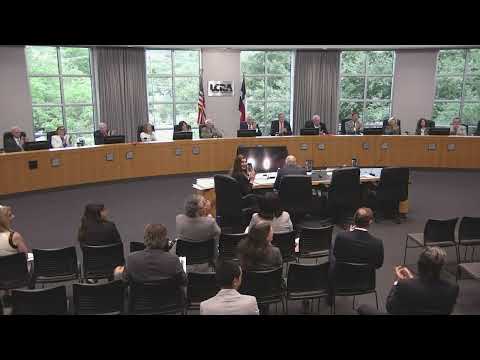
Lower Colorado River Authority staff on Monday asked the LCRA Board of Directors to approve the authority’s business and capital plans for the coming fiscal year while reporting summer safety preparations, an energizing milestone for the Timmerman power plant and continued emphasis on water conservation.
Lower Colorado River Authority staff on Monday asked the LCRA Board of Directors to approve the authority’s business and capital plans for the coming fiscal year while reporting summer safety preparations, an energizing milestone for the Timmerman power plant and continued emphasis on water conservation.
The presentation told directors the utility is reminding employees about heat‑safety measures — taking breaks in shaded or air‑conditioned areas, rotating job functions, using sunscreen and staying hydrated — and that supervisors “expect employees to stop work when needed” to reduce heat‑related risk. The presenter also urged customers and residents to reduce discretionary outdoor watering during the drought.
LCRA staff emphasized two operational milestones. First, teams at the Timmerman power plant in Caldwell County energized the site in March to test systems such as cooling, fuel‑oil handling and engine controls; the next testing steps are engine start‑ups and synchronization with the Electric Reliability Council of Texas (ERCOT) grid, followed by commercial operation once ERCOT approves market participation. Second, staff summarized generation, transmission and telecommunications investments included in the proposed plans.
Among figures stated in the presentation, staff said LCRA expects to invest about $5,900,000,000 over five years to build and upgrade transmission facilities and about $168,000,000 over five years in telecommunications capital projects. Staff also said the authority is using excess fiber capacity to help connect communities to broadband "under authority from the legislature." The presentation named the Arbuckle Reservoir in Wharton County as a planned new water‑supply project; staff said Arbuckle could add up to 90,000 acre‑feet per year and is expected to enter service this summer.
The presenter also referenced investment for dam rehabilitation and for additional water supply development but did not provide clear, unambiguous dollar amounts for those items in the meeting record. The transcript of the presentation contained several large numeric figures that were inconsistent in wording and therefore are recorded here as not specified.
The presenter described cross‑department coordination in the Timmerman commissioning work, naming generation, transmission, commercial operations, supply chain, cybersecurity and market compliance among participating groups. The presentation thanked employees who participated in "Step(s) Forward Day," a recurring volunteer event; a brief video and several brief remarks from participants followed the formal briefing.
No formal vote on the business and capital plans is recorded in the meeting transcript provided. The presenter said staff was seeking board approval of the plans at the meeting; the transcript ends with the presenter asking if directors had questions and offering to conclude his remarks.
LCRA referenced compliance with ERCOT reliability requirements for extreme weather planning and noted that investments in transmission and generation are intended to support reliability and the authority’s role as a wholesale power provider. The presentation framed water conservation as a near‑term operational priority during the summer drought and as one arm of a combined approach that also requires development of new supplies.
The authority provided specific operational guidance for employees: use of shaded or air‑conditioned break areas, rotating job functions, applying sunscreen with at least SPF 15, and hydrating before, during and after work. On water conservation, staff said wholesale customers report 60–70% of treated water delivered during peak summer is for discretionary outdoor use and encouraged drought‑tolerant landscaping that can survive on reduced watering schedules.
Looking ahead, staff said Unit 1 of the Timmerman facility is scheduled to enter service this year and Unit 2 in 2026, and described continued investments to expand grid capacity and telecommunications capacity over the next five years. The presentation closed with recognition of employees and volunteers involved in the projects and outreach events.
The meeting record does not include a completed board vote or a formal adoption recorded in the transcript provided. Where dollar amounts or dates were unclear in the transcript, this article states that the figure was not specified in the meeting record rather than substituting an interpretation.