Get Full Government Meeting Transcripts, Videos, & Alerts Forever!
Get email alerts on the Education Field Trip topic
No spam. Unsubscribe anytime.
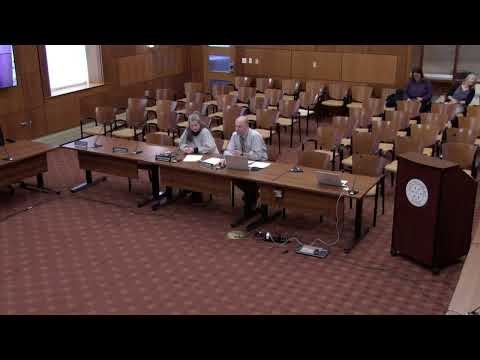
Edward Little teacher presents Iceland field program, students read group poem to Auburn School Committee
Summary
At the May 21 Auburn School Committee meeting, Edward Little High School teacher Aaron Towns described a recent student field program to Iceland linked to the school's Arctic Climate Studies course and outlined partners, student activities and funding details.
Aaron Towns, a teacher at Edward Little High School, described a recent field-based program to Iceland for 13 students during the Auburn School Committee's meeting on May 21, 2025.
Towns told the committee the trip was part of an ongoing Arctic Climate Studies course offered at Edward Little that combines earth and climate science, visual arts, history and global economics. He said the students kept field notebooks, conducted coastal erosion studies and participated in hands-on fieldwork such as making a mock ice core, examining lava fields and visiting an outlet glacier and volcanic sites.
Towns said the group traveled with Geocamp Iceland and stayed at a field station described in the presentation as the Sudern Science and Learning Center in southwestern Iceland. He listed partners and influences on the program'including the University of Maine, the Mount Washington Observatory and visiting scientists from the University of Colorado at Boulder'and said the trip emphasized both scientific techniques (drone use, LIDAR, meteorological tools) and cultural study (Icelandic society, Viking and Celtic history, local folklore).
Towns recited a student-composed poem titled "Found," which he said the group wrote during the trip. Excerpts he read included, "I find a hug in this nature. Grief leaves my body, finds a new home" and later, "How beautiful my life can be when I step out of my comfort zone." He described the trip as a bonding experience for students, many of whom had never traveled outside Maine.
On funding, Towns said Geocamp Iceland subsidized part of the trip and the total cost per student was $2,100; he said that amount covered flights, accommodations, local transportation and entry fees. He acknowledged support from Edward Little staff, including Principal Ackley, and from parents and community members who helped make the trip affordable. Towns said organizers hope to pursue competitive grants to keep future costs around $2,000 per student, "so it makes it manageable," and said organizers prefer a small group size for field-based work.
Towns described specific learning moments: students stood at the Mid-Atlantic Ridge where the Eurasian and North American plates separate, examined lava fields and black sand beaches, visited Grindavik (a community heavily affected by recent volcanic activity) and navigated challenging hikes that included climbing by chains and reaching geothermal pools. He also said students practiced budgeting and currency exchange while living in teams at the field station.
Towns said Geocamp also runs programs in Denmark and that he and partners are working with the University of Maine to develop a field program tied to a research station near Copenhagen.
The committee did not take formal action on the presentation. Chairperson Pam Albert and other committee members asked follow-up questions about future offerings and funding; Towns said they hope to run another program next year if logistics and funding allow.
The presentation closed after Towns and committee members exchanged brief comments and Towns thanked the committee for the opportunity to share the students'work.