Get Full Government Meeting Transcripts, Videos, & Alerts Forever!
Get email alerts on the County Budget topic
No spam. Unsubscribe anytime.
Oconee County presents $83.7 million recommended budget; commissioners hold second public hearing on FY2026 plan
Summary
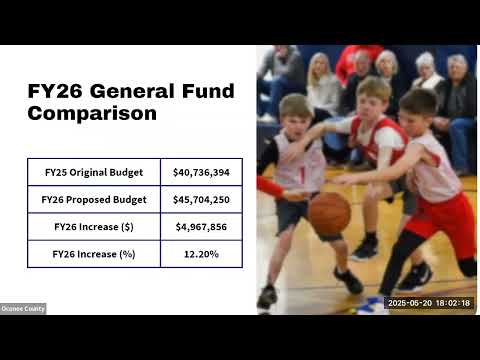
The Oconee County Board of Commissioners held a second public hearing on the proposed fiscal year 2026 budget, during which county staff said the recommended general fund budget is $45,704,250 and the county’s total recommended budget is $83,700,551, an increase of about $7 million from FY2025.
The Oconee County Board of Commissioners held a second public hearing on the proposed fiscal year 2026 budget, during which county staff said the recommended general fund budget is $45,704,250 and the county’s total recommended budget is $83,700,551, an increase of about $7 million from FY2025.
Melissa, a county staff member who presented the budget, said the proposed general fund represents about a 12% increase over the current year and that property taxes are budgeted at $19.7 million, making up about 43.5% of the proposed general fund. She said the county plans to use approximately $310,000 in reserved fund balance in the general fund to purchase law-enforcement body cameras.
The presentation listed the largest expenditure categories as law enforcement/jail/911 (about 33.9% of the general fund recommendation), administration and operations (17.3%), parks and recreation (9.8%), and public works (9.4%). Personnel and benefits are budgeted at $25.6 million (about 56% of the proposed general fund), reflecting an across-the-board step increase for eligible employees plus several position changes. Melissa outlined specific staffing adjustments: two part-time positions proposed for animal services, two part-time positions for the Civic Center with one full-time custodial position removed, one full-time planning manager added with a full-time code enforcement officer position removed, elimination of an assistant director position in the Water Resources Fund, and the transfer of an accountant position from the Water Resources Fund to the general fund finance department.
The county presentation included capital and one-time items in the general fund such as life-cycle equipment replacements, crime-scene cameras, and an IT contract upgrade to a tier III security level. Capital outlay in the general fund was listed at $872,500; other capital projects and special revenue funds (SPLOST and TSPLOST) bring the total recommended budget to $83.7 million. The county cited $4.0 million of the year-over-year increase as attributable to the general fund, $1.4 million to SPLOST/TSPLOST capital funds and $1.0 million to the Water Resources Fund.
The presentation also described the county’s School Resource Officer (SRO) program, budgeting $2.5 million for the program and noting a 90% cost-share from the Board of Education, budgeted as $2.2 million; the county said that budgeted amount would fund 16 SROs and related small equipment.
Staff described fee and rate changes included in the FY2026 proposal. Noted changes in the fee schedule presented by staff included: consolidating three sanitation bag sizes into one (no fee change for the bag itself), an increase to the oversized tire fee (an increase of $10 was noted), added detail and no fee change for bulky-item disposal, Civic Center fee restructuring with a 10% nonprofit discount and a 25% upcharge for out-of-county renters, an added $100 fee for private cremation and surrender at animal services and a $5 increase to the distemper vaccine fee, parks program-fee increases and rental consolidations (generally increases of $5–$10 and program fees up about 10%), and water rate increases of 3.5% and sewer rate increases of 5.25%.
During the hearing, resident Pam Hendricks questioned the size of the year-over-year increase and said it felt large for taxpayers and tenants she rents to. Hendricks said, “that 12.2% increase in 1 year is huge,” and urged commissioners to restrain government growth. Commissioners and staff responded that the presented increase reflects a combination of factors — including a full-year budget for the recently implemented SRO program, capital and lifecycle items, and revenue estimates — and that staff expects the typical homeowner’s county property tax bill would not rise by the same percentage. Melissa pointed to the budget’s revenue mix and usage of fund balance; another commissioner noted uncertainty in the digest and referenced House Bill 581’s homestead exemption changes as affecting taxable values. County presenters recommended not setting an “estimated millage rate” under HB 581 at this time, saying doing so could trigger taxpayer notices if later changes push the final millage higher than that estimate. The board was told current estimates indicate no county millage increase is required to balance the FY2026 budget.
What happened next: the county scheduled a final adoption vote for the budget on June 3, 2025, and staff said the updated fee schedule and a one-page budget summary are posted on the county website and on a public bulletin board and at both county libraries. The presentation indicated some capital projects and engineering work would return later for specific budget amendments if construction-phase costs are requested.
Why it matters: the proposed budget funds public safety, fleet and facility lifecycle work, an expanded SRO program, and pavement projects funded in part with SPLOST/TSPLOST; it also includes several small fee and utility-rate increases that will affect residents’ monthly costs. The board’s decision on the final millage rate and the June 3 adoption will determine whether the presented plan becomes the county’s FY2026 spending plan.
Sources: presentation to the Oconee County Board of Commissioners second public hearing on the FY2026 budget; statements during the hearing by Melissa (county staff) and public commenter Pam Hendricks.