Get Full Government Meeting Transcripts, Videos, & Alerts Forever!
Get email alerts on the County Budget topic
No spam. Unsubscribe anytime.
Caroline County earmarks $100,000 for tree trimming, sets aside remaining capital for radio replacement
Summary
After updated state revenue estimates, commissioners restored several capital items and voted to allocate $100,000 to tree trimming and $980,005.94 to a fund for a future radio replacement program.
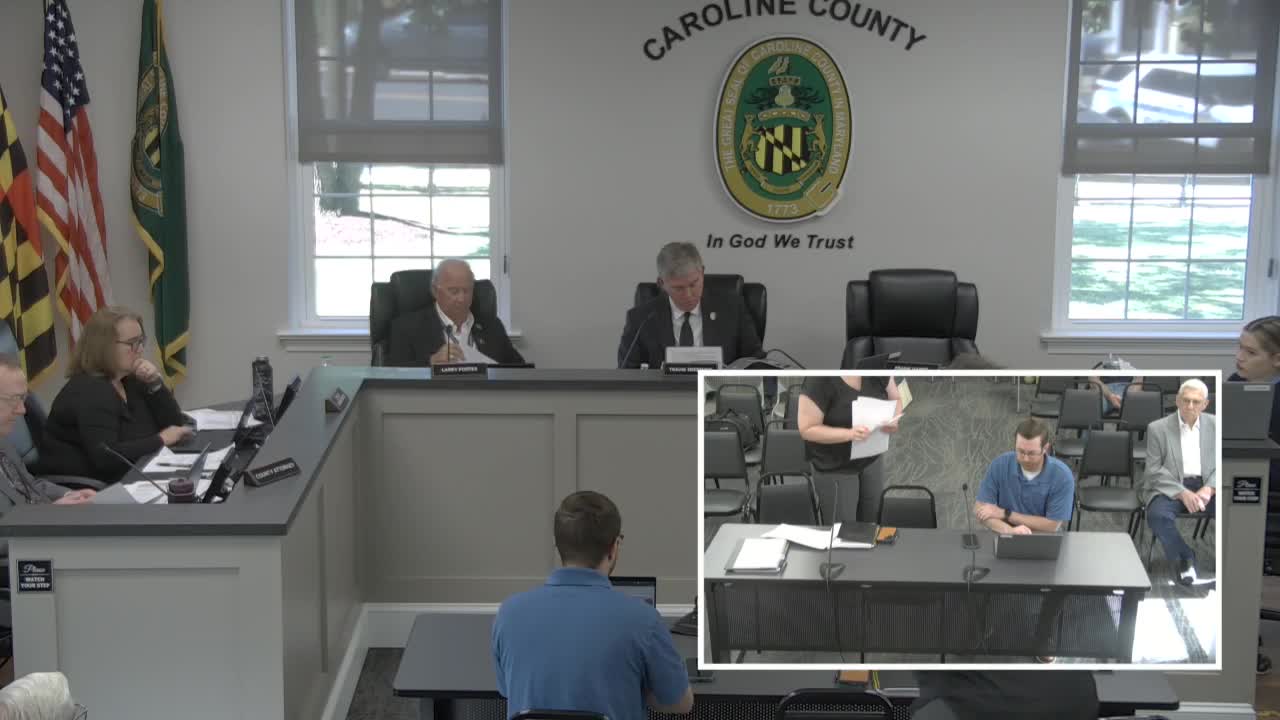
Caroline County commissioners directed staff on Tuesday to allocate $100,000 from newly available capital funds for roadside tree trimming and to place $980,005.94 into a fund to purchase a planned radio replacement system.
County budget staff said state actions narrowed an expected income-tax revenue loss from roughly $1.1 million to about $200,000 and increased the county’s disparity grant for one year, producing roughly $1.08 million in additional capital capacity. “The legislators decided to put a bill through that would, for one time this year, actually make that gap whole up to 90%,” the county’s budget presenter said, noting Caroline County was among five counties receiving extra disparity funding.
During a fiscal-year 2026 budget workshop, staff showed that restoring previously cut projects — including road surface work and the county share of a Chesapeake College building — left about $1 million available to place toward other capital needs. Commissioners debated priorities including a multi-year radio replacement estimated by county staff and vendors at several million dollars and ongoing maintenance items.
After discussion, the board voted to direct $100,000 to public-works tree trimming operations to address limbs and clearance needs and to reserve $980,005.94 toward the planned radio replacement fund. A commissioner moved the allocation and a second was recorded; the motion passed on a voice vote.
The board and staff discussed financing options for the radio system, including phased purchasing and pay-go funding versus borrowing. County staff and commissioners expressed a preference for pay-go funding to avoid interest expense and to avoid adding recurring operating costs tied to one-time state revenue changes that may not recur.
Budget staff said they will update the budget documents with the allocation decisions, circulate revised sheets publicly and return to the board for formal adoption at the scheduled budget adoption meeting on June 10. Commissioners also discussed retaining the one-time nature of the funds to avoid creating recurring obligations that could force cuts next fiscal year if state funding reverts.
No public comments were recorded on the capital allocation during the workshop portion of the meeting.