Get Full Government Meeting Transcripts, Videos, & Alerts Forever!
Get email alerts on the Land Use And Environment topic
No spam. Unsubscribe anytime.
Hundreds of residents urge Hays County to block proposed Cloudburst data center over water, air and noise concerns
Summary
A public workshop on Cloudburst Data Centers’ proposal in the county drew dozens of speakers who raised concerns about water use, emissions, light and noise. County staff said a floodplain permit is under review and that many approvals will come from state agencies and neighboring Guadalupe County.
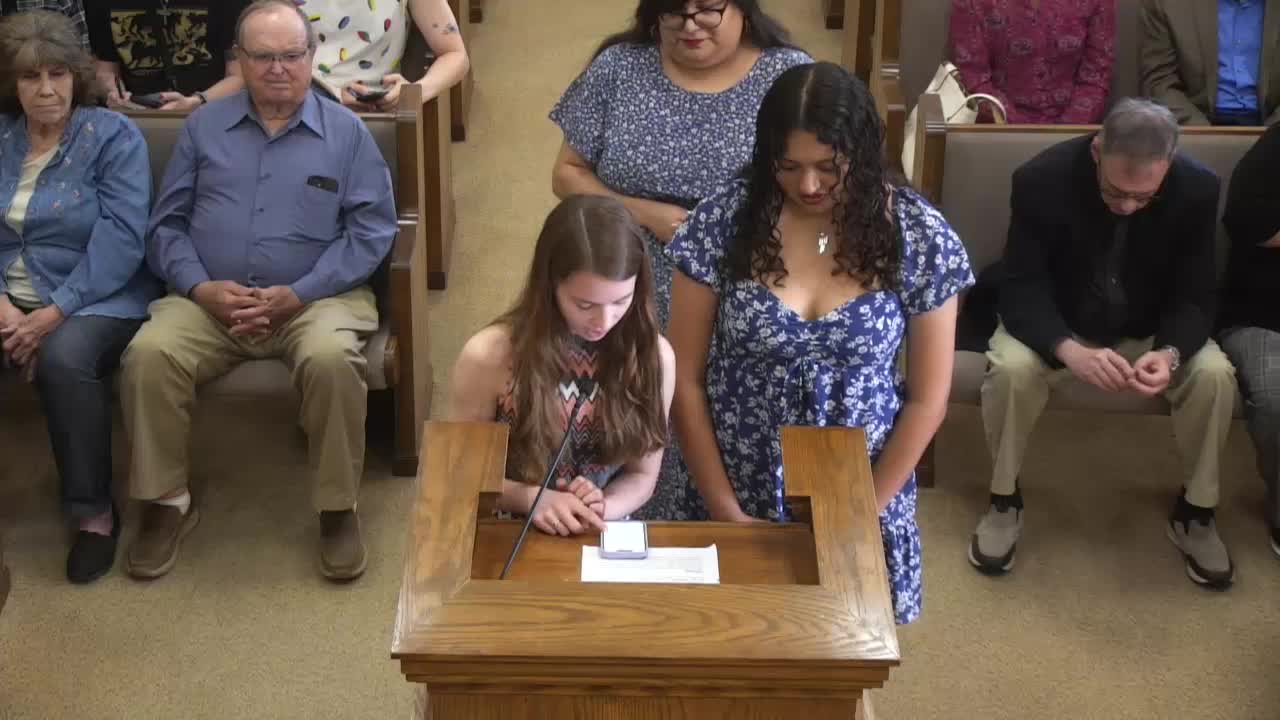
Dozens of Hays County residents packed the commissioners court on May 20 to challenge a proposed Cloudburst AI data center and associated natural gas power plant planned for 2955 Francis Harris Lane, a site that includes York Creek and lies in a floodplain.
The majority of public commentators urged the Commissioners Court to oppose the project, arguing the large facility would consume scarce fresh water, increase greenhouse-gas and air pollution, harm springs and tributaries that feed the San Marcos River, and impose noise and light pollution on rural neighborhoods.
Why it matters: Cloudburst’s proposal includes an on-site power plant and significant cooling systems for computing hardware. Presenters and many residents said the project would demand millions of gallons of water per day for power generation and cooling and that San Marcos-area surface and groundwater supplies are already strained. County staff said some components of the development fall under Guadalupe County’s jurisdiction and that the county’s authority to restrict land use is limited under current state law.
What happened at the workshop: Cloudburst representatives, including Cynthia Thompson (identified by Cloudburst as chairperson), gave a brief explanation of data centers as “physical facilities” that host cloud data and said Cloudburst intends to operate with recycled water, low lighting and other mitigation measures. They told the court they expect to start small and expand with demand, and that technical details for water volumes and other design specifics are being developed.
Residents challenged those assurances. A stack of public commentators described local water shortages and cited regional drought and low river flows, asking where the facility’s millions of gallons a day of water would come from and how any wastewater or coolant leaks would be prevented. Virginia Parker of the San Marcos River Foundation urged the company to rely on reclaimed treated wastewater if it proceeds and to adopt a riparian buffer and enhanced stormwater controls near York Creek. Several speakers urged the court to deny any permits.
County process and limits: Marcus Pacheco, director of Development Services, told the court that the county has a flood-hazard permit application under review for the administrative building on the Hays County side of the property; he said that review is in an early round and that multiple rounds of review are expected. He also explained that portions of the project that lie in Guadalupe County — including the data center complex and planned power plant — will fall under that county’s permitting authority. Pacheco reiterated that the county does not have land-use zoning authority like a city and that other permitting authorities (for water, power and air emissions) rest with state regulators such as the Texas Commission on Environmental Quality and ERCOT.
No county approvals or votes were taken: the workshop was informational; no formal permit was approved by the Commissioners Court during the meeting. Commissioners and county staff repeatedly encouraged Cloudburst to improve outreach with neighbors; several residents said they had not received direct outreach from the company despite claims in Cloudburst materials that neighborhood contacts had been made.
Next steps: County staff said they will continue technical review of the flood-hazard permit and circulate questions to the applicant. Several county officials and residents said they will press state and municipal regulators for more detailed water-use, stormwater, and air-quality data as the proposal advances. Cloudburst said it will continue to refine its design, including investigating reclaimed water and closed-loop cooling options.
Evidence: The workshop included a Cloudburst presentation by Cynthia Thompson; public comment came from more than 30 people (including Virginia Parker of the San Marcos River Foundation, Gina Fleming of Hays County, and many Valley Acres and York Creek Road residents) and statements by county staff and the developer.