Get Full Government Meeting Transcripts, Videos, & Alerts Forever!
Get email alerts on the Budget Fiscal topic
No spam. Unsubscribe anytime.
Valley County begins FY2026 budget workshops; wildfire mitigation staffing, Title 3 funds and multiple department requests highlighted
Summary
Commissioners began budget workshops May 19 and heard departmental requests including a proposed permanent staff addition for wildfire mitigation, travel and training increases in planning and building, and several staffing and equipment asks across probation, assessor and HR.
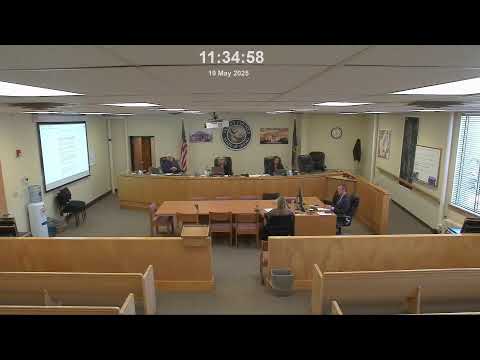
Valley County commissioners opened their fiscal year 2026 budget workshops on May 19, hearing department‑level requests and flagging several items for further discussion, including a recommended permanent position in the county’s wildfire mitigation program and dwindling Title 3 funds.
Laura Halovich, director of the county’s new Wildfire Mitigation division, told commissioners that her salary has been grant‑funded but that sustaining the program over time will require county funding or other steady sources. Halovich said shared stewardship partners have authorized a consultant to provide roughly 30 days of assistance next fiscal year and that the county will carry approximately $30,000 in uncommitted Title 3 (Secure Rural Schools) funds into FY2026. She asked commissioners to consider long‑term funding options and said outreach and education efforts — including social‑media advertising, Firewise community development and a mobile risk assessment portal — are priorities that may require local support if federal SRS funding is not renewed.
Planning and zoning staff requested higher travel and training budgets tied to increased commissioner and staff training needs (including APA participation and additional permit‑tech training), and noted greater engineering review workload as new development activity proceeds. Building department staff explained anticipated demand for on‑site inspections and for mobile inspection tools and tablets to support remote review; staff also discussed options such as drone inspection technology in the near future.
Probation and juvenile detention staff proposed replacing expiring body armor for field officers and shifting monitoring strategies away from ankle SCRAM devices toward portable breathalyzer/personal monitoring equipment; probation leaders said grants and lottery funds may cover portions of training and equipment but asked the board to budget for contingencies. The board also discussed juvenile detention contingencies, noting that high‑cost placements (e.g., inpatient or long‑term secure placement) can quickly drive costs and may require mid‑year budget adjustments.
Human resources and the assessor’s office briefed the board on personnel and workload pressures: HR requested modest increases for background checks, professional development and supplies tied to an anticipated new payroll/HR staff position; the assessor cited parcel growth and a 5‑year workload plan that supports adding staff to handle increases in buildable‑lot counts and related valuation work.
Commissioners repeatedly cautioned staff to identify grant or external funding first and to return with amended budget requests if grant awards arrive before final appropriation. Several directors said they will seek outside grants where possible and provide updated figures to the budget officer for inclusion in future workshops.
Why it matters: wildfire mitigation was discussed at length, and commissioners identified it as a county‑level priority that may need sustained local funding if federal streams decline. Other requests (training, inspection technology, probation monitoring equipment) reflect operational changes tied to growth, new programs and compliance requirements.
Next steps: departments were asked to refine requests, share documentation of alternative funding, and return to the commissioners in subsequent workshops before final budget adoption in July/August.