Get Full Government Meeting Transcripts, Videos, & Alerts Forever!
Get email alerts on the Sugar Beet Industry topic
No spam. Unsubscribe anytime.
Sugar beet growers and Amalgamated Sugar brief House Agriculture Affairs Committee on labor, glyphosate, DEQ permitting and factory workforce
Summary
House Agriculture Affairs Committee members heard from sugar‑beet industry representatives about labor shortages, heavy dependence on glyphosate‑resistant seed, delays in DEQ permitting and factory workforce challenges.
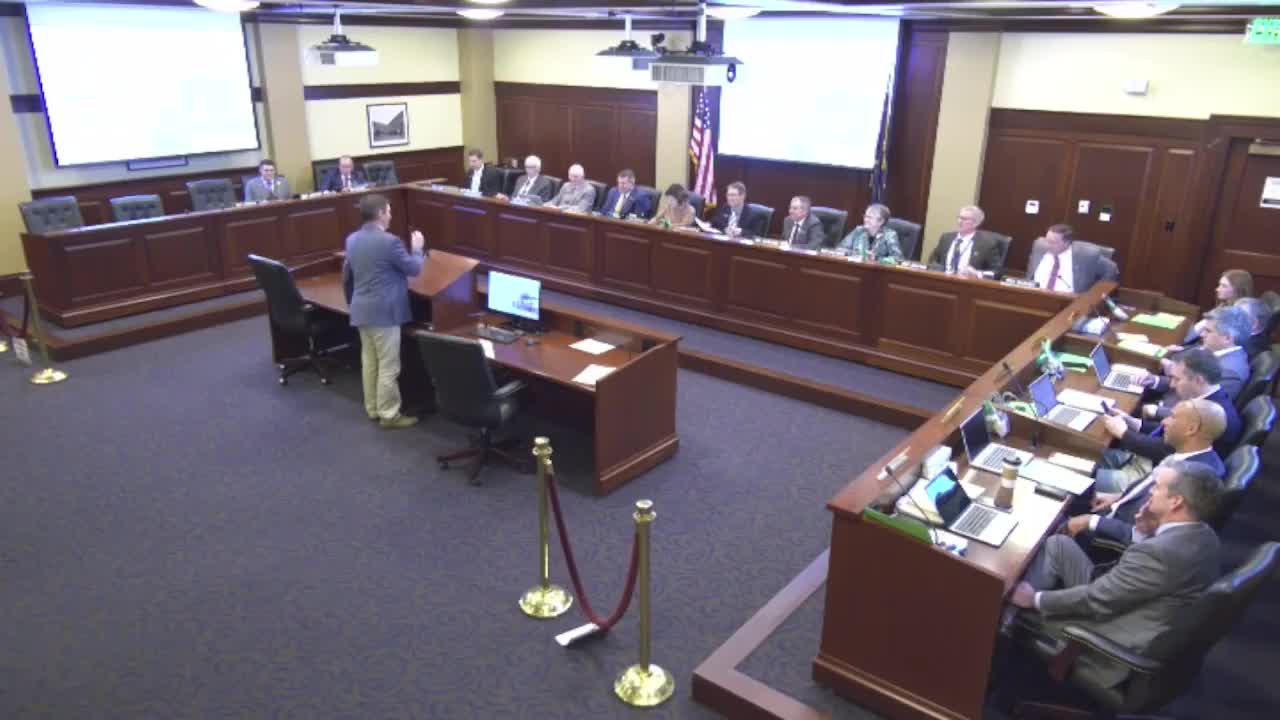
Members of the House Agriculture Affairs Committee heard a combined presentation from Zach Patterson, president of the Snake River Sugar Beet Growers Association, and Christina Hardesty, vice president, general counsel and secretary at Amalgamated Sugar Company, on the state’s sugar‑beet sector and its policy and workforce challenges.
The presenters told the committee that sugar beets are a major crop in southern Idaho and that the industry supports local economies through farm income, factory payroll and byproduct sales. Hardesty said Amalgamated operates three processing facilities and 72 receiving stations and that the cooperative’s growers supply roughly 181,000 acres of beets; she added that the company produces what she described as "approximately 12% of the sugar consumed in The United States." Patterson and Hardesty also highlighted labor availability, the crop’s dependence on glyphosate, permitting delays at the Idaho Department of Environmental Quality and factory recruitment for skilled trades.
"I want clean water, I want clean air," Zach Patterson told the committee as he described farm stewardship and the importance of pesticide label compliance to family farms. Patterson also explained the seasonal rhythm of beet production and said farmers rely on glyphosate in their crop management: "[I]t has been a complete game changer. It is something that...has been the best thing that we've had, quite frankly, to increase our yields." Representative questions focused on trends in domestic beet versus cane production, the role of glyphosate‑resistant seed, disease pressures and the industry's labor needs.
Hardesty detailed Amalgamated’s operations and byproducts and provided several economic figures to the committee. She said the cooperative receives about 7,250,000 tons of sugar beets during harvest each year, produces roughly 800,000 tons of pressed and dried beet pulp used for cattle feed and about 350,000 tons of molasses and other feed products annually. At peak harvest, Amalgamated employs about 2,500 workers across factories and receiving stations and reported roughly $141 million in annual payroll; she told the committee the company contributes over $1,000,000,000 annually to Idaho’s economy.
Hardesty told lawmakers the company’s principal near‑term policy priorities are increased staffing and funding for the Idaho Department of Environmental Quality (DEQ) to reduce multi‑year delays in environmental permitting; support for workforce development (Idaho Launch) to recruit tradespeople for factory jobs such as welders and electricians; and tort‑reform measures to limit liability for businesses that comply with federal and state labeling and warning requirements. On tort reform she summarized the proposal to the committee: "So the tort reform bill, all it does is say...I can't be held liable for failing to warn" when sellers comply with required warnings on products.
Committee members asked technical and policy questions. Representative Mathias asked whether sugar‑beet share of domestic production is rising; Patterson said year‑to‑year weather and crop conditions keep beet and cane output close in national totals. Representative McCann and others pressed the presenters on labor needs and whether glyphosate has reduced demand for manual weeding crews; Patterson said glyphosate has sharply reduced that labor demand on the farm. Representatives asked about disease pressures such as cercospora and about partnerships with the University of Idaho on research and seed development; Patterson and Hardesty both emphasized the role of university research and seed‑development projects.
Hardesty described specific factory capacities: she said the company’s "Minicasia" plant (which she said borders Minidoka and Cassia counties) processes about 17,600 tons sliced per day, its Twin Falls site is smaller, and the Nampa plant slices about 11,500 tons per day. She characterized the factories as old (structures built in 1916, 1917 and 1942 per her remarks) and said aging infrastructure and lengthy DEQ permitting timelines make capital improvements costly and slow.
Questions to the presenters also covered byproduct uses (beet pulp for cattle feed, CSB or beet juice used in some places as a road de‑icer and feed additive, and betaine for feed and industrial uses), union representation (Hardesty said roughly 1,400–1,500 union employees among her regular staff base of about 1,800), and automation trends on farms and in factories. Hardesty said automation is more likely to increase on the factory side while farms have adopted mechanization that reduces but does not eliminate the need for human labor.
The committee did not take formal votes related to the industry presentations during the session. Presenters and legislators agreed the sector’s immediate concerns are labor availability, regulatory permitting capacity at DEQ and preserving access to key crop‑protection tools and seed technologies.
The record shows the committee heard the presentations and posed follow‑up questions; no committee directives or formal policy actions were recorded in the transcript.