Get Full Government Meeting Transcripts, Videos, & Alerts Forever!
Get email alerts on the Public Health School Inspections topic
No spam. Unsubscribe anytime.
Douglas County adopts charter resolution exempting local health department from school sanitary inspections
Summary
The Board adopted a charter resolution allowing Lawrence Douglas County Public Health to decline routine sanitary inspections of schools, citing overlapping inspections by other agencies and limited staff capacity; the health department said it will still respond to complaints.
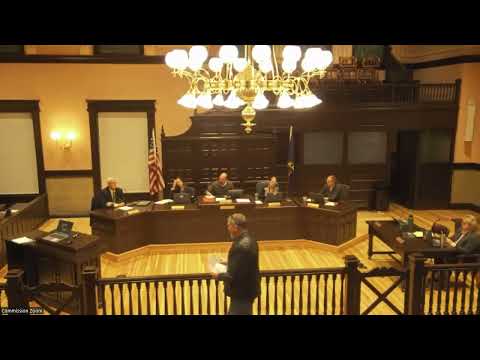
The Douglas County Board of Commissioners adopted a charter resolution allowing Lawrence Douglas County Public Health to be exempt from completing routine sanitary inspections in county schools.
Jonathan Smith, director of Lawrence Douglas County Public Health, told commissioners the department requests the exemption under KSA 65‑202a and that the health board approved a draft resolution in August 2024. Smith said the health department's historical school inspections were largely checklist reviews and that other agencies and existing school assessments provide more comprehensive oversight and, in some cases, the ability to compel a response from schools.
Smith said the exemption would not reduce the health department's responsiveness to specific public health complaints. "This exemption by no means does it mean that we will not respond to public health complaints or environmental health complaints that come through via schools," Smith said. He explained that the department's two environmental health staff already spend about 80 hours a month on other inspections including pools, septic systems and tobacco and retail checks.
Shelby Ostrom, policy analyst for the health department, said the charter resolution language was drafted by the Kansas Association of Local Health Departments and that several other Kansas counties, including Johnson and Sedgwick, have chosen similar exemptions. Ostrom noted statutory changes during the COVID‑19 pandemic affected the authority to exempt and that the option to adopt a charter resolution became available again in 2024.
Commissioners who spoke in favor said removing duplicated inspections could free environmental health staff to handle time‑sensitive constituent services such as septic inspections and new construction reviews. One commissioner said: "It's always good to eliminate duplication of effort and keep things streamlined." Another noted that many state laws are outdated and local control provides useful flexibility.
There was no public comment on the item. Commissioner Reed moved to adopt the charter resolution and the motion was seconded; the board approved the resolution by voice vote. A commissioner asked whether to record a roll call for items requiring four votes, and staff said roll call votes are generally used only where statutorily required.
Jonathan Smith said the health department can provide a side‑by‑side comparison of school inspections conducted by other agencies if commissioners want a fuller review before finalizing implementation steps.