Get Full Government Meeting Transcripts, Videos, & Alerts Forever!
Get email alerts on the District Budget topic
No spam. Unsubscribe anytime.
Beacon City School District previews 5.15% tax-cap levy as part of multi‑year capital and program plan
Summary
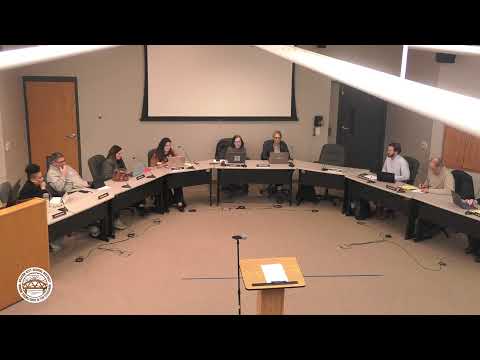
Beacon City School District officials on March 10 presented a draft budget trajectory that yields a maximum allowable tax levy increase of 5.15% under the state's tax‑cap calculation, driven mainly by the local share of the district's recent capital project and an unusually large tax‑base growth factor.
Beacon City School District officials on March 10 presented a draft budget trajectory that yields a maximum allowable tax levy increase of 5.15% under the state's tax‑cap calculation, driven mainly by the local share of the district's recent capital project and an unusually large tax‑base growth factor.
The board heard the levy calculation from staff during a workshop presentation. Ann Marie (staff member) said state aid this year is higher than last year but cautioned there is uncertainty at the federal level: "The federal money only makes up about 2% of our budget," she told the board, and those federal funds support items such as Title I and reading teachers. The district's presentation showed a maximum levy increase of about $2,400,000 (5.15%) under current assumptions; staff described that as a tax‑cap calculation, not the same as a year‑to‑year budget‑to‑budget increase.
Why it matters
District staff and board members framed the higher levy calculation as the product of several factors that matter to taxpayers and to operations: a capital project approved by voters in May 2024 (staff said the district had increased the local borrowing for that project by roughly $550,000); a large tax‑base growth factor that spreads the levy across more properties; and the district's strategy to phase in the local share of new debt rather than concentrate it in a single year. Matt (staff member) and other speakers noted the 5.15% figure is the maximum allowable under the calculation and that the final budget the board adopts in April could produce a smaller budget‑to‑budget percentage increase.
Details from the presentation
- Staff described the capital exclusion (the locally borne portion of principal and interest, less state building aid) as larger this year than in recent years. Historically the district said the capital exclusion had been around $900,000; the 2024 project and added local share increase that figure. Staff said one of the levers to lower the percent in the final adopted budget would be to reduce the amount budgeted for capital debt service in the levy calculation.
- Ann Marie explained the district's reserves: capital reserve (to be used for the 2024 capital project), a small insurance reserve and other restricted reserves for employee benefits and retirement contributions. The unappropriated fund balance stood a little over 4% at the time of the presentation, which staff said is within state guidelines.
- Administrators described options for managing short‑term heat‑related mandates and longer‑term cooling plans tied to the capital project. Staff said some very hot rooms will be identified as relocation sites short term, while CP24 mechanical projects will address longer‑term cooling and ventilation needs.
Programs and multi‑year priorities
Budget staff previewed programmatic priorities they intend to phase in over two to three years rather than fund all at once. Those priorities included: - Full‑day Pre‑K run internally in district buildings (staff said the program served 110 students this year and the district served every applicant this cycle). - A possible ninth‑period schedule at the high school that could require roughly the equivalent of 4 FTE over time or a mix of extra classes and hires to add electives and study skills supports at middle grades. - Additional elementary intervention teachers (staff proposed adding up to one more math intervention teacher and one to two reading intervention teachers split across schools).
Enrollment and staffing context
Board members and staff reviewed enrollment patterns and retirements. Jesse Morell, director of facilities, and budget staff said maintenance staff retirements are producing a loss of institutional knowledge at the same time buildings are receiving more technically complex HVAC and building management systems; staff recommended moving toward more specialized maintenance positions (for example, HVAC controls specialists) rather than relying solely on generalist custodial/trades roles.
Communication and next steps
Staff told the board they will provide additional, more granular materials in subsequent meetings, including household tax‑impact tables (comparisons with nearby districts), principal and interest schedules tied to the capital exclusion, and more detailed enrollment and staffing breakdowns. Board members asked staff to emphasize in public communications that the levy calculation percentage and the actual household impact differ by property type and assessment changes.
The board will consider adoption of the budget and the levy at its April 21 meeting; staff scheduled intermediate budget presentations for March 24 and April 7 to dig into staffing, instructional priorities and the detailed numbers.
Ending
Board members and staff framed the approach as a multi‑year effort to stabilize infrastructure and curriculum investments while trying to avoid surprise midyear expenditures. Staff stressed they plan to return more detailed cost breakdowns and household‑level examples before the April adoption vote.