Get Full Government Meeting Transcripts, Videos, & Alerts Forever!
Get email alerts on the Public Health topic
No spam. Unsubscribe anytime.
Greater LA County Vector Control briefed council on dengue, West Nile risks and new control tools
Summary
A representative of the Greater Los Angeles County Vector Control District told the City Council the district covers parts of Long Beach, detailed recent local dengue transmission and described surveillance, trapping, sterile insect techniques and interagency coordination.
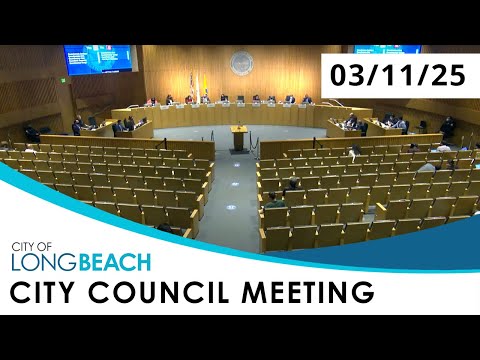
Carolyn Gongora, public information coordinator for the Greater Los Angeles County Vector Control District, briefed the Long Beach City Council on March 11 about mosquito‑borne disease risks and the district’s operations in parts of the city.
Gongora told council the district is the largest of five vector control districts serving Los Angeles County and that its service area includes parts of Long Beach. She said the district is funded through property and special assessment taxes and that the current annual cost per single‑family household is $18.97 for services covering mosquitoes, black flies and midges.
Gongora highlighted dengue fever as a growing concern: Long Beach saw local transmission of dengue in 2023 and the district reported three locally transmitted cases within its service area last year. She said West Nile virus remains endemic to the county and that annual surveillance detects activity in dead birds, mosquito samples and, occasionally, human cases.
The district described an integrated vector management approach composed of surveillance, control and public education. Gongora said the operations team responds to public service requests, inspects properties and treats identified breeding sources; the scientific team traps and identifies mosquito species and sends samples to UC Davis for testing; and the communications team provides outreach and youth education in collaboration with cities and health departments.
Gongora described the district’s sterile insect technique pilot, in which male mosquitoes are sterilized with X‑rays and released into targeted areas to mate with wild females; the resulting nonviable eggs reduce mosquito populations over time. She emphasized that the technique supplements but does not replace existing chemical or physical control methods.
The presentation noted coordination with the Long Beach Department of Health and Human Services and with other agencies for maintenance of flood‑control channels and storm drains. Gongora said the district inspected and treated more than 8,000 sources in 2024 within its service area and encouraged cities and residents to coordinate with the district for surveillance and control.
There was brief council acknowledgment and no vote on the presentation; staff and district representatives offered to take questions after the briefing.