Get Full Government Meeting Transcripts, Videos, & Alerts Forever!
Get email alerts on the Civil Rights topic
No spam. Unsubscribe anytime.
Residents flood public forum urging committee to retain Title IX protections and resist book‑ban requests
Summary
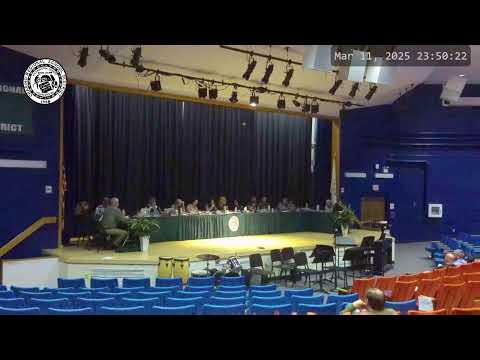
More than 50 people spoke during an extended public forum at the March 11 Chariho school committee meeting calling on the committee to keep nondiscrimination and library protections intact and opposing policy changes proposed by some members.
Dozens of residents, students, current and former teachers, medical professionals and elected officials used the March 11 public forum to urge the Chariho School Committee to preserve nondiscrimination and inclusion policies — including Title IX protections and current library media practices — and to resist efforts to remove protections for transgender and gender‑nonconforming students.
Speakers included alumni, parents, medical professionals and current and former teachers who described personal and professional experience of harm when school policies are weakened. Several parents and clinicians told the committee that discrimination and bullying had measurable health consequences: they cited elevated rates of anxiety, depression and suicide attempts among LGBTQ youth and asked committee members to consider those harms before changing policy. A number of speakers also tied opposition to “book bans” and censorship to historic examples where removing materials led to broader civic harms.
Jake Blanchett, a Chariho alumnus and founding member of an early Gay–Straight Alliance program, told the committee that he objected to members’ public association with an outside group that has supported book challenges and said removing protections would harm students’ mental health. ‘‘Taking away protections for those who need it does not align with those goals,’’ Blanchett said.
Former students and parents told personal stories about harassment and its effects. One speaker who identified as transgender described repeated bullying, suspensions, truancy proceedings and long‑term effects on education and employment; another said speaking at the meeting provided closure and urged the committee to protect vulnerable students.
Medical professionals and school staff urged the committee to heed professional guidance: Dr. Lisa Manlove, a Richmond family physician and school physician, cited bullying statistics and linked supportive school climates to better attendance and academic outcomes. Jennifer Wood, a former chief legal counsel at the Rhode Island Department of Education and an attorney with education law experience, told the committee that executive orders do not override federal or state law, and that current federal and state law and the First Circuit’s precedents protect transgender students in Rhode Island. She advised the committee that existing law prevents legally required rollbacks.
Several speakers also read passages from and cited the Rhode Island Attorney General’s response to Open Meetings Act complaints related to committee communications earlier in the year; those remarks asked the committee to prioritize transparency and public trust.
The public forum ran well beyond the committee’s original time allocation and the chair shortened subsequent public‑comment time limits because of the length of the docket. Committee members frequently reiterated the need to hear public comment but also said they needed to keep to a long agenda that included the FY26 budget.
The public forum did not conclude in any committee action; members requested that people who had specific concerns about the wording of particular policies wait until the committee considers those items on the agenda or when a policy subcommittee meeting is scheduled.