Get Full Government Meeting Transcripts, Videos, & Alerts Forever!
Get email alerts on the Contracts Energy topic
No spam. Unsubscribe anytime.
Energy consultant recommends 28-month fixed electricity purchase, 50/50 gas hedging to stabilize Proviso 209 costs
Summary
IGS consultant Sam Lewis told the board a 28-month fixed electric supply contract and a half-hedged natural gas strategy would protect the district from market reliability charges and volatility; administrators plan to seek contract approval through the consent agenda.
An energy-supply consultant recommended that Proviso Township High School District 209 lock in a 28-month fixed electricity contract and hedge 50% of its natural gas volume to protect the district from market volatility and rising capacity charges.
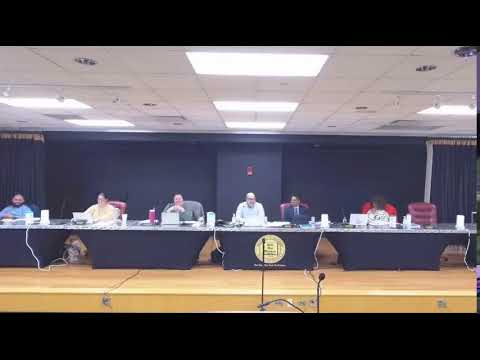
Sam Lewis of IGS, who presented to the board on March 11, said the PJM grid operator’s increased reliability (capacity) charges are a major upward pressure on electricity prices in Illinois. Lewis recommended a fixed-position electricity contract for 28 months to provide budget stability and to hedge against possible higher supply costs tied to grid reliability investments.
On natural gas, Lewis recommended a 50/50 approach: secure fixed pricing for 50% of the district’s gas volume and leave 50% exposed to market prices, with the option to lock additional volumes later if market pricing improved. “That contract will provide budget stability and risk mitigation against the changes within the electricity markets,” Lewis said.
Lewis told the board his firm has supplied the district for six years and that the recommended electricity volume for the 28-month term would be about 24,000,000 kilowatt-hours, normalized for recent consumption trends. He also said the district can use a “blend-and-extend” strategy later if commodity prices fall, which would allow the district to extend terms while capturing lower prices.
Administrators indicated the IGS contract was included among items on the consent agenda for board approval. During the presentation board members asked clarifying questions about contract length, consumption normalization, and how distribution and taxes (from utilities such as ComEd and Nicor/ILCORP) continue to be billed separately from supply.
Why it matters: energy supply is a recurring, budget-significant cost for school districts. Locking supply prices can reduce budget uncertainty but also carries the risk of missed savings if market prices decline. The consultant emphasized mechanisms to reprice or extend if market conditions change.
Next steps: the district’s business office told the board it would include an IGS gas and electric recommendation on the consent agenda for action and proceed with implementation if the board approved the contract.
Quote from the meeting: “I suggest a fixed position on the electricity supply, the term length of 28 months,” Sam Lewis said. “For that reason, I suggest a fixed position on the electricity supply, the term length of 28 months. That contract will provide budget stability and risk mitigation.”
Ending: If approved in the consent agenda, the contracts would be implemented to cover the district’s supply for the next multi-year term and staff would report back on pricing and implementation.