
Athens Area SD superintendent previews 2025-26 budget and flags $1.9M cyber charter cost
Get AI-powered insights, summaries, and transcripts
Subscribe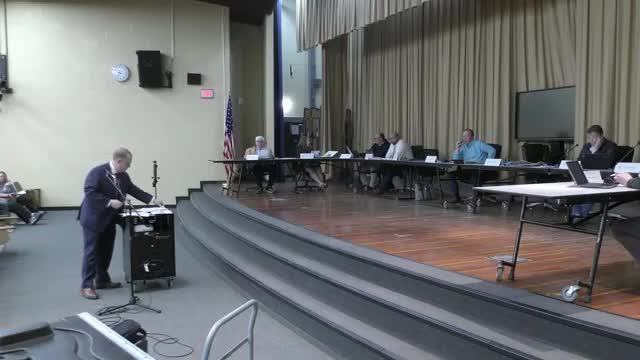
Summary
Superintendent Dr. Sage told the Athens Area School District board March 11 that declining assessed value and continuing cyber charter tuition payments will squeeze the 2025-26 preliminary budget; he outlined options including raising to the Act 1 index and urged awareness of a proposed $8,000 statewide cyber tuition cap in the governor's budget.
Superintendent Dr. Sage on March 11 presented a budget preview to the Athens Area School District board, saying the district faces a projected local revenue decline of $114,495.90 for 2025-26 if taxes remain unchanged and highlighting a projected $1,930,000 payment to cyber charter schools that will further strain the budget.
The preview, delivered at the district's March board meeting, explained that total assessed value dropped from about $281 million to $278.9 million and that Athens Township's assessed value fell from $131,392,000 in 2024 to about $129,100,000 in 2025. Dr. Sage said those changes, plus the loss of three parcels from the tax rolls, drive the local revenue decline.
Dr. Sage said the board in December agreed to limit future tax increases to the Act 1 index. At the district's current millage of 54.3 mills, the Act 1 index would allow a rise to roughly 57.57 mills and would yield about $835,000 if the board chose to adopt it.
Why it matters: the superintendent framed the cyber charter payments as a major cost driver. The district currently projects roughly $1.93 million in cyber charter tuition payments for the year — equal, he said, to roughly 12.59 full-time teacher positions at the district's average teacher salary-and-benefits cost. "That's $251 out of every tax bill," Dr. Sage said, and he urged the board to consider the fiscal effect as it prepares the preliminary budget scheduled for the April 8 meeting.
Dr. Sage noted other drivers that will affect the preliminary budget: a locked-in 8.2% increase in the district's Blue Cross Blue Shield health insurance (about $500,789), an increase in the PSERS employer contribution rate (projected to rise further over coming years), the end of ESSER pandemic relief funds, and uncertain federal funding streams such as Title I and Medicaid access reimbursements. He told the board the district expects only modest increases from the governor's proposed state funding: about $86,331 in basic education funding and roughly $68,680 in special education funding under the governor's proposal, while the adequacy supplement (a component of the state's fair funding adjustments) is not expected to provide money to Athens because the district's local effort rate remains below the threshold used in the state's calculations.
Dr. Sage also described a proposed state policy in the governor's budget that would cap regular-education cyber charter tuition at $8,000 per student; he said that measure applies only to students without individualized education programs and that current cyber charter tuition rates the district pays vary widely (he cited a current range, depending on student needs, from roughly $16,000 to $35,000 per student). He said the proposed cap would reduce the district's current outflow substantially but noted it is only a proposal at this point.
Board members asked clarifying questions about the $1.9 million figure and the mechanics of how cyber tuition is calculated. Mr. Johnson asked for further details; Dr. Sage said the district will provide more cost breakdowns and that the district's online learning option (WOLA) runs on district-managed platforms and staff, which he contrasted with for-profit cyber charter providers.
Dr. Sage closed by reiterating the timeline: the district aims to present a proposed preliminary budget for board action on April 8 to meet Act 1 deadlines. He emphasized that, absent changes, the district faces pressures from rising benefit costs and potential federal funding changes and asked the board to prepare for a budget cycle that could require offsets if additional revenue does not materialize.
Board action: no formal budget vote occurred at the March 11 meeting; Dr. Sage said the preliminary budget is targeted for board consideration on April 8.
Ending: The board scheduled its next regular meeting for April 8; the superintendent said he will return with a proposed preliminary budget and additional breakdowns of cyber charter costs and insurance and PSERS projections.