Get Full Government Meeting Transcripts, Videos, & Alerts Forever!
Get email alerts on the Special Education topic
No spam. Unsubscribe anytime.
Appoquinimink parents urge board to fix special-education gaps, cite state regulation
Summary
Six parents and advocates told the Appoquinimink School District board on March 12 that the district’s parent council, course-placement policies, transition planning, staffing and behavior supports for special-education students are inconsistent or inadequate. District leaders said they would follow up with each speaker.
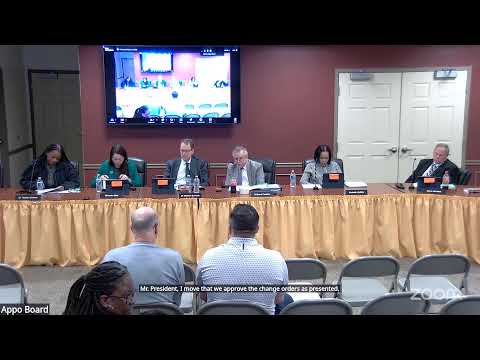
At the Appoquinimink School District Board of Education meeting on March 12, 2025, six parents and advocates delivered public comments alleging systemic problems in the district’s special-education services and asked the board and administration to take specific corrective steps.
The parents said problems include a lack of a functioning district parent council for families of students with disabilities, mandatory placements in accelerated courses for some students on the diploma track, inconsistent transition planning across schools, staffing shortages in special education, inconsistent implementation of individualized education programs (IEPs) and insufficient behavioral supports.
Courtney Beard, identifying herself as a parent, said the district failed to maintain a visible parent council and cited “State regulation 31 25,” which she quoted as requiring districts to contact parents each year to facilitate a parent council for students with disabilities. “This lack of transparency has created an exclusionary system that fails to fully represent our communities,” Beard said, and said parents working to reestablish a council found no meeting minutes, defined parent roles or clear advocacy processes.
Nicole (Nikki) Elliott, who said she is the parent of an eighth grader receiving special-education support, criticized automatic placement of diploma-track students into AP Human Geography in ninth grade and Algebra I in eighth grade. “Mandating AP courses is not equitable for all students,” Elliott said, describing negative effects on her daughter’s self-esteem and learning. Elliott asked the district to review course-placement policy and collaborate with families and staff to provide appropriate alternatives.
Loretta Geddy, identifying herself as a parent advocate, urged standardized, earlier and more consistent transition planning when students move between elementary, middle and high school. She said transition meetings are inconsistent across schools and often “feel dismissive rather than collaborative,” leaving families without clear information on academic, vocational or postsecondary options.
Lakeisha Parker urged the board to address staffing shortages and retention in special education, saying overworked special-education teachers, paraprofessionals and behavior staff cause delays and missed services in students’ IEPs. Parker asked the district to consider competitive pay and incentives, protected planning time for staff, faster hiring and more resources for staff wellness.
Rebecca Rothweiler said many IEP goals are written at grade level rather than at a student’s instructional level, and that requests for evaluations have been dismissed without explanation. She urged the district to ensure IEPs close academic gaps, that evaluation requests be handled promptly and that students who need small-group or specialized settings receive them. “No family or child should have to fight for services they are legally entitled to receive,” Rothweiler said.
Mariama Sumakeda (transcript: Mariama Sumakeda) described insufficient behavioral supports and an overreliance on suspensions and removals, calling for expanded behavior-health teams, improved data collection, functional behavior assessments, and evidence-based preventive strategies. “My heart is bleeding here today,” Sumakeda said, and asked to meet with district behavior leaders and administrators.
Superintendent Dr. Burrows told the speakers the administration would follow up with each person who spoke. Several board members acknowledged the comments: Dr. Graham said special education should be viewed “as being the heart of what equity is,” and thanked the parents for speaking. Ms. Wall and Ms. DeWitt also thanked parents and staff for their work and engagement.
The concerns raised during public comment were linked in the meeting record to other agenda items: in his superintendent’s report earlier in the meeting, Dr. Burrows said the district had 32 full-time teaching openings and 18 full-time paraprofessionals — figures he said were the lowest in some time — and that HR had filled 633 positions to date. Dr. Burrows also said the district’s enrollment had grown by 82 students since the September 30 count, to 13,079.
Board members and administrators did not take a formal vote on any of the parent requests at the March 12 meeting. Several speakers requested meetings with district staff and written follow-up; Dr. Burrows and board members said administration would follow up in writing and through meetings.